
Taco Bell Target Market Analysis
Jul
Understanding a company’s target market is essential for creating effective marketing strategies, designing products that resonate, and building long-term customer loyalty. For food and beverage brands, especially in the competitive quick-service restaurant (QSR) industry, success hinges on a deep awareness of who the customer is—and what drives their choices.
Taco Bell, a leading American fast-food chain owned by Yum! Brands, has long stood out for its bold flavors, affordable menu, and unconventional marketing. With over 7,000 locations worldwide, Taco Bell caters to millions who crave customizable Mexican-inspired meals with a playful, edgy twist. Whether it’s a late-night taco run or a quick lunch break, the brand consistently meets customers where they are—both culturally and physically.
This article provides a comprehensive Taco Bell target market analysis. We’ll explore the key demographics, geographic preferences, consumer behaviors, and psychographic characteristics that shape Taco Bell’s marketing approach. We’ll also delve into how Taco Bell tailors its strategies compared to competitors like Chipotle and McDonald’s. From segmentation strategies to digital outreach, we’ll uncover how Taco Bell keeps its brand relevant, especially among younger audiences.
Contents
Who is Taco Bell’s Target Audience?
The Taco Bell target market primarily consists of young adults aged 18 to 34, a demographic known for valuing convenience, affordability, and bold experiences. This group is often tech-savvy, socially aware, and drawn to brands that reflect their lifestyle and attitudes. Taco Bell has successfully aligned itself with these traits, making it a staple for younger generations.
Most of Taco Bell’s core audience falls within the middle- to lower-income brackets, typically earning under $75,000 annually. This income level aligns with their appetite for budget-friendly meals that don’t compromise on flavor or variety. College students, entry-level professionals, and hourly workers are key customer segments, often choosing Taco Bell for its low prices and quick service.
In terms of lifestyle, Taco Bell attracts late-night diners, busy urbanites, and fast food enthusiasts looking for something different from traditional burgers or pizza. Many customers enjoy the brand’s customizable menu, vegetarian-friendly options, and limited-time offerings, which create a sense of novelty and experimentation.
Values also play a role. Taco Bell appeals to a fun-loving, slightly rebellious mindset. Its marketing campaigns often reflect pop culture, humor, and inclusivity, resonating with audiences who appreciate brands that don’t take themselves too seriously. For example, the brand’s collaborations with celebrities and social media influencers have bolstered its appeal among Gen Z and Millennials alike.
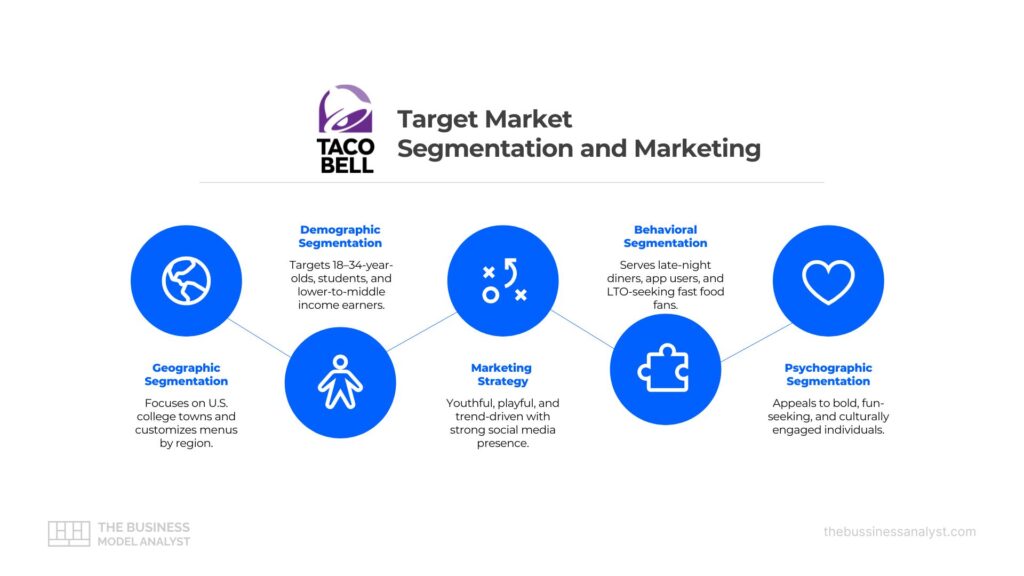
Taco Bell Target Market Segmentation and Marketing
Market segmentation involves dividing a broad customer base into smaller groups based on shared characteristics. These segments can be demographic, geographic, behavioral, or psychographic. For a brand like Taco Bell, which aims to serve a wide yet specific audience, segmentation ensures its marketing remains relevant, personalized, and effective.
Taco Bell uses segmentation to fine-tune its advertising, menu development, and digital strategy. Instead of taking a one-size-fits-all approach, the brand creates targeted campaigns and promotions that appeal to distinct audience types. This allows Taco Bell to reach both loyal repeat customers and new audiences seeking variety or innovation.
The company actively leverages all four major types of segmentation:
- Demographic Segmentation: Focuses on age, gender, income, and education level.
- Geographic Segmentation: Adjusts offerings and strategies based on region or location.
- Behavioral Segmentation: Examines customer behavior such as frequency of visits or purchasing habits.
- Psychographic Segmentation: Considers values, lifestyles, and personality traits.
Each of these segmentation strategies allows Taco Bell to maintain its position as a youth-driven, innovative fast-food brand. In the following sections, we’ll explore each segmentation type in detail and examine how Taco Bell uses them to reach and retain its audience.
Demographic Segmentation
Demographic segmentation is one of the most foundational strategies in marketing. It involves grouping customers based on measurable statistics such as age, gender, income, and education. For Taco Bell, this approach is crucial to understanding who their core customers are and how to appeal to their everyday preferences.
Taco Bell’s most active customer base includes young adults aged 18 to 34, particularly college students and young professionals. This age group craves convenience, affordability, and a sense of individuality in the products they consume. They often have limited budgets, which aligns perfectly with Taco Bell’s value-based menu pricing. The “Cravings Value Menu” and $5 boxes cater directly to this segment.
In terms of gender, Taco Bell appeals fairly equally to both men and women, though some products and campaigns lean more toward a male-dominated fast food demographic. Marketing featuring bold flavors and late-night indulgence—like the “Fourthmeal” campaign—often resonates with young male consumers, particularly those in college or early career stages.
Income also plays a decisive role. Most Taco Bell customers fall within lower- to middle-income brackets. By offering substantial meal options at low prices, the brand remains accessible without alienating cost-conscious eaters. These individuals are less likely to dine at more expensive fast-casual chains and prioritize quantity and convenience.
Education influences Taco Bell’s reach through its strong presence in college towns and university areas. Students looking for quick, inexpensive meals during late-night study sessions or social outings are key to the brand’s sustained popularity. Taco Bell even customizes store formats near campuses to accommodate longer hours and fast service.
Taco Bell’s messaging is designed to connect with this young demographic through humor, pop culture references, and digital engagement, particularly via platforms like TikTok and Instagram. Their tone is casual, slightly irreverent, and always tuned in to the trends that resonate with a youthful, open-minded audience.
Geographic Segmentation
Geographic segmentation allows Taco Bell to tailor its offerings based on location-specific preferences, cultural influences, and lifestyle habits. As a global brand with strong U.S. roots, Taco Bell adapts its menu and marketing to reflect regional tastes while maintaining its core identity.
In the United States, Taco Bell has a massive presence, with over 7,000 locations, many of which are concentrated in urban and suburban areas. Cities with large college populations, like Austin, Ann Arbor, and Tempe, often have multiple Taco Bell outlets strategically placed to serve a late-night, budget-conscious crowd. These locations tend to offer extended hours or 24-hour service.
Internationally, Taco Bell has been expanding into markets such as India, the UK, and South Korea, adjusting its menu to local preferences. In India, for instance, the brand emphasizes vegetarian options and less spicy variants to cater to regional dietary norms. In the UK, Taco Bell offers items like Churros and Fries Supreme, responding to British tastes.
Regional U.S. markets also see custom offerings. In Southern states, for example, Taco Bell has tested Tex-Mex influenced items, while West Coast markets may get early access to vegan or plant-based experiments due to higher demand. The brand uses test kitchens and regional pilots before rolling out new products nationally, showcasing how location impacts innovation.
Taco Bell’s geographic strategy also includes non-traditional locations such as airports, college campuses, and military bases, each requiring tailored pricing, portion sizes, or store layouts. This flexibility helps the brand stay relevant in diverse environments while maintaining a recognizable brand image.
Behavioral Segmentation
Behavioral segmentation focuses on how customers interact with a brand, including their usage patterns, loyalty, decision-making habits, and product preferences. For Taco Bell, this approach reveals not just who the customers are, but why and how they choose to engage with the brand.
One of the most distinctive behaviors among Taco Bell’s core audience is late-night dining. The brand has successfully branded this as “Fourthmeal,” targeting night owls, college students, and shift workers who crave fast, flavorful food outside traditional hours. Many locations are open until 2 a.m. or later, with some operating 24/7, capitalizing on this behavior.
Taco Bell also appeals to impulse buyers and fast-food experimenters. With a steady rotation of limited-time offers (LTOs) like the Nacho Fries or Doritos Locos Tacos, the brand taps into customers’ desire for novelty and excitement. These LTOs generate buzz and encourage repeat visits from curious diners.
Loyalty is another key behavioral trait Taco Bell leverages through its Taco Bell Rewards app. Users earn points for purchases, access to exclusive menu items, and early alerts about promotions. This digital engagement not only retains frequent customers but also encourages upselling through personalized offers based on past purchases.
Subscription models also play a role in customer behavior. In 2022, Taco Bell launched its Taco Lover’s Pass, offering one taco per day for 30 days at a flat rate. This campaign targeted loyal fans and increased app downloads, demonstrating how purchase frequency can be incentivized through creative pricing.
Customers also tend to favor customization, choosing ingredients and combinations that suit their taste or dietary preferences. Taco Bell’s flexible menu format supports this behavior, making it a top choice for consumers who like control over their meal without sacrificing speed or price.
Psychographic Segmentation
Psychographic segmentation goes beyond surface-level traits to explore customers’ values, lifestyles, personality traits, and emotional drivers. Taco Bell excels in this area by aligning its brand with a youthful, unconventional, and self-expressive identity that resonates deeply with its audience.
Taco Bell’s core customers—primarily Gen Z and Millennials—tend to value authenticity, individuality, and convenience. They’re drawn to experiences and brands that help them express who they are. Taco Bell captures this through irreverent humor, pop culture tie-ins, and a voice that’s deliberately non-corporate. Campaigns like “Live Más” (“Live More”) emphasize living boldly and breaking norms, which aligns with the self-image of this audience.
Lifestyle also plays a significant role. Many of Taco Bell’s fans are adventurous eaters, open to trying new food combinations and limited-time items. They don’t just want sustenance—they want flavor, fun, and a break from routine. This psychographic trait fuels interest in experimental items like the Mexican Pizza revival, which sparked massive online support and social media trends.
Emotionally, Taco Bell fosters a sense of belonging and cultural relevance. The brand frequently collaborates with musicians, fashion designers, and gaming platforms, embedding itself in the lifestyle of its target audience. These partnerships allow customers to feel that Taco Bell “gets them,” which strengthens brand loyalty.
Taco Bell also taps into humor and irony—traits commonly associated with younger audiences—to build emotional resonance. Its tone is cheeky, informal, and meme-worthy, inviting users to engage online and share experiences. The result is a brand that feels more like a friend than a fast-food chain, creating a lasting emotional connection.
Taco Bell Marketing Strategy
Taco Bell’s marketing strategy is built around cultural relevance, digital fluency, and youth-oriented messaging. The brand uses a mix of humor, innovation, and trend-sensitive content to maintain visibility across platforms that matter to its target audience—especially social media.
The company maintains a strong presence on Instagram, TikTok, Twitter (X), and YouTube, where it promotes product launches, pop culture collaborations, and user-generated content. These platforms are ideal for reaching Taco Bell’s core demographic of 18–34-year-olds who consume content quickly and socially. Campaigns often include interactive elements like challenges or limited-time AR filters, especially on TikTok.
Taco Bell also uses influencer partnerships and celebrity collaborations to strengthen its brand identity. For example, it teamed up with rapper Doja Cat to promote the return of the Mexican Pizza, creating viral buzz and mass engagement. These moments tie emotional excitement to new or returning menu items.
At its core, Taco Bell’s messaging is driven by fun, rebellion, and flavor-forward freedom. Whether through digital storytelling, late-night humor, or nostalgic product revivals, the brand consistently appeals to those who value taste, affordability, and cultural clout.
How Taco Bell Reaches Its Audience
Taco Bell delivers its message through a mix of digital innovation, in-store experiences, and culturally aligned collaborations. Here’s how it connects with fans across its core segments:
Social Media Storytelling
Taco Bell excels on platforms like TikTok, Instagram, and YouTube, publishing bite-sized videos that showcase new menu items, behind-the-scenes content, and playful challenges. This strategy keeps the brand top-of-mind among younger audiences who value visual storytelling and shareable content. Interactive posts—like polls and AR filters—encourage direct viewer participation.
Influencer and Celebrity Partnerships
Taco Bell partners with creators and performers who resonate with its Gen Z and millennial audience. Celebrity collaborations with artists such as Doja Cat or Lizzo have amplified product launches, blending pop culture with menu promotion. These campaigns generate excitement and lend authenticity by aligning the brand with influential cultural figures.
App-Based Personalization
Through the Taco Bell Rewards app, the company offers tailored promotions, early access to products, and gamified incentives. Personalized campaigns based on purchase history and location drive repeat visits and increased average order value. App-based notifications also allow Taco Bell to reach users in real-time with promotions for nearby stores.
On-Site and Non-Traditional Locations
Many Taco Bell locations are strategically placed near colleges, airports, or entertainment districts. These stores often feature extended hours and layouts optimized for late-night orders and mobile pickup. Taco Bell also deploys co-branded pop-ups or themed experiences—for example, limited-time in-store activations tied to product launches or cultural events.
Comparison to Competitors’ Target Audience
Taco Bell operates in a crowded fast-food landscape, competing with brands like Chipotle, McDonald’s, and Del Taco. While they may offer similar product categories, each brand targets slightly different consumer mindsets, lifestyles, and motivations. This section compares how Taco Bell’s audience aligns—and diverges—from its competitors, revealing its unique market positioning.
Taco Bell vs Chipotle Target Audience
Taco Bell and Chipotle both serve Mexican-inspired cuisine, but they cater to distinctly different customer profiles. Chipotle appeals to a health-conscious, urban professional audience that values food transparency, organic ingredients, and ethical sourcing. Their target market is typically aged 25–40, with higher income levels and a preference for customizable, perceived healthier meals.
Taco Bell, on the other hand, embraces a more playful, budget-friendly brand voice that targets 18–34-year-olds who prioritize bold flavors and convenience over food purity. While Chipotle emphasizes “Food With Integrity,” Taco Bell markets indulgence and experimentation—like combining nacho cheese with a Doritos shell—at a lower price point.
Chipotle’s marketing focuses on clean aesthetics and sustainability, while Taco Bell leans into humor, cultural references, and social engagement. This difference in tone also reflects a difference in lifestyle segmentation: Chipotle aligns with disciplined, wellness-focused eaters; Taco Bell appeals to spontaneous, fun-seeking consumers.
Taco Bell vs McDonald’s Target Audience
McDonald’s targets a much broader demographic, ranging from families with children to working professionals and seniors. It focuses on universal appeal, with menu staples like burgers and fries that satisfy cross-generational tastes. McDonald’s stronghold among families and older adults differentiates it from Taco Bell’s youth-centric image.
Taco Bell, by contrast, carves out a niche with younger, late-night diners who crave innovation and affordability. While McDonald’s positions itself as dependable and classic, Taco Bell wins on novelty and cultural edge. Their respective tones reflect this: McDonald’s projects warmth and familiarity, while Taco Bell evokes rebellion and excitement.
Similarities in Target Audiences
Despite their distinctions, these brands overlap in key areas. All three target price-sensitive consumers who value speed and convenience. They share space in urban environments and college towns, often competing for the same quick-service traffic. In terms of platform usage, their audiences are all active on mobile apps and digital loyalty programs.
Additionally, Taco Bell, Chipotle, and McDonald’s each recognize the value of menu personalization and mobile-first marketing, providing app users with location-based deals, loyalty perks, and exclusive items. This digital strategy reflects a common behavioral pattern: fast, flexible, and increasingly app-driven ordering.
Key Differences in Target Audiences
Where Taco Bell diverges most sharply is in psychographic appeal. Its fans are drawn to risk-taking and play—two traits less emphasized by McDonald’s or Chipotle. Chipotle customers are guided by values and health goals; McDonald’s by family convenience and brand familiarity. Taco Bell taps into youth identity, social currency, and meme culture.
This also translates to their respective product lines. Taco Bell frequently launches experimental items and mashups. Chipotle keeps a relatively consistent menu with minimal seasonal variations. McDonald’s falls somewhere in the middle, rotating items occasionally while staying rooted in classic offerings.
Taco Bell Advantages
- Youth-Centric Branding
Taco Bell’s strong alignment with Gen Z and Millennials allows it to dominate cultural conversations, especially on social media. Its humor, late-night appeal, and app-based customization resonate with younger consumers better than more traditional chains. - Menu Innovation
Taco Bell’s frequent rollout of bold, limited-time products like the Cheez-It Crunchwrap or Nacho Fries keeps the brand fresh and top-of-mind. This innovation attracts both loyal fans and curious newcomers, driving traffic even during off-peak hours. - Strong Digital Engagement
The brand’s mobile app, loyalty program, and presence on platforms like TikTok allow for personalized engagement. These channels deliver exclusive offers, early access to menu items, and influencer-led content that boosts interaction and retention. - Brand Personality and Humor
Taco Bell’s irreverent tone and culturally aware messaging make it feel less like a corporation and more like a friend. This emotional connection builds trust and loyalty, especially among younger consumers who seek relatable brands.
Taco Bell Disadvantages
- Limited Family Appeal
Unlike McDonald’s, Taco Bell does not heavily target families with young children. It lacks the family meal bundles, toys, and play area incentives that help competitors attract parents and kids. - Perception of Low Food Quality
Despite its popularity, Taco Bell is sometimes seen as less healthy or lower in quality compared to Chipotle. This perception can alienate health-conscious consumers or those seeking clean ingredients. - Narrow Time-of-Day Relevance
Taco Bell’s strongest association is with late-night and casual dining, which limits its competitiveness during traditional mealtimes, especially breakfast, where brands like McDonald’s dominate. - International Expansion Challenges
While Taco Bell has made strides globally, its international footprint still lags behind that of McDonald’s or KFC. Adapting its quirky, niche branding to different cultures remains a challenge for consistent global growth.
Conclusion
Taco Bell’s success lies in its sharp understanding of its audience and its willingness to adapt, innovate, and speak directly to the values and behaviors of younger consumers. The brand’s deliberate focus on affordability, flavor innovation, and cultural relevance allows it to maintain a stronghold in the fast-food industry despite fierce competition.
Through demographic, geographic, behavioral, and psychographic segmentation, Taco Bell effectively tailors its offerings to meet the evolving needs of its audience. Its marketing strategy—rooted in digital engagement, humor, and collaboration—has helped it resonate with Gen Z and Millennials more deeply than many of its rivals.As the Taco Bell target market continues to evolve, especially with growing interest in plant-based options, digital convenience, and sustainability, the brand’s challenge will be to keep pace without losing its core identity. If Taco Bell can maintain its cultural edge while diversifying its appeal, it is well-positioned for continued growth in the global QSR space.


