Uber Target Market Analysis
Jul
Understanding a company’s target market is critical for building effective marketing strategies, ensuring customer satisfaction, and driving business growth. For brands operating at a global scale, this understanding must be deep, flexible, and data-driven. Few companies exemplify this as clearly as Uber, a leader in the ride-hailing and mobility services sector.
Founded in 2009, Uber revolutionized urban transportation by connecting riders with drivers through a sleek, user-friendly app—an essential element of the Uber business model. Today, Uber operates in over 70 countries, offering not just rideshare services but also food delivery (Uber Eats), freight solutions, and autonomous vehicle development. Its rapid expansion has been fueled by a keen focus on consumer behavior, convenience, and digital integration.
This article provides a comprehensive overview of the Uber target market — analyzing who uses Uber, how they’re segmented, and how Uber tailors its messaging and product features accordingly. We’ll explore Uber’s use of demographic, geographic, behavioral, and psychographic segmentation, compare its target audience to those of its key competitors like Lyft and Bolt, and evaluate its strengths and weaknesses in reaching its market. Through real-world examples and strategic insights, this analysis will show how Uber maintains relevance across diverse global markets and shifting consumer needs.
Contents
Who is Uber Target Audience?
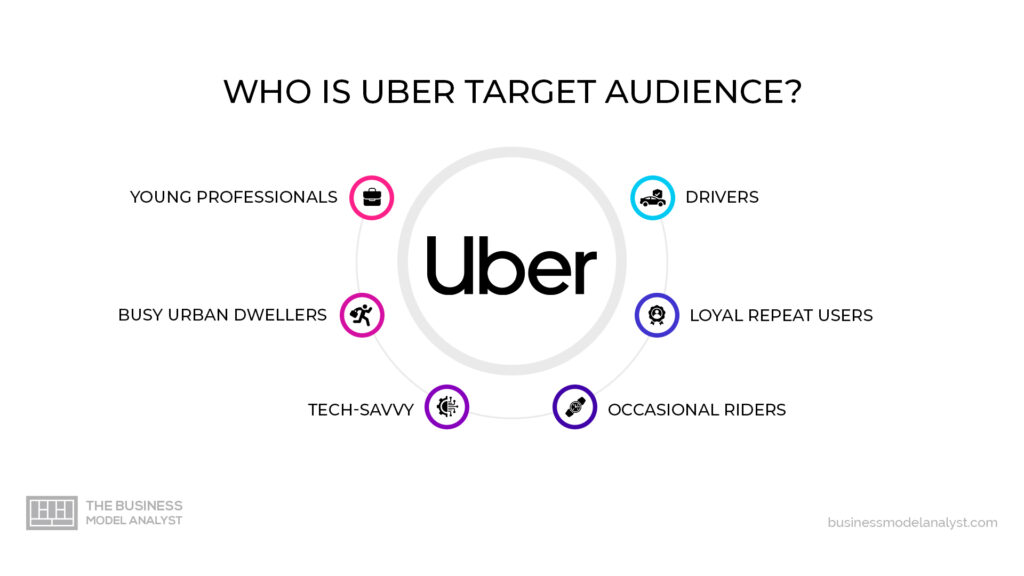
The Uber target market is broad but strategically focused on urban, tech-savvy individuals who prioritize convenience, efficiency, and affordability. Uber’s core users typically fall within the 18–45 age range, with a heavy skew toward millennials and Gen Z — groups comfortable with mobile technology and accustomed to on-demand services. These users often live in cities or densely populated areas where car ownership is expensive or impractical.
Income levels vary widely among Uber users, but the majority belong to the middle- to upper-middle-income brackets. For many, Uber is not a luxury but a practical alternative to public transportation, taxis, or owning a car. Among Uber Eats customers, a significant portion includes busy professionals, students, and families seeking convenience in food delivery.
Uber’s audience is diverse in gender and background, although specific services can show variations. For example, Uber’s business segment often targets corporate professionals, while its budget-friendly options like Uber Pool have strong appeal among students and cost-conscious riders.
Behaviorally, Uber users value speed, simplicity, and control. With features like real-time tracking, upfront pricing, and easy payment options, Uber’s service appeals to a lifestyle that prioritizes on-demand accessibility. In many regions, the company has cultivated strong loyalty by meeting everyday transportation needs and expanding into food delivery with Uber Eats.
A good example of this strategy in action is Uber’s success in India, where the company introduced localized services like cash payment options and auto-rickshaw rides to better align with local behavior and economic conditions. This flexibility underscores Uber’s nuanced understanding of its audience — both globally and locally.
Uber Target Market Segmentation and Marketing
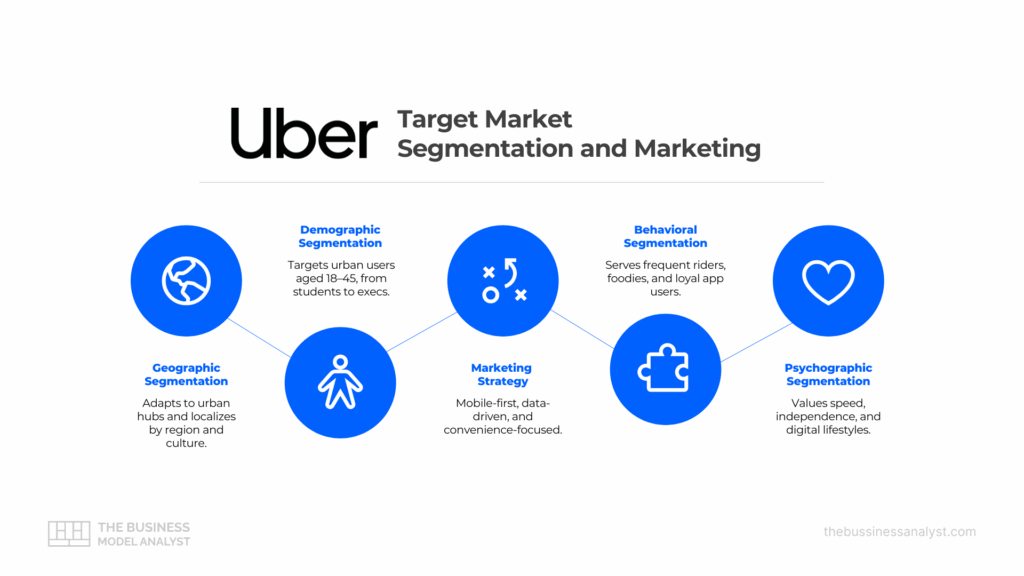
Market segmentation is the process of dividing a broad consumer or business market into sub-groups based on shared characteristics. It helps companies tailor their offerings and messaging to meet specific needs. Uber uses market segmentation to optimize how it connects with riders and drivers across varied geographic and cultural landscapes.
Uber applies four primary segmentation types to refine its reach: demographic, geographic, behavioral, and psychographic. By doing so, it can localize promotions, adjust pricing models, and develop unique features for different user types. For example, Uber Eats’ strategy for college towns differs from its approach in affluent city centers. Similarly, Uber’s ride-hailing services vary by location, with premium tiers available in high-income areas and budget options in developing markets.
Each segment provides a lens through which Uber can understand user motivation — whether it’s the urgency of food delivery, the affordability of a shared ride, or the prestige of a luxury trip. Uber also uses AI-driven user data to personalize marketing, incentivize repeat usage, and test regional adaptations. This allows them to scale globally while staying relevant locally.
We’ll now explore each segmentation type in depth, starting with Demographic Segmentation.
Demographic Segmentation
Demographic segmentation categorizes the market based on attributes like age, gender, income, education, and occupation. Uber relies heavily on this form of segmentation to define its services, pricing, and communication strategies. The core Uber target market — primarily aged 18 to 45 — includes students, young professionals, and middle-income earners who are highly engaged with mobile apps and digital services.
In urban centers across the U.S., Uber’s key riders are millennials and Gen Z consumers earning between $30,000 and $100,000 annually. These users often choose Uber over owning a car due to high urban parking costs, insurance, and fuel prices. Many are college-educated and rely on rideshare apps for commuting, social outings, or avoiding the hassle of public transport.
Uber Eats similarly targets young professionals and college students — demographics who frequently order takeout and value convenience over price. For instance, in the U.S., Uber Eats has found a strong foothold on college campuses and in downtown business districts, where busy lifestyles encourage food delivery.
Uber’s business offerings — like Uber for Business — are tailored toward corporate employees and executives, often aged 30 to 55, who use the service for client meetings, airport rides, or work travel. In contrast, budget-focused services like Uber Pool (where available) are more attractive to lower-income users or students looking to save on ride costs.
Uber also adapts its demographic strategy in emerging markets. In places like India or Brazil, it includes payment options for cash users and creates tiered pricing to appeal to a broader economic range. By understanding demographics, Uber tailors marketing campaigns, app features, and service offerings to suit diverse user profiles around the world.
Geographic Segmentation
Geographic segmentation divides the market based on location — such as countries, cities, climate zones, or population density. Uber’s global success is largely due to its ability to adapt services to local needs while maintaining a consistent app experience. The company operates in over 70 countries, with services tailored for urban, suburban, and even rural markets, depending on demand.
Urban areas are Uber’s core focus. Cities like New York, London, São Paulo, and Mumbai are high-traffic hubs where Uber meets the need for fast, reliable transportation. In these regions, Uber customizes pricing, promotions, and vehicle types to match city infrastructure and user expectations. For example, Uber’s London service includes UberXL and UberExec — targeting families and business travelers — while its Indian operations offer Uber Auto (a rickshaw-based option).
In more suburban or less dense markets, Uber may limit service hours or reduce availability due to lower demand. In the U.S., for instance, Uber’s presence in smaller cities or towns is often less robust than in metropolitan centers. In contrast, in regions like Southeast Asia and Africa, the company has partnered with local fleets or adapted to regional traffic norms to build a foothold.
Uber also localizes marketing. In the Middle East, campaigns have emphasized safety features and family-friendly services, aligning with cultural expectations. In Latin America, cash payment options were added to accommodate a largely unbanked population. These geographic considerations ensure Uber’s relevance, even in vastly different markets.
Behavioral Segmentation
Behavioral segmentation focuses on how users interact with a product or service — including usage frequency, loyalty, purchasing habits, and decision-making triggers. Uber thrives on this approach, leveraging real-time data to identify user patterns and deliver personalized experiences that drive engagement and retention.
A major behavioral trait among Uber users is their preference for convenience and speed. Frequent riders — often commuters or social travelers — value features like ETA tracking, driver ratings, and one-click rebooking. These behaviors inform Uber’s core interface design, emphasizing ease of use and time savings.
Uber segments users by ride frequency, creating custom offers like ride bundles, loyalty perks, and discount codes. For example, Uber’s Uber One membership program (formerly Uber Pass) incentivizes high-frequency users by offering discounted rides and zero delivery fees. These behaviors allow Uber to upsell and increase lifetime customer value.
In food delivery, Uber Eats tracks order timing, favorite cuisines, and frequency to tailor restaurant suggestions and push notifications. If a user consistently orders late-night meals, the app may spotlight 24-hour restaurants or offer promotions during that time window. These behavioral insights power machine-learning-driven personalization.
Drivers are also segmented behaviorally. Uber tailors its outreach and incentives based on how often a driver is active, their customer ratings, or cancellation habits. This enables targeted messaging like bonus opportunities for high-performing drivers or retention campaigns for those reducing hours.
By continuously analyzing behavior, Uber adapts not only its messaging but also its in-app experience, ensuring users and drivers receive content, services, and offers aligned with their routines and preferences.
Psychographic Segmentation
Psychographic segmentation delves into users’ values, lifestyles, personalities, and beliefs — factors that deeply influence emotional connection and brand loyalty. Uber appeals strongly to consumers who value independence, efficiency, and modern technology. The brand’s positioning aligns with urban lifestyles, where convenience and control are high priorities.
A large segment of the Uber target market includes young, ambitious professionals who prefer experiences over ownership. These users often don’t own cars, opting instead for flexible, on-demand transportation. Uber markets itself as a tool of freedom and autonomy, helping riders reclaim time and avoid the stresses of driving or navigating public transit.
Sustainability is another growing psychographic theme. Eco-conscious riders may choose Uber Green (where available), a service offering hybrid and electric vehicles. In response to values like climate responsibility, Uber has publicly committed to becoming a zero-emissions platform in key markets by 2030. This aligns with a segment of users who prioritize environmental impact when choosing services.
Emotionally, Uber taps into the desire for reliability and control. Campaigns often emphasize knowing who your driver is, the ability to share trip status, and cashless transactions — features designed to build trust and reinforce safety.
Uber also resonates with users who view their smartphones as central to daily life. These digitally immersed consumers see Uber as an extension of their on-demand lifestyle, much like streaming services or food delivery apps. The brand’s clean interface, fast support, and transparent pricing cater to users who value clarity and seamless digital experiences.
Uber Marketing Strategy
Uber’s marketing strategy centers on simplicity, personalization, and trust-building, targeting users across multiple digital and physical touchpoints. The brand focuses on mobile-first engagement, leveraging app-based notifications, email campaigns, and targeted promotions to reach users at the right moment — whether they’re booking a ride or ordering food.
Social media plays a major role in Uber’s outreach. Platforms like Instagram, Twitter, and TikTok are used to promote safety updates, service features, or limited-time discounts. Uber also partners with influencers and content creators, particularly in travel, food, and tech, to engage younger audiences and increase brand relatability.
Emotional appeal is key. Uber’s messaging often highlights freedom, convenience, and reliability, positioning the service as a trusted companion in both everyday life and emergencies. Campaigns like “Get There” and “Thank You for Not Driving” have reinforced Uber’s place as a modern necessity.
Offline, Uber markets through billboards, transit ads, and event sponsorships, especially in major cities. For Uber Eats, the company partners with local restaurants to co-promote food options, sometimes featuring well-known chefs or exclusive menus.
Overall, Uber’s strategy relies on data-driven targeting, ensuring that its marketing feels timely, relevant, and tailored to user needs.
How Uber Reaches Its Audience
Uber connects with its audience through diverse channels and formats, each tailored to segment-specific preferences and contexts.
Mobile App & Push Notifications
Uber’s central hub is its mobile app—designed for intuitive use, fast booking, and real-time updates. Push notifications alert users to personalized promotions, wait-time reductions, and surge-free hours. This channel keeps frequent users engaged and encourages occasional riders to revisit with timely reminders.
Social Media & Influencer Partnerships
On platforms like Instagram, TikTok, and X, Uber shares engaging content that highlights safety features, new service launches, or seasonal promotions. Influencer collaborations—especially travel bloggers, local foodies, and city lifestyle creators—help Uber tap into emotionally driven psychographic segments, building credibility among younger demographics.
Partnerships & Local Collaborations
Uber boosts brand visibility through strategic alliances—such as airport terminals, transit hubs, hotels, and restaurants. For instance, Uber Kits at major events and in-app restaurant promotions via Uber Eats bring added value to both users and partners, reinforcing Uber’s link to convenience and local experiences.
Email Marketing & CRM
Uber’s email campaigns are segmented by user behavior—new sign-ups, dormant users, or frequent spenders. Content is tailored accordingly: welcome offers, reactivation discounts, or loyalty perks. These nudges, combined with easily redeemable promo codes, help convert trial users into repeat customers.
Each of these methods illustrates how Uber weaves together digital precision with physical presence, ensuring its message resonates across demographics, geographies, behaviors, and psychographics.
Comparison to Competitors’ Target Audience
In this section, we’ll compare Uber’s target audience with key competitors to understand how different strategies resonate with varied customer segments. We’ll start with Lyft and then summarize overarching similarities and differences.
Uber vs Lyft Target Audience
Uber and Lyft share a broadly similar audience—urban, tech-savvy individuals aged 18–45 who appreciate convenience and seamless ride-hailing. However, Lyft places more emphasis on a community-driven, friendly ethos, often using messaging that emphasizes social connection and localized experiences. As a result, Lyft resonates especially well with college towns and younger consumers who prefer a brand with a personal, approachable tone.
By contrast, Uber leans more heavily on tech innovation and service breadth—from rideshare to Uber Eats, freight, and self-driving vehicles. This breadth appeals to urban professionals who value an integrated platform. While both brands operate in the same demographic range, Uber attracts slightly older users (25–45) with greater income diversity due to its premium services like Uber Black and Uber for Business.
Similarities in Target Audiences
Both Uber and Lyft cater to millennials and Gen Z urbanites who prioritize convenience over ownership. In-app features like real-time tracking, transparent pricing, and digital payment are standard expectations across both services. Moreover, both brands are extending into delivery and subscription models, signaling that their users increasingly value on-demand everything—not just transportation, but food and other services too.
Key Differences in Target Audiences
A significant difference lies in Uber’s global reach versus Lyft’s U.S.-centric presence. Uber’s broad presence allows it to target diverse demographics—from wealthy professionals in London to middle-income riders in São Paulo—unlike Lyft, which primarily targets American urban consumers.
Another distinction is Uber’s appeal to corporate users through Uber for Business, while Lyft has been slower to develop an enterprise segment. Consequently, Uber better captures the business-traveler audience, particularly in U.S. and international metros. Its service tiers—from value to luxury—also allow it to appeal to a wider income spectrum.
Uber Advantages
- Global Scale and Service Variety
Uber operates in over 70 countries with services ranging from rideshare and delivery to freight and autonomous vehicles, which broadens its target market and offers cross-sell opportunities. - Integrated Platform Ecosystem
The seamless connection between Uber rides, Uber Eats, and Uber for Business creates added convenience and high retention, especially among frequent users and urban professionals. - Data‑Driven Personalization
With advanced AI and machine learning, Uber delivers targeted promotions, dynamic pricing, and features like Uber One, enhancing engagement and lifetime value across segments.
Uber Disadvantages
- Brand Perception and Trust Issues
Uber has faced public scrutiny over safety and labor practices, which can undermine trust—particularly among safety‑sensitive psychographic segments. Lyft’s more personable image sometimes resonates better on this front. - Limited Localized Engagement
In some locales, Uber’s global-brand positioning can feel impersonal. Competitors like Bolt or Careem leverage strong local identities and partnerships that feel more regionally tuned. - Regulatory Challenges
Uber’s expansive operations expose it to complex regulatory environments—sometimes resulting in service suspensions or higher operational costs compared to more flexible, smaller regional rivals.
Conclusion
Uber’s target market is a diverse, urban-centric group that spans young adults, professionals, students, and families. Through demographic, geographic, behavioral, and psychographic segmentation, Uber has created an ecosystem that appeals globally—whether through convenience, technological integration, or service variety. Comparison with competitors like Lyft and Bolt highlights Uber’s strengths in scale, service depth, and corporate outreach, while also revealing challenges in cost perception, brand warmth, and streamlined simplicity.
As ridesharing shifts toward sustainability, automation, and seamless service bundling, Uber’s ongoing focus must be on localizing experiences, ensuring affordable options, and sustaining user trust, as outlined in this detailed Uber SWOT analysis. Staying ahead will require balancing global ambition with localized empathy—an effort key to retaining the loyalty of its diverse and evolving market.