
Ikea Target Market Analysis
Jul
Understanding a company’s target market is essential to crafting products, messaging, and experiences that resonate with the right audience. In today’s hyper-competitive global retail landscape, even well-known brands must precisely align their strategies with evolving customer behaviors. One of the most successful examples of strategic audience targeting is IKEA.
Founded in Sweden in 1943, IKEA has grown into the world’s largest furniture retailer, renowned for its minimalist design, flat-pack delivery system, and budget-friendly home solutions. The brand’s distinctive mix of style, affordability, and sustainability has made it a household name in over 60 countries.
This article explores the IKEA target market through a comprehensive lens. We’ll examine who IKEA serves, how the company segments and engages its audience, and the strategic differences that set it apart from competitors. We’ll also delve into IKEA’s marketing methods, geographical and behavioral strategies, and psychographic appeal. By the end, you’ll have a clear picture of how IKEA attracts and retains its diverse customer base — and where its opportunities and challenges lie in the years ahead.
Contents
Who is IKEA’s Target Audience?
The IKEA target market is diverse yet sharply focused. At its core, IKEA primarily appeals to young adults, couples, and families seeking affordable, stylish, and functional home furnishings. These consumers are typically between 18 and 45 years old, with a large proportion in the 25–34 age bracket. Many are first-time renters or homeowners, navigating limited space and budgets while striving for a personal aesthetic.
Gender-wise, IKEA has a relatively balanced customer base, though marketing often skews slightly towards women due to their significant role in household purchasing decisions. Income levels tend to range from lower-middle to upper-middle class, with most buyers earning between $30,000 and $80,000 annually. This segment values cost-effectiveness and product longevity — two areas where IKEA excels.
IKEA customers are also characterized by urban or suburban living, where small-space solutions and easy transport are critical. For instance, flat-pack packaging and self-assembly furniture resonate deeply with apartment dwellers in major cities like New York, London, and Tokyo.
Beyond demographics, IKEA buyers typically share a mindset: they’re practical, design-conscious, and sustainability-minded. Many are tech-savvy and self-reliant, favoring brands that empower them to customize their living spaces. IKEA has successfully tapped into this ethos through its modular designs, digital tools (like its AR placement app), and eco-friendly product lines.
Real-world behaviors reinforce these traits. IKEA stores are often bustling on weekends, not only because of convenience, but because the in-store experience is intentionally designed to inspire — from room mockups to the food court. This immersive journey reinforces IKEA’s appeal to a lifestyle, not just a price point.
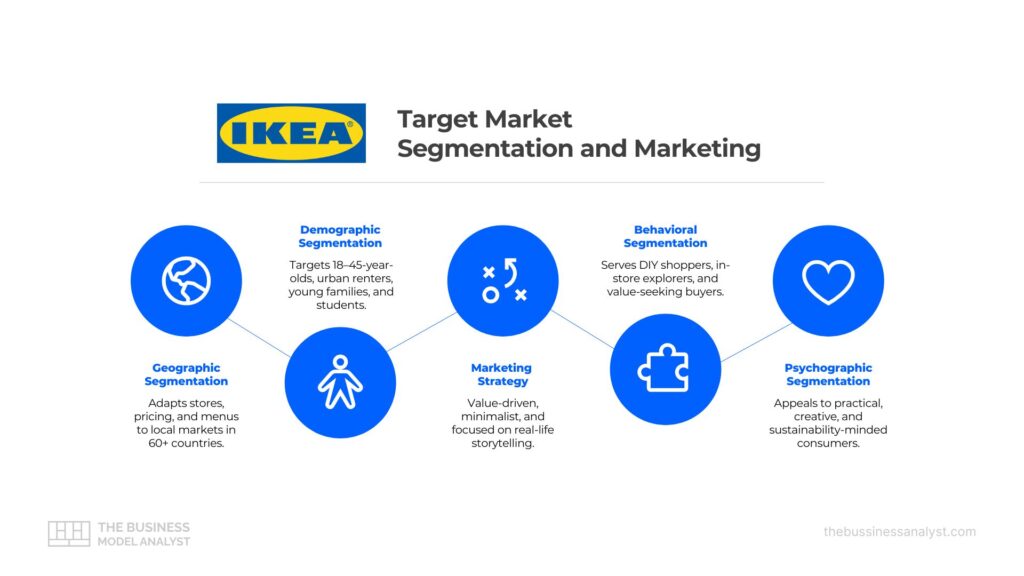
IKEA Target Market Segmentation and Marketing
Market segmentation involves dividing a broad consumer base into distinct groups based on shared characteristics. These segments enable companies to tailor their marketing, products, and communication strategies to better meet the specific needs of each group. IKEA leverages segmentation masterfully to serve a global yet highly individualized audience.
The IKEA target market is segmented across four primary dimensions: demographic, geographic, behavioral, and psychographic. This allows the company to craft messages and product lines that speak to different lifestyles, values, and living conditions.
For example, IKEA doesn’t just sell a sofa — it offers a range of sofas tailored to the income levels, space constraints, aesthetic tastes, and lifestyle priorities of each segment. Its catalog and website content vary depending on region, often showcasing room designs that reflect local housing trends and cultural preferences. Meanwhile, loyalty programs and digital tools adapt to how customers behave and shop.
Each segmentation strategy plays a specific role in IKEA’s global success. The following sections will break down how IKEA uses each segmentation type to connect with its market on a deeper level.
Demographic Segmentation
Demographic segmentation focuses on measurable population characteristics such as age, gender, income, education, and family structure. For IKEA, these factors play a major role in product development and marketing tone.
The IKEA target market is largely made up of young adults and families, particularly those aged 18 to 45. Within this group, IKEA sees strong engagement from millennials and Gen Z consumers — generations known for valuing experience, personalization, and affordability. IKEA designs many of its products, such as modular shelves and compact sofas, with urban renters and first-time homeowners in mind.
Income levels are another key demographic variable. IKEA customers typically fall into the lower-middle to upper-middle income range. The brand positions itself as the sweet spot between budget and quality — affordable enough for students and young professionals, yet durable and attractive enough for families with growing needs. For example, IKEA’s MALM dresser or KALLAX shelving unit offers versatile functionality without high cost, making them staples in many starter homes.
Education and career stage also inform IKEA’s appeal. College students, recent graduates, and young professionals gravitate toward IKEA because of its mix of style, convenience, and price. IKEA often collaborates with influencers and launches limited edition collections to appeal to this demographic’s desire for trendy, seasonal looks.
Additionally, IKEA is family-friendly in both product design and shopping experience. Stores include play areas and low-cost meals, making weekend visits appealing for parents with young children. Items like adjustable cribs or children’s room themes show that IKEA recognizes the evolving needs of growing households.
By designing products and campaigns around these specific demographics, IKEA ensures that its offerings resonate with real-life needs — from a college student’s first studio apartment to a family’s new house in the suburbs.
Geographic Segmentation
Geographic segmentation divides the market by location—such as country, region, urban density, or climate—allowing brands to tailor offerings for local market needs. The IKEA target market is shaped significantly by where people live and shop around the world.
As of mid‑2025, IKEA operates approximately 483 stores across 63 countries. The largest presence is in Germany (about 55 stores), followed by strong markets in the U.S., France, UK, Italy, and China. Each territory presents diverse housing styles, living conditions, and consumer expectations.
IKEA adapts its offerings to different geographic contexts. In China, for example, the company partners with local assembly services because many urban consumers expect full service rather than self-assembly. In regions like India, IKEA offers smaller-format stores and furniture scaled to compact apartments; its in-store restaurants include vegetarian options tailored to local diets.
In Finland, IKEA has taken localization a step further: in Espoo, the store is painted white instead of the iconic blue to blend with the city’s aesthetic — and showroom spaces vary across Finnish locations to reflect local lifestyles (rural vs urban design). These efforts highlight how IKEA adjusts visual identity and layout to match regional culture and housing norms.
Pricing and product mix also vary: in high-income European markets like Germany and France, IKEA retains its value positioning but may offer expanded design or sustainability-focused ranges. In emerging markets like India or Southeast Asia, IKEA’s product lines emphasize affordability, modularity, and cultural fit.
Across urban vs rural segments, IKEA tends to place large-format stores in metropolitan and suburban areas, while deploying smaller “city stores” or “Plan & Order” points in dense city centers. This ensures accessibility for customers with limited mobility or housing space, while still maintaining the full store experience in more spacious regions.
Overall, geographic segmentation enables IKEA to serve globally while appearing local—creating environments and product assortments that reflect regional lifestyles, cultures, and living conditions.
Behavioral Segmentation
Behavioral segmentation categorizes customers based on their interactions with a brand — including buying habits, usage patterns, brand loyalty, and product benefits sought. For the IKEA target market, behavior plays a central role in how the company shapes its store experience, loyalty incentives, and product personalization.
A key behavioral trait among IKEA shoppers is value-seeking behavior. Customers typically weigh both price and durability, often choosing IKEA for its reputation of offering modern design at accessible prices. For instance, college students and young couples prioritize affordability and convenience, frequently purchasing compact, multi-use items like the LACK table or HEMNES storage solutions.
IKEA also capitalizes on self-service behavior. Its self-assembly model is not just cost-effective — it aligns with the DIY ethos embraced by many of its younger consumers. Shoppers are comfortable taking an active role in the process, from showroom inspiration to flat-pack transport and at-home assembly.
Another critical behavior is in-store browsing. IKEA’s store layout encourages customers to explore and interact with staged rooms, increasing dwell time and impulse purchases. The average customer spends more than 2 hours per visit. This behavior is mirrored online, where digital tools like the IKEA Place AR app and online planning software enable users to “try before they buy.”
Loyalty also shapes IKEA’s behavioral segmentation. The IKEA Family program offers members exclusive discounts, product previews, and even free coffee — appealing to frequent shoppers and reinforcing a sense of belonging. In some countries, IKEA uses purchase history to recommend products or offer tailored promotions, deepening personalization.
IKEA also recognizes seasonal and life-stage behaviors. Back-to-college campaigns each fall, new-parent targeted nursery bundles, and home-renovation spring sales align with predictable customer needs. The brand times promotions and product drops accordingly, ensuring relevance and timely appeal.
Through behavioral segmentation, IKEA meets customers not just where they are — but how they shop, think, and furnish their lives.
Psychographic Segmentation
Psychographic segmentation goes deeper than demographics or behaviors — it explores the values, lifestyle choices, personality traits, and beliefs that influence buying decisions. This dimension is essential to understanding the IKEA target market, which spans across cultures but shares remarkably similar attitudes and aspirations.
IKEA appeals strongly to consumers who value simplicity, self-expression, and sustainability. These customers often describe themselves as creative, independent, and practical — traits that align well with IKEA’s modular design philosophy and “design it your way” ethos. Many live in smaller urban spaces and seek products that reflect their identity without overwhelming their environment.
Minimalism and modern living are powerful drivers. IKEA’s catalog, advertising, and in-store displays consistently promote clean lines, open space, and clutter-free aesthetics. This speaks to psychographic groups that associate minimalism with emotional calm, focus, and lifestyle efficiency. For example, IKEA’s BRIMNES line offers smart storage solutions with sleek design, resonating with those who prioritize both order and elegance.
Another major psychographic anchor is environmental consciousness. IKEA customers are typically motivated by brands that align with their personal ethics. The company has embraced this with initiatives like sourcing 100% of its cotton from sustainable sources, designing products with recycled materials, and aiming to become climate-positive by 2030. Campaigns often center on how IKEA helps consumers “live more sustainably at home,” appealing to this value-driven mindset.
Emotionally, IKEA taps into the desire for empowerment and personalization. It frames furniture not just as a necessity, but as a tool for creating a home that reflects who you are. The company’s marketing often features diverse, real-life families and individuals in relatable domestic settings — reinforcing the idea that everyone deserves a well-designed, cozy, and personal space, regardless of budget.
In short, IKEA succeeds psychographically by aligning with people’s aspirations for affordable self-expression, functionality, and ethical living — a combination that continues to attract loyal, values-oriented customers worldwide.
IKEA Marketing Strategy
IKEA’s marketing strategy is built on relatable storytelling, value-focused messaging, and omnichannel outreach. The brand positions itself as more than just a furniture retailer — it’s a lifestyle partner helping people live better, more efficiently, and more affordably.
IKEA uses a mix of traditional and digital marketing channels to connect with the IKEA target market. Television commercials, digital ads, print catalogs, and immersive in-store signage work in tandem with strong social media campaigns across platforms like Instagram, YouTube, and Pinterest. These channels allow IKEA to visually showcase its products in real-life settings, emphasizing their versatility and emotional impact.
The company also leverages emotional appeal in its messaging. Whether it’s highlighting a cramped apartment turning into a dream space or parents creating a cozy room for their child, IKEA’s campaigns are rooted in real-life moments. This tone resonates with consumers who view home as a reflection of personal values and milestones.
IKEA frequently collaborates with designers and cultural influencers, enhancing its image as a trendy, forward-thinking brand. Seasonal collections, social responsibility themes, and sustainability-driven messages are consistent across global campaigns, but often localized for cultural nuance — making IKEA feel both international and personally relevant.
How IKEA Reaches Its Audience
IKEA reaches its audience through a multi-layered communication strategy that combines digital tools, in-store experiences, content marketing, and community engagement. Each approach is tailored to match how different customer segments discover, research, and buy home furnishings.
Immersive In-Store Experiences
IKEA’s store layout is one of its most iconic tools for engagement. Each store is designed like a showroom maze, guiding customers through mock living spaces. This setup encourages exploration and idea generation, allowing customers to visualize how furniture might fit into their own lives. IKEA’s Swedish food courts and child play areas make the visit feel like a family-friendly outing, not just a shopping trip.
Digital Tools and Augmented Reality
Tech-savvy consumers in the IKEA target market often start their shopping journey online. IKEA’s website and mobile app offer extensive filtering, planning tools, and the IKEA Place app — an AR tool that lets users see furniture in their space before purchasing. These innovations cater to the growing number of consumers who prefer to research and visualize products digitally before making a trip in person.
Social Media and Influencer Collaborations
IKEA maintains an active presence on platforms like Instagram, TikTok, and Pinterest — ideal spaces to reach younger demographics who value aesthetics and inspiration. Campaigns like #IKEAatMine encourage customers to share photos of their real-life setups, creating a user-generated content loop. IKEA also collaborates with micro-influencers and DIY bloggers to reach niche, design-oriented audiences.
Content and Sustainability Storytelling
Through branded blogs, video content, and sustainability reports, IKEA communicates its mission to help people live better while reducing their environmental footprint. Features on how to upcycle old products or organize small spaces appeal to customers looking for eco-conscious and value-driven solutions. This content positions IKEA not just as a retailer, but as a guide to smarter living.
Comparison to Competitors’ Target Audience
IKEA operates in a competitive landscape that includes global brands like Wayfair and Target, each targeting distinct but sometimes overlapping audiences.
IKEA vs Wayfair Target Audience
Wayfair’s target market leans toward online-first shoppers who prioritize convenience, fast delivery, and wide product variety. While IKEA serves budget- and design-conscious urban and suburban customers, often through physical retail experiences, Wayfair attracts consumers comfortable with e‑commerce and seeking rapid, delivered solutions. IKEA customers enjoy self-service and in-store exploration, while Wayfair users often value streamlined checkout, frequent sales, and home delivery without assembly. IKEA emphasizes global brand identity and assembled-in-home customization, whereas Wayfair appeals more to time-pressed consumers needing quick furnishing upgrades.
IKEA vs Target Target Audience
Target’s home goods segment, marketed under Target Home, targets middle-income families and young professionals seeking stylish but affordable options. Unlike IKEA, Target shoppers often look for one-stop convenience—combining groceries, fashion, and home decor in a single visit. IKEA shoppers expect a dedicated experience centered around home design ideas, in-store browsing, and extensive product ranges. Target customers seek accessible modern design with minimal assembly. IKEA’s audience, by contrast, is more willing to engage in DIY assembly and place design over convenience. Both brands attract value-oriented consumers, but IKEA appeals more to those wanting deep customization and immersive brand engagement.
Similarities in Target Audiences
Both IKEA and its competitors appeal to budget-conscious, design-minded consumers—especially younger adults, couples, and families. Each audience values style, function, and affordability. These brands also compete for urban and suburban customers looking to furnish compact living spaces with modern, functional pieces. Sustainability is increasingly a shared value, with customers expecting eco‑friendly materials and transparent sourcing.
Key Differences in Target Audiences
The core distinction lies in shopping mindset: IKEA buyers appreciate the experiential, hands‑on, and self‑service model, whereas competitors like Wayfair or Target serve consumers who prioritize speed and ease. IKEA’s audience also tends to value creative control and personalization more strongly. Additionally, IKEA often attracts an audience with a stronger interest in sustainability narratives and design storytelling than competitors who focus more on utility and convenience.
IKEA Advantages
- Strong Global Brand Identity
IKEA’s consistent brand voice and Scandinavian design aesthetic give it a distinct presence across markets. This strong identity fosters design credibility and brand loyalty, especially among repeat and international shoppers. - In‑Store Experience as Marketing Tool
IKEA’s store layouts are immersive environments that function as marketing channels in themselves. The ability to explore full room setups encourages discovery and impulse purchasing in a way online-only competitors can’t match. - Customization Empowerment at Scale
Through modular designs and planning tools, IKEA enables customers to tailor their spaces affordably. The IKEA Place app and planning features drive engagement and influence purchase decisions, reinforcing its image as a DIY-friendly, creative brand. - Value + Sustainability Positioning
IKEA uniquely combines accessible pricing with strong sustainability messaging—such as using recycled materials and working toward climate-positive goals. This dual positioning resonates with cost-conscious yet ethically minded consumers globally.
IKEA Disadvantages
- High Time and Effort Cost for Customers
IKEA’s self-assembly and intentional DIY model may deter busy shoppers. Competitors offering fully assembled furniture and fast delivery—like Wayfair or Target—attract consumers who prefer convenience over the hands‑on experience IKEA provides. - Less Flexibility for Delivery or Installation
In many markets, IKEA’s lack of comprehensive assembly or white‑glove delivery services limits appeal. Brands that offer full-service options often capture customers seeking minimal effort in furnishing their homes. - Perception of Lower Durability in Some Segments
Although IKEA emphasizes value, some customer segments perceive its products as less durable compared to higher-end competitors. This perception can make IKEA less appealing to buyers with longer‑term investment mindsets or who prioritize premium quality.
Conclusion
The success of IKEA lies in its deep understanding of who its customers are and what they value. From design-loving urban renters to sustainability-minded families, the IKEA target market is both diverse and clearly defined. Through strategic segmentation—demographic, geographic, behavioral, and psychographic—IKEA effectively crafts personalized experiences that meet global needs with local relevance.
IKEA’s marketing strategy leverages storytelling, immersive retail environments, and digital innovation to connect emotionally and practically with its audience. Compared to competitors like Wayfair and Target, IKEA distinguishes itself through a strong brand identity, affordability, and a customer experience that emphasizes empowerment and creativity.
As market dynamics shift and expectations evolve, IKEA’s ability to adapt while staying true to its values will be crucial. With increasing demand for convenience, faster service, and sustainable practices, IKEA may need to enhance logistics and service flexibility without compromising its core brand strengths.
In a competitive home furnishings landscape, IKEA’s nuanced, data-driven understanding of its audience remains its most powerful asset — turning casual browsers into loyal, lifelong customers.


