
Home Depot Target Market Analysis
Jul
Understanding a company’s target market is essential for building effective marketing strategies, optimizing product offerings, and driving long-term growth. For a retail giant like Home Depot, which operates in a competitive and seasonal industry, defining and refining its target audience is crucial to staying ahead of both traditional and online competitors.
Founded in 1978, Home Depot has become the largest home improvement retailer in the United States, serving millions of customers across North America. The brand is known for offering a wide range of products, including building materials, tools, appliances, and home décor. Its scale and reputation have positioned it as a go-to destination for DIY enthusiasts, professional contractors, and homeowners alike.
This article provides a deep dive into the Home Depot target market, examining who its core customers are and how the company segments and engages them. We’ll explore Home Depot’s marketing strategy, customer behavior patterns, regional adaptations, and how it compares to key competitors like Lowe’s. By understanding how Home Depot aligns its offerings with audience needs, businesses can gain valuable insights into customer-centric growth in the home improvement sector.
Contents
Who is Home Depot’s Target Audience?
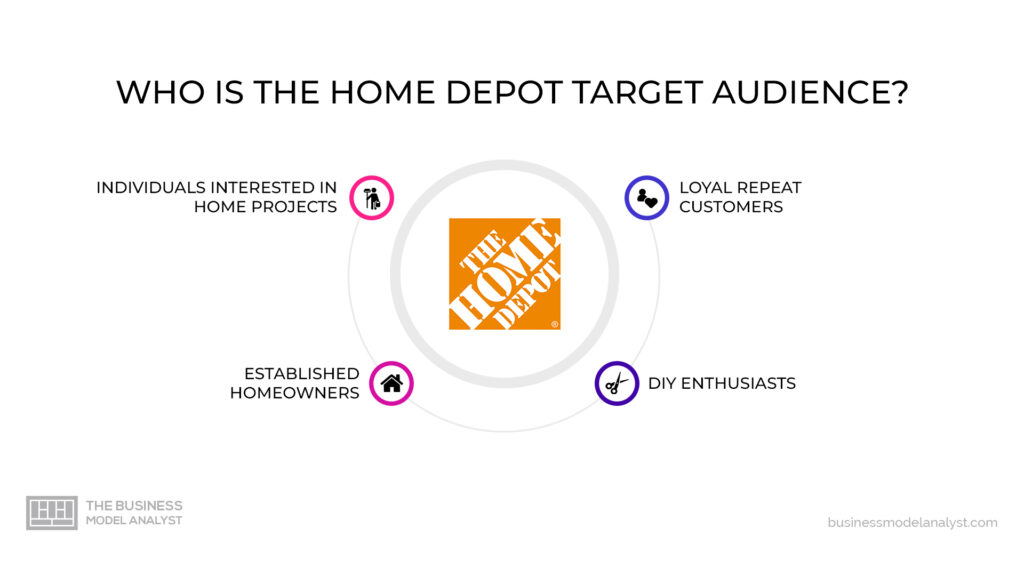
The Home Depot target market primarily includes homeowners, DIY enthusiasts, and professional contractors across North America. These groups are typically between the ages of 30 and 65, with moderate to high income levels, and they prioritize functionality, value, and convenience in their purchasing decisions. Most are middle-class to upper-middle-class individuals who either own property or manage real estate projects.
Among homeowners, Home Depot appeals especially to those who prefer tackling renovation and maintenance tasks themselves. These consumers often have a “do-it-yourself” mindset, enjoy learning new skills, and view home improvement as both a necessity and a personal achievement. Home Depot meets their needs by offering instructional workshops, project guides, and a broad inventory of tools and materials that cater to varying skill levels.
Professional contractors form another key segment. These customers are less price-sensitive but highly focused on durability, efficiency, and availability. Home Depot supports this audience with services like bulk pricing, pro-exclusive products, and early store hours. The Pro Xtra loyalty program also encourages repeat business by offering volume-based rewards and job site delivery options.
Income-wise, the core audience typically earns between $50,000 and $125,000 per year, though it can extend beyond this range depending on region and project type. These customers often value the ability to buy online and pick up in-store, which aligns with their need for speed and reliability.
Culturally, the Home Depot target market values self-reliance, practicality, and quality. The brand appeals to these traits through its marketing tone, which emphasizes empowerment—helping customers feel capable of achieving professional results on their own.
Home Depot Target Market Segmentation and Marketing
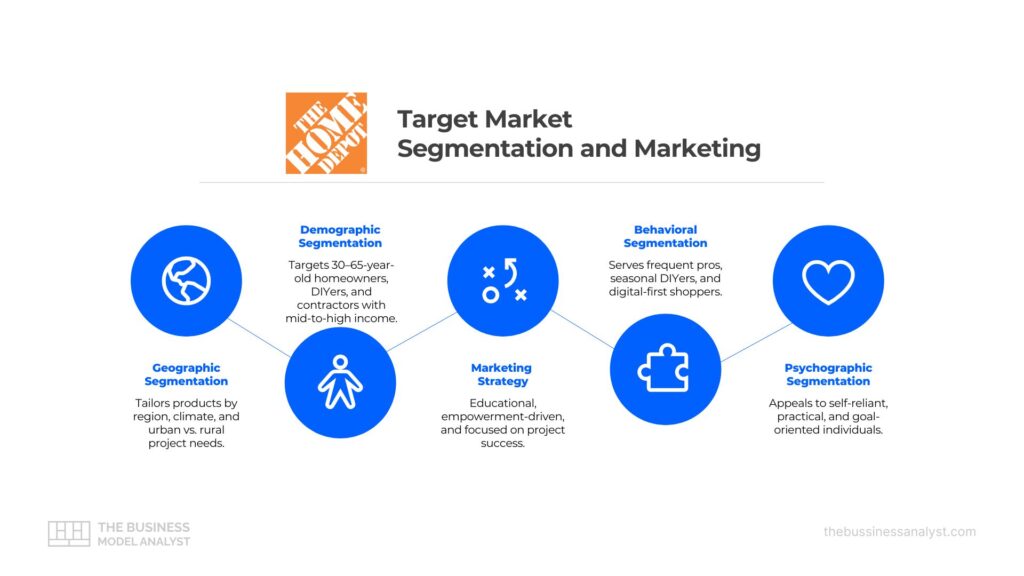
Market segmentation involves dividing a broad audience into smaller groups based on shared characteristics such as demographics, geography, behavior, and psychographics. This allows brands like Home Depot to tailor marketing efforts and product offerings to meet the specific needs of each segment more effectively.
Home Depot uses a multilayered segmentation strategy to reach both individual consumers and professionals. By analyzing data on buying habits, regional preferences, and lifestyle choices, the company creates targeted campaigns that resonate deeply with its diverse customer base. These efforts range from digital ads for suburban DIYers to personalized promotions for urban contractors.
The segmentation allows Home Depot to customize messaging and service models across different customer profiles. For instance, a homeowner might see content promoting seasonal gardening supplies, while a contractor receives bulk pricing offers on power tools. This personalized approach enhances relevance and builds stronger brand loyalty.
In the next sections, we’ll break down the four key segmentation types used by Home Depot:
- Demographic Segmentation
- Geographic Segmentation
- Behavioral Segmentation
- Psychographic Segmentation
Each segmentation approach reveals different insights into how Home Depot identifies and connects with its most valuable customers.
Demographic Segmentation
Demographic segmentation focuses on quantifiable characteristics such as age, gender, income level, education, and occupation. For Home Depot, these factors play a critical role in defining its primary customer groups and shaping its marketing strategies and product lines.
Age is a significant factor. The Home Depot target market primarily includes adults aged 30 to 65—individuals more likely to own homes or manage renovation projects. Within this group, customers in their 30s and 40s are often first-time homeowners taking on essential upgrades, while those in their 50s and 60s may focus on larger renovations, maintenance, or resale improvements.
Gender trends also show a traditional skew toward male customers, particularly among professional contractors and tradespeople. However, in recent years, Home Depot has broadened its appeal by marketing more directly to female DIYers, offering simplified tutorials, design-focused products, and welcoming in-store experiences. The inclusion of home décor and garden products has further increased its reach among women.
Income levels are another key element. Home Depot’s core customers usually earn between $50,000 and $125,000 annually, though its offerings scale up for premium buyers and down for budget-conscious shoppers. This range allows the company to serve both modest DIYers and high-spending contractors without alienating either segment.
In terms of education and occupation, Home Depot frequently attracts those with at least some college education, especially in trades, business, or technical fields. Many professional customers are small business owners or independent contractors who rely on Home Depot for consistent supply and value-driven pricing.
These demographic insights inform everything from store layout to advertising tone. For example, ads targeting homeowners in their 30s highlight ease and affordability, while content for pros emphasizes job site reliability and productivity. The segmentation allows Home Depot to fine-tune offerings and stay relevant across its varied customer base.
Geographic Segmentation
Geographic segmentation involves tailoring products, services, and marketing strategies based on customer location. For a retailer with as broad a footprint as Home Depot, this form of segmentation is especially vital. The company operates over 2,300 stores across the United States, Canada, and Mexico, each with region-specific inventory and service models.
In the United States, Home Depot adjusts offerings to suit climate and seasonal demands. For example, stores in the Southeast stock hurricane prep supplies during storm season, while those in the Midwest carry snow removal tools and winter insulation materials. In Western states prone to drought, Home Depot promotes water-saving irrigation and xeriscaping solutions.
Urban vs. rural location also influences strategy. In urban areas, Home Depot stores are often smaller and focus more on apartment-friendly products, portable tools, and delivery logistics. In contrast, suburban and rural stores have larger footprints, offering lumber yards, garden centers, and expanded tool rentals to support bigger home and land projects.
In Canada and Mexico, Home Depot localizes product selection and marketing to fit regional tastes and building codes. In Mexico, for instance, there’s a stronger emphasis on masonry and concrete-based construction materials, while in Canada, the focus often includes energy-efficient insulation and cold-weather construction tools.
Online, geographic segmentation also plays a role. HomeDepot.com customizes its landing pages based on zip codes, promoting region-specific deals, weather-related alerts, and local store inventory. These adaptations ensure that the Home Depot target market is served appropriately wherever they are located.
Behavioral Segmentation
Behavioral segmentation groups customers based on their interactions with a brand, including purchasing habits, product usage, loyalty, and responsiveness to marketing. Home Depot leverages this approach extensively to deepen engagement and increase customer lifetime value.
One key behavioral trait is purchase frequency. Home Depot serves both occasional DIY shoppers and frequent professional buyers. Occasional customers often make seasonal purchases—such as gardening tools in spring or holiday décor in winter—while professionals may buy supplies weekly or monthly for ongoing projects. Recognizing this, Home Depot offers tailored services like job site delivery and pro-only discounts to encourage repeated purchases.
Purchase habits also vary by project size. Many homeowners buy smaller quantities for single projects, while contractors rely on bulk orders. Home Depot’s Pro Xtra loyalty program caters specifically to this professional segment by offering volume pricing, purchase tracking, and rewards that incentivize continued business.
Another behavioral factor is channel preference. Increasingly, customers use HomeDepot.com to research products, check availability, and order for home delivery or in-store pickup. Home Depot has invested heavily in digital tools, including a mobile app that personalizes recommendations based on past purchases and browsing behavior.
Finally, Home Depot tracks customer responsiveness to promotions and communications. By analyzing which offers drive conversions, the company refines its email marketing and online ads, delivering more relevant messages that resonate with specific segments.
By understanding these behavioral nuances, Home Depot can provide personalized experiences that meet the distinct needs of casual shoppers and professionals alike, reinforcing loyalty and increasing sales.
Psychographic Segmentation
Psychographic segmentation examines the values, lifestyles, personalities, and beliefs that influence customer decisions. For Home Depot, this approach helps connect with the deeper motivations behind home improvement purchases.
Home Depot’s core audience shares a strong value of self-reliance. Many customers see home improvement not just as maintenance but as a way to express creativity, pride, and independence. The brand taps into this by framing its messaging around empowerment, encouraging customers to “do it yourself” with confidence.
Lifestyle is another key psychographic factor. Home Depot appeals to both hands-on DIYers who enjoy projects as a hobby and busy professionals who prioritize convenience and efficiency. For the latter, the company offers services like online ordering with in-store pickup and pro delivery, emphasizing time-saving solutions.
Personality traits also play a role. Home Depot’s marketing resonates with practical, goal-oriented individuals who value quality and durability over fleeting trends. The company avoids overly flashy advertising, instead focusing on trustworthy expertise and reliable products.
Emotional triggers include the desire for home comfort and improvement. Campaigns often highlight how a well-maintained home enhances family life and personal well-being. This appeals to customers who see their home as a sanctuary worth investing in.
By aligning its messaging and product offerings with these psychographic insights, Home Depot creates strong emotional connections that go beyond transactional relationships, building brand loyalty rooted in shared values and lifestyle aspirations.
Home Depot Marketing Strategy
Home Depot’s marketing strategy is built around delivering tailored, relevant messaging to distinct customer segments through a mix of channels. The company uses digital advertising, social media, email marketing, and traditional media like TV and print to reach both homeowners and professionals effectively.
A core focus is on educational content that empowers customers, including how-to videos, workshops, and project guides. This positions Home Depot as a trusted advisor rather than just a retailer. The brand’s tone is practical, helpful, and confidence-building, aligning with its target market’s desire for self-reliance and quality.
Home Depot also invests in partnerships with influencers and trade professionals to amplify its reach, especially within the contractor community. Promotions emphasize convenience, value, and a comprehensive product range, highlighting the company’s ability to meet all home improvement needs in one place.
Additionally, Home Depot leverages data-driven personalization across digital platforms to deliver customized offers and recommendations, enhancing customer engagement and repeat business.
How Home Depot Reaches Its Audience
Home Depot employs a variety of methods to communicate with its diverse audience segments effectively. Each channel and approach is carefully tailored to match the preferences and behaviors of specific customer groups.
Digital Advertising and Social Media
Home Depot uses targeted digital ads on platforms like Facebook, Instagram, and YouTube to engage DIY homeowners. These ads often showcase seasonal projects, new tools, or promotions, and include how-to videos that inspire confidence. Social media also allows the company to interact directly with customers, answering questions and sharing user-generated content.
Email Marketing and Loyalty Programs
For professionals and repeat customers, Home Depot relies heavily on email marketing tied to its Pro Xtra loyalty program. Personalized offers, volume discounts, and exclusive deals help retain contractors and serious DIYers. Email communications often include project ideas and alerts for local events, keeping the brand top-of-mind.
In-Store Experience and Workshops
Home Depot’s physical stores are designed to serve both casual shoppers and professionals. Pro customers benefit from dedicated service desks, early hours, and bulk purchasing options. Additionally, free workshops and DIY clinics provide hands-on learning, encouraging customers to return and try new projects, fostering long-term engagement.
Content Marketing and Educational Resources
The Home Depot website features extensive content, including blogs, project calculators, and detailed product guides. This content appeals especially to homeowners seeking inspiration or technical help. The company’s mobile app integrates these resources with personalized shopping tools, enhancing convenience and supporting informed purchasing decisions.
Through these channels, Home Depot ensures it meets the unique needs of its varied target market segments, combining convenience, education, and personalized service.
Comparison to Competitors’ Target Audience
Understanding how Home Depot’s target audience compares to its competitors sheds light on the company’s positioning and strategic advantages. The two primary rivals in the home improvement retail space are Lowe’s and Menards. Each brand targets overlapping yet distinct customer segments based on factors like demographics, psychographics, and purchasing behaviors.
Home Depot vs Lowe’s Target Audience
Home Depot and Lowe’s both serve homeowners, DIYers, and professional contractors but approach their audiences with slightly different emphases. Home Depot’s core audience tends to skew more toward professional contractors and serious DIY enthusiasts, who value efficiency, a wide product range, and pro-focused services like bulk purchasing and delivery.
In contrast, Lowe’s often targets family-oriented homeowners with a slightly younger demographic focus. Lowe’s marketing highlights ease, home décor, and seasonal trends, appealing more to lifestyle-conscious shoppers who may prioritize aesthetics and convenience. While both brands attract similar income brackets, Lowe’s typically positions itself as a bit more approachable for casual DIYers and first-time homeowners.
Psychographically, Home Depot appeals strongly to customers valuing self-reliance and rugged practicality, while Lowe’s messaging often embraces comfort and design inspiration, reflecting different emotional connections with their audiences.
Home Depot vs Menards Target Audience
Menards, a regional player primarily in the Midwest, targets a value-driven audience often characterized by budget-conscious homeowners and small contractors. Menards focuses on competitive pricing and promotions, attracting customers who prioritize cost savings over extensive brand or service offerings.
Compared to Menards, Home Depot’s target market is broader and includes more professional users seeking reliability and product variety. Menards’ customer base tends to skew toward more price-sensitive shoppers, while Home Depot balances value with quality and expertise.
Similarities in Target Audiences
Across all three brands, there is clear overlap in the middle-income homeowner segment interested in home improvement projects. DIYers, seasonal renovators, and contractors form the backbone of each company’s customer base. Additionally, all emphasize convenience through online ordering, in-store pickup, and loyalty rewards, responding to evolving shopping preferences.
Key Differences in Target Audiences
The main differences lie in brand positioning and emotional appeal. Home Depot prioritizes professionalism, reliability, and empowerment, while Lowe’s leans into family-friendly inspiration and Menards emphasizes affordability. These distinctions influence each brand’s product selection, marketing tone, and customer loyalty programs.
Home Depot Advantages
- Extensive Pro Customer Focus – Home Depot’s strong commitment to professional contractors through programs like Pro Xtra and dedicated services creates a loyal, high-volume customer base that competitors struggle to match.
- Comprehensive Product Range – The company offers a broader inventory, including specialty tools and building materials, enabling it to serve diverse project needs better than many rivals.
- Robust Digital and Educational Resources – Home Depot’s investment in digital tools, tutorials, and workshops fosters customer empowerment, enhancing engagement beyond transactional relationships.
- National and International Reach – With thousands of stores across the U.S., Canada, and Mexico, Home Depot’s scale supports consistent brand presence and localized strategies in multiple markets.
Home Depot Disadvantages
- Perceived Higher Prices – Compared to value-focused competitors like Menards, Home Depot can be seen as more expensive, potentially alienating highly price-sensitive shoppers.
- Complex Store Layouts – Some customers find Home Depot’s large store format overwhelming, which can deter casual or novice DIYers looking for simplicity.
- Less Emphasis on Design and Décor – While strong in tools and building materials, Home Depot sometimes trails Lowe’s in attracting customers focused on interior design and lifestyle enhancements.
- Regional Competitor Loyalty – In areas where regional players dominate, Home Depot faces challenges breaking deep customer loyalty established by local brands.
Conclusion
A clear understanding of the Home Depot target market reveals how the company successfully serves a diverse customer base, from hands-on homeowners to professional contractors. Through detailed demographic, geographic, behavioral, and psychographic segmentation, Home Depot tailors its product offerings, marketing messages, and services to meet specific needs.
Its marketing strategy emphasizes empowerment, convenience, and expertise, delivered via multiple channels including digital platforms, in-store experiences, and loyalty programs. When compared to competitors like Lowe’s and Menards, Home Depot stands out for its pro-focused services, extensive product range, and robust educational resources.
As the home improvement industry evolves with technology and shifting customer expectations, Home Depot may need to continue innovating in digital personalization and expand appeal to younger, design-conscious segments. Overall, its deep understanding of its target market remains a key factor in maintaining its leadership position in a competitive retail landscape.


