
Under Armour Target Market Analysis
Jul
Understanding a company’s target market is essential to crafting effective marketing strategies, refining product offerings, and sustaining growth in a competitive landscape. It reveals who the business serves, how it communicates with customers, and what differentiates it from its rivals. For brands in the athletic apparel industry, knowing the customer is more than just a business advantage—it’s a necessity.
Under Armour, founded in 1996, has carved out a significant place in the global sportswear and performance gear market. Known for its high-tech apparel designed to keep athletes cool, dry, and light, Under Armour has grown from a niche base into a globally recognized brand. Despite competing with giants like Nike and Adidas, Under Armour continues to innovate and push boundaries through athlete partnerships, performance-driven design, and digital fitness platforms.
This article provides a comprehensive look into the Under Armour target market, analyzing who the brand reaches, how it segments audiences, and how it tailors its marketing efforts accordingly. We’ll also compare Under Armour’s target audience to key competitors, examining where it excels and where challenges lie. Whether you’re a marketer, entrepreneur, or industry observer, this breakdown will offer actionable insights into the strategies powering Under Armour’s success.
Contents
Who is Under Armour’s Target Audience?
The Under Armour target market primarily consists of performance-focused individuals who prioritize fitness, training, and personal achievement. The brand resonates strongly with athletes and active consumers, especially those who value innovation, discipline, and a competitive edge. This audience spans a wide age range but is heavily concentrated in the 18–34 demographic.
Under Armour appeals to both men and women, though it historically had a stronger male following. Over the past decade, it has expanded its women’s product line and marketing to better engage female athletes and fitness enthusiasts. The typical Under Armour customer leads an active lifestyle, whether through gym workouts, team sports, running, or fitness challenges.
Income-wise, Under Armour targets middle- to upper-middle-class consumers. Its pricing positions it slightly below luxury brands but above discount options. The audience is willing to pay a premium for technical performance gear that enhances athletic results. These customers often seek value through durability, technology, and comfort.
Lifestyle and values play a crucial role. Under Armour’s brand identity is grounded in grit, discipline, and relentless self-improvement. Campaigns like “I Will What I Want” (featuring Misty Copeland) and “The Only Way Is Through” reflect this ethos. The audience is inspired by stories of perseverance and high performance rather than mainstream trends or fashion-forwardness.
Under Armour customers often follow sports, engage in training programs, and use digital platforms to track progress. Many participate in communities focused on fitness or athletic competition. By aligning with both elite athletes and everyday strivers, the brand stays relevant to those who see fitness not as a hobby but as a core part of their identity.
Under Armour Target Market Segmentation and Marketing
Market segmentation involves dividing a broad consumer or business market into sub-groups based on shared characteristics. This strategy enables companies like Under Armour to tailor their products, messaging, and experiences to the specific needs of each group rather than relying on a one-size-fits-all approach.
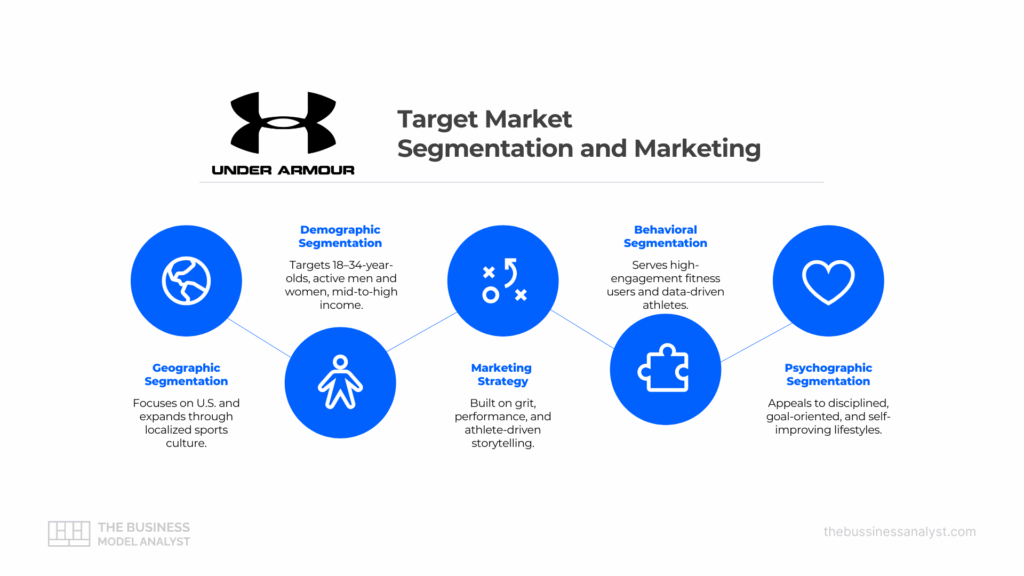
The Under Armour target market is segmented using four main categories: demographic, geographic, behavioral, and psychographic. These segments help Under Armour identify the right audience and craft compelling campaigns that resonate deeply with distinct groups.
By applying segmentation, Under Armour can develop targeted marketing that aligns with the priorities of high school athletes, elite professionals, or fitness-focused moms. It also helps the brand optimize distribution—offering region-specific products or crafting localized campaigns based on environmental or cultural factors. For instance, products suited for cold-weather training are marketed differently in Canada than in Florida.
Next, we’ll explore how Under Armour applies each segmentation type to reach its diverse but focused customer base.
Demographic Segmentation
Demographic segmentation focuses on quantifiable characteristics like age, gender, income, and education. Under Armour uses this data to shape its product design, marketing tone, and channel selection.
The core of the Under Armour target market lies in the 18–34 age group, comprising college students, young professionals, and emerging athletes. This segment is highly active on digital platforms and values performance and personal progress. For example, products like UA RUSH, which claim to enhance blood flow and recovery, are especially appealing to this younger, performance-driven audience.
In terms of gender, Under Armour initially catered more to men, reflected in early product lines and sponsorships. However, a significant shift began in the 2010s with campaigns targeting women—most notably the “I Will What I Want” campaign starring ballerina Misty Copeland. This shift was supported by product expansion into women’s compression wear, leggings, and sports bras, helping the brand grow in a previously underdeveloped segment.
Income-wise, Under Armour targets consumers in the middle to upper-middle income bracket, typically earning $50,000 to $120,000 annually. These individuals are willing to invest in performance apparel if it delivers measurable value, such as moisture-wicking fabrics, compression technology, or data-driven fitness integration through apps like MapMyRun.
Educational background also influences how Under Armour communicates. College-educated consumers—often exposed to wellness trends and sports science—respond to the brand’s technical claims and performance research. Marketing tends to include high-performance language, supported by data, to build credibility with this educated demographic.
Under Armour’s demographic strategy enables it to attract young, active consumers while expanding inclusively across gender and socioeconomic lines. Its message of grit and performance resonates broadly, but is fine-tuned by demographic insights to maximize impact.
Geographic Segmentation
Geographic segmentation divides a market based on location—countries, regions, cities, or even climate zones. Under Armour uses this segmentation to tailor product offerings, adapt marketing campaigns, and align with local athletic preferences and environmental needs.
While headquartered in Baltimore, Maryland, Under Armour has established a global presence, with major markets in North America, Europe, and Asia. Its strongest foothold remains in the U.S., where it competes head-to-head with Nike for market share in performance wear. In the U.S., campaigns often align with American sports culture—football, baseball, and basketball—featuring athletes like Tom Brady and Stephen Curry.
In Canada and Northern Europe, Under Armour adapts its cold-weather gear marketing, emphasizing technologies like ColdGear that keep athletes warm without bulk. In contrast, regions like Florida, Southern California, and parts of Asia focus more on lightweight, breathable fabrics suited for hot climates, such as HeatGear apparel.
Localization also occurs through partnerships. In China, Under Armour has collaborated with local athletes and influencers to build credibility. For instance, the brand signed Chinese basketball player Han Xu to appeal to youth interested in the NBA and global basketball culture. Similarly, in Germany, the brand promotes soccer-focused content to resonate with regional sports interests.
Pricing strategies vary as well. Under Armour uses market-specific pricing to reflect currency, competition, and consumer expectations. For example, premium positioning in emerging markets helps maintain brand prestige, while discounting is more common in North America during seasonal sales.
Behavioral Segmentation
Behavioral segmentation examines how customers interact with a brand—what they buy, how often, and why. Under Armour leverages this approach to tailor experiences around user intent, athletic commitment, and digital engagement.
A key trait of the Under Armour target market is high engagement with fitness and performance. These consumers don’t just wear the gear—they train, track, and often compete. Under Armour taps into this by offering tiered product lines that match different intensity levels. For example, the UA Project Rock collection, designed with Dwayne “The Rock” Johnson, appeals to serious weightlifters and gym-goers who are motivated by discipline and strength.
Frequency of use is another defining behavior. Under Armour serves both casual fitness consumers and elite athletes, but emphasizes high-utility products that can withstand frequent, rigorous activity. Repeat purchases of compression shirts, moisture-wicking tops, or training shoes are common among loyal customers who see the brand as part of their workout routine.
The brand also integrates behavioral data through its digital fitness platforms, such as MapMyRun and MyFitnessPal. These apps allow Under Armour to gather insights into how users train, when they exercise, and what motivates them. This data informs product development and personalized marketing, like sending hydration reminders or promoting gear for weather-specific workouts.
Loyalty-building behaviors are further supported by limited-edition drops, exclusive collaborations, and performance challenges. For instance, Under Armour might release exclusive gear only accessible through app engagement, rewarding brand interaction with tangible perks.
Psychographic Segmentation
Psychographic segmentation explores customers’ personalities, values, attitudes, and lifestyles. It helps Under Armour connect with its audience on an emotional level—focusing not just on what consumers do, but why they do it.
The Under Armour target market is driven by values like self-discipline, ambition, and resilience. These are not casual shoppers—they are individuals who push themselves daily, whether through sports, fitness, or personal development. This audience doesn’t just want clothes that perform—they want a brand that reflects their mindset.
Campaigns like “The Only Way Is Through” embody this ethos, celebrating grit over glamour. The tone is serious, determined, and often motivational, resonating with people who view struggle as part of success. These messages attract a psychographic profile that includes competitive athletes, self-improvers, and those who identify with overcoming obstacles.
Under Armour’s storytelling consistently appeals to identity-based motivation. For instance, its collaboration with Dwayne “The Rock” Johnson connects with fans who admire his relentless work ethic and underdog-to-icon journey. Similarly, the Misty Copeland campaign targeted women who felt underestimated or overlooked—offering empowerment through athletic excellence rather than image.
Lifestyle is another key factor. The brand aligns with those who live active lives beyond just the gym. Weekend warriors, marathon runners, and fitness class regulars all see Under Armour as part of their daily routine. Many value function over fashion, preferring performance features to aesthetic trends.
Under Armour Marketing Strategy
Under Armour’s marketing strategy is grounded in performance, authenticity, and emotional intensity. Rather than focusing on style or trendiness, the brand positions itself as a partner in its customers’ pursuit of excellence. Its core message—centered around themes like grit, discipline, and resilience—consistently appeals to serious athletes and fitness-minded consumers.
The company uses a multi-channel approach to reach its target market. Its marketing mix includes television and digital ads, athlete endorsements, social media campaigns, and app-based engagement through MapMyRun and MyFitnessPal. These channels are chosen strategically to reach users both when they’re training and when they’re consuming motivational content.
Endorsements are a major pillar of Under Armour’s visibility. From NFL quarterback Tom Brady to Olympic swimmer Michael Phelps, the brand partners with top-tier athletes who embody its “no excuses” mentality. These ambassadors lend credibility and reach across various sports and fitness subcultures.
Emotionally, Under Armour leans heavily into narrative-driven advertising. Rather than flashy visuals or humor, the brand tells stories of perseverance and personal growth. This approach strengthens its bond with customers who see training as part of their identity—not just a hobby.
How Under Armour Reaches Its Audience
Under Armour delivers its message through a strategic mix of digital, physical, and community-based channels. The brand engages audiences where they train, compete, and connect—with tailored approaches for each touchpoint.
Athlete Endorsements and Sponsorships
High-profile athletes and teams remain central to Under Armour’s outreach. These partnerships—such as Tom Brady in NFL and Michael Phelps in swimming—serve as proof points of performance. Their training routines and victory moments are featured in ad campaigns, strengthening credibility with fitness-focused consumers.
Digital Platforms and Apps
Under Armour leverages its fitness apps (MapMyRun, MyFitnessPal, and UA Record) to reach users in real time. These platforms offer training guidance, nutrition tracking, and wellness challenges. The data collected enables personalized messaging, such as suggesting weather-appropriate gear or workout-specific apparel to users based on their activity history.
Social Media and Content Marketing
On Instagram, YouTube, TikTok, and Facebook, Under Armour shares motivational videos, workout tutorials, and athlete spotlights. The tone is intense and authentic, often featuring behind-the-scenes training footage or “day in the life” narratives. Campaign hashtags like #RuleYourself amplify user engagement and reinforce belonging to a performance-driven community.
Retail and Experiential Events
Through Under Armour brand houses, factory outlets, and pop-up activations, the brand creates immersive experiences. In-store gyms, test-track zones, and interactive kiosks let customers see, feel, and try products firsthand. Events like fitness boot camps or local 5K runs further embed Under Armour in real-world training communities.
By delivering across these channels—athlete credibility, app integration, social storytelling, and experiential environments—Under Armour ensures its message of discipline and performance is consistently reinforced, building both brand loyalty and cultural relevance.
Comparison to Competitors’ Target Audience
Under Armour vs Nike Target Audience
Nike and Under Armour both cater to performance-focused individuals who value innovation and athletic excellence. However, Under Armour skews younger, with a stronger presence among millennials and Gen Z athletes, particularly ages 18–24. Nike’s demographic extends broadly across ages 15–45, covering more urban and style-conscious consumers across global regions.
Nike appeals to both dedicated athletes and casual wearers, blending sports with fashion and pop culture. Its campaigns—like “Just Do It”—engage emotional themes like self-empowerment and social change. Under Armour, by contrast, emphasizes discipline and grit, with storytelling rooted in intense training and personal perseverance. The difference lies in tone: Nike is broad, inclusive, and stylish; Under Armour is focused, determined, and functional.
Nike also dominates in digital innovation and cultural influence. From fitness tracking with the Nike Training Club app to collaborations with celebrities and designers, Nike reaches beyond the gym. Under Armour is gaining ground through fitness app integrations and tech-forward apparel, but it lacks Nike’s cultural omnipresence.
Under Armour vs Adidas Target Audience
Adidas positions itself between performance and lifestyle. It appeals to youth culture, fashion-forward consumers, and casual athletes. Collaborations with influencers and designers—like Pharrell Williams or Yeezy—have bolstered its image in the athleisure and streetwear spaces.
Under Armour lacks this fashion footprint. Its audience is more rooted in performance training and serious athletic goals. While Adidas markets comfort and style with shoes like Ultraboost, Under Armour promotes gear like HOVR shoes with emphasis on data tracking and performance optimization.
Adidas also benefits from strong global awareness, particularly in Europe. Under Armour, by contrast, continues to build global credibility through localized athlete endorsements and sport-specific marketing but remains most dominant in North America.
Similarities in Target Audiences
All three brands target active, health-conscious consumers who value high-performance gear. They invest in digital tools, social media, and athlete-driven storytelling to engage their audiences. Each brand attracts both men and women and speaks to aspirational values like strength, success, and progress.
Fitness app integrations, sustainability messaging, and customization options are common across all three. These elements cater to younger demographics who expect brands to align with their goals and beliefs.
Key Differences in Target Audiences
Nike reaches the broadest range of consumers—from professional athletes to sneaker enthusiasts and urban fashionistas. Adidas follows closely by merging sport and lifestyle, leaning into style-conscious and youth-driven communities. Under Armour is more narrowly focused on dedicated athletes and gym-goers, with less emphasis on fashion or casual wear.
Nike and Adidas have strong appeal in both elite and lifestyle categories. Under Armour, while evolving, still speaks most effectively to consumers who value performance over aesthetics. This focus helps differentiate it, but also limits its appeal in more style-led or casual segments.
Under Armour Advantages
- Brand Authenticity in Performance
Under Armour’s roots in moisture-wicking gear and partnerships with elite athletes like Steph Curry and Dwayne Johnson reinforce its credibility among serious fitness consumers. Its brand messaging consistently reflects purpose and performance. - Younger, Engaged Base
Under Armour’s strong appeal to Gen Z and younger millennials is supported by app-based engagement and motivational branding. Its digital fitness platforms help maintain high user interaction. - Innovation & Tech Messaging
With product lines like UA RUSH and ColdGear, Under Armour’s commitment to scientifically advanced gear appeals to tech-savvy athletes. This focus attracts customers who want performance benefits backed by data. - Focused Brand Identity
The clarity of Under Armour’s identity—rooted in toughness, training, and perseverance—makes its brand voice more distinct. This resonates powerfully with audiences who see fitness as part of their core values.
Under Armour Disadvantages
- Limited Global Visibility vs Nike
While Nike enjoys near-universal recognition, Under Armour’s presence remains more regional, especially in North America. This restricts its brand exposure and growth in emerging international markets. - Narrower Fashion-Athleisure Footprint
Compared to Nike and Adidas, Under Armour lacks a strong foothold in the lifestyle and fashion segments. This limits its reach among consumers who prioritize style or dual-purpose gear. - Heavier Focus on Training vs Lifestyles
Under Armour’s strong emphasis on high-performance training gear can alienate casual users who seek comfort or everyday wear. Nike and Adidas bridge both worlds more effectively. - Slower Cultural Adoption
Cultural relevance—through music, fashion, or pop culture—is slower to build for Under Armour. Nike and Adidas consistently lead in campaigns that influence not just athletes, but broader communities.


