
Patagonia Target Market Analysis
Aug
In today’s highly competitive retail landscape, brands that truly understand their customers can build deeper connections, cultivate loyalty, and drive sustainable growth. Market insights go beyond surface-level demographics — they shape product development, communication strategy, and even brand ethos. Patagonia, a trailblazer in outdoor apparel, exemplifies this principle by aligning its mission-driven identity with the precise needs and values of its audience.
Founded in 1973, Patagonia has grown from a small climbing gear company into a globally recognized leader in ethical and sustainable outdoor wear. Known for high-quality products and environmental activism, Patagonia has built a reputation that transcends fashion. Its consumer base doesn’t just buy clothes — they buy into a cause. The Patagonia target market reflects this, encompassing not only outdoor enthusiasts but also socially conscious consumers who prioritize sustainability, ethical labor, and corporate transparency.
This article offers an in-depth look at the Patagonia target market. We’ll explore who they are demographically, where they live, how they behave, and what values drive them. We’ll also break down Patagonia’s segmentation strategies, compare its audience to that of key competitors, and examine the strengths and weaknesses in its marketing approach. Whether you’re a marketing professional, entrepreneur, or outdoor gear enthusiast, this analysis will offer valuable insights into how Patagonia connects meaningfully with its customers.
Contents
Who is Patagonia’s Target Audience?
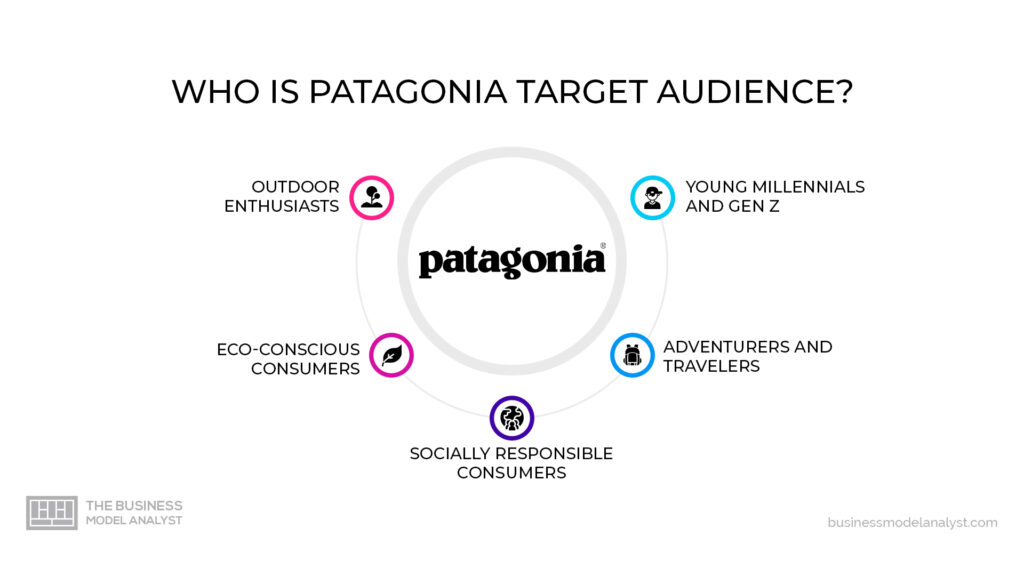
Patagonia’s core audience is a unique blend of environmentally conscious consumers and outdoor adventurers. These individuals often fall within the age range of 25 to 45, though the brand resonates with both younger Gen Z and older Gen X demographics. The typical Patagonia customer is educated, with a college degree or higher, and falls into the middle to upper-middle income bracket, allowing them to invest in higher-priced, durable gear that aligns with their values.
While Patagonia appeals to both genders, it sees strong loyalty among millennial and Gen Z women, particularly those interested in sustainable fashion and ethical consumption. These consumers care about where and how products are made, and they expect transparency from the brands they support. Patagonia’s emphasis on fair labor practices, recycled materials, and environmental activism speaks directly to these expectations.
Many in the Patagonia target market live active, outdoor-oriented lifestyles. Whether it’s hiking, rock climbing, skiing, or simply spending time in nature, these individuals prioritize gear that performs well and minimizes ecological impact. A case in point: Patagonia’s Worn Wear program, which encourages customers to repair rather than replace gear, appeals directly to these values of sustainability and minimalism.
Additionally, Patagonia draws in professionals and urban dwellers who may not spend every weekend in the wilderness but want to signal their environmental values through what they wear. For example, a San Francisco tech worker might wear a Patagonia fleece to the office not just for function, but as a symbol of eco-conscious living and ethical consumerism.
Patagonia Target Market Segmentation and Marketing
Market segmentation is the practice of dividing a broad audience into smaller, more specific groups based on shared characteristics. This allows companies to tailor products, messaging, and marketing strategies to resonate more deeply with each group. Patagonia applies segmentation with precision, aligning its offerings with both practical and ethical concerns that drive customer behavior.
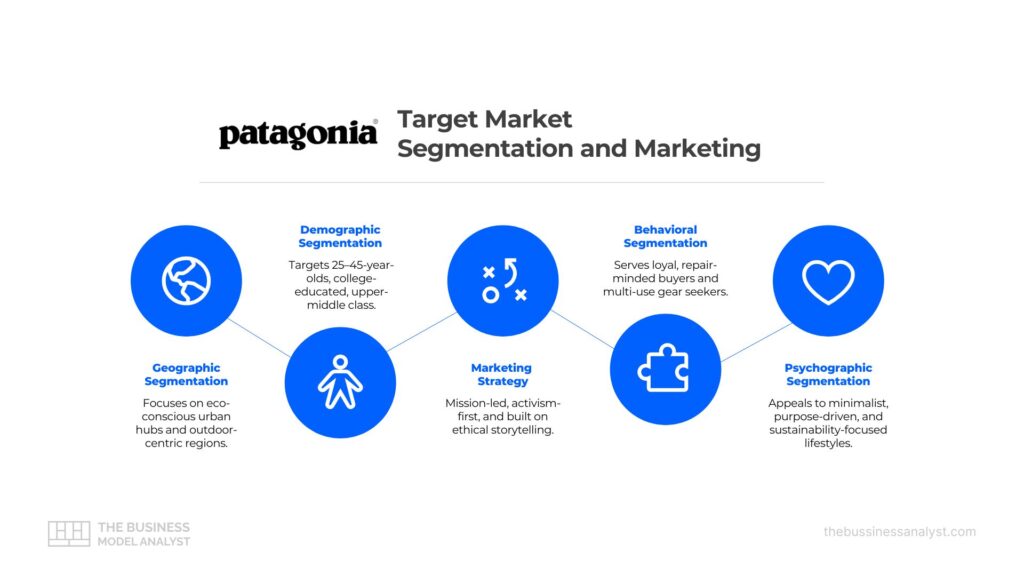
The Patagonia target market is shaped through four primary segmentation types: demographic, geographic, behavioral, and psychographic. These categories help the company understand not just who its customers are, but why they make purchasing decisions and how they want to interact with the brand.
Demographically, Patagonia focuses on younger, educated, higher-income individuals who have a passion for the outdoors. Geographically, the brand prioritizes eco-conscious markets, especially in North America and parts of Europe. Behaviorally, Patagonia appeals to users who value durability, product transparency, and sustainable practices. Psychographically, it resonates with consumers whose lifestyles are deeply aligned with nature, activism, and minimalism.
Each of these segmentation strategies enables Patagonia to speak directly to the values and priorities of its audience. From sustainability-driven campaigns to localized product lines and loyalty programs, Patagonia tailors its outreach in a way that reinforces its brand ethos while meeting the specific needs of each segment.
Demographic Segmentation
Demographic segmentation breaks down an audience by quantifiable factors such as age, gender, income, and education. For Patagonia, this type of segmentation is foundational, allowing the brand to target individuals who not only appreciate outdoor gear but are willing to invest in sustainability and ethical manufacturing.
Patagonia’s core demographic includes individuals aged 25 to 45, a group that combines millennials and younger Gen Xers. These are working professionals, outdoor enthusiasts, and socially aware consumers who actively seek out brands that reflect their values. While the brand does cater to both men and women, it has seen notable success among millennial women, especially those in urban areas who value both style and sustainability.
Income is a critical factor in Patagonia’s demographic strategy. Most customers fall into the upper-middle-class bracket, with household incomes typically above $75,000 per year. This group is more likely to pay premium prices for items that promise long-term durability, ethical sourcing, and environmental benefits. Patagonia’s higher price points are justified by their product lifespan and social value, which appeals to consumers who see shopping as a form of activism.
Education also plays a key role. Patagonia’s customers are generally well-educated, with many holding college or advanced degrees. This demographic is more likely to research brands, understand supply chain ethics, and engage in environmental discourse. Patagonia tailors its messaging to reflect this intellectual curiosity, using transparent language about materials, labor, and impact.
For example, Patagonia’s “Don’t Buy This Jacket” campaign — which encouraged thoughtful consumption — resonated particularly well with educated consumers. The campaign wasn’t about selling more, but about selling smarter, aligning perfectly with a demographic that values long-term thinking and responsibility.
Geographic Segmentation
Geographic segmentation categorizes customers based on their location, allowing brands to tailor products, messaging, and services to fit regional needs. For Patagonia, geography is more than just logistics — it’s a reflection of lifestyle, climate, and cultural values tied to environmental responsibility.
Patagonia operates globally, but its primary markets are concentrated in North America, Western Europe, and parts of Asia-Pacific. Within the U.S., it has a strong presence in environmentally progressive states such as California, Colorado, Oregon, and Washington — areas known for active lifestyles and a strong sustainability ethos. These regions align perfectly with Patagonia’s mission, offering fertile ground for loyalty and brand advocacy.
Urban markets also play a significant role. While many assume Patagonia only serves rugged outdoor adventurers, it also appeals to urban professionals who use the brand to signal ethical consumption. For instance, in cities like San Francisco, Seattle, and New York, Patagonia jackets are as common in office spaces and cafes as they are on trails. The brand’s geographic strategy smartly balances both outdoor necessity and urban identity.
Outside the U.S., Patagonia targets countries with strong environmental movements and high disposable incomes. In Germany, for example, its marketing emphasizes energy efficiency and sustainable living. In Japan, Patagonia has adapted its product designs slightly to cater to aesthetic and functional preferences specific to the market, while maintaining its environmental core.
By recognizing that geographic context shapes not only climate but also values and consumption patterns, Patagonia ensures its global message stays consistent — yet locally relevant.
Behavioral Segmentation
Behavioral segmentation focuses on customer actions — how, when, and why they engage with a brand. For Patagonia, this means identifying not just purchase habits, but motivations tied to ethics, longevity, and lifestyle alignment. This insight is pivotal to how Patagonia builds loyalty and encourages repeat engagement.
Patagonia’s customers tend to be value-driven buyers. They aren’t just looking for outerwear; they’re looking for meaning. Buying a jacket becomes a statement about supporting environmental conservation or reducing consumer waste. The brand’s Worn Wear program, which encourages product repair and reuse, is a direct response to this behavior. It taps into consumers’ desire to reduce their footprint, and it transforms Patagonia into more than a retailer — it becomes a partner in sustainable living.
Usage patterns also define the Patagonia target market. Many customers use products across multiple contexts: hiking, skiing, commuting, or traveling. This versatility is reflected in Patagonia’s product design and marketing, which emphasizes durability and function across settings. For example, the popular Nano Puff jacket is marketed for its ability to perform on a mountain yet remain compact and stylish enough for city use.
Patagonia also segments based on brand loyalty and advocacy. It engages deeply with returning customers through email campaigns, environmental petitions, and exclusive events. Those who purchase regularly are not just treated as shoppers — they are treated as community members. Loyalty is less about discounts and more about shared mission, which strengthens Patagonia’s brand tribe.
Even Patagonia’s approach to holiday sales reflects behavioral insight. Rather than following traditional retail trends, it often limits promotions to discourage overconsumption. In doing so, it attracts a behaviorally distinct audience that values restraint over impulse buying — a rare stance in the consumer apparel world.
Psychographic Segmentation
Psychographic segmentation explores consumers’ lifestyles, values, personality traits, and emotional motivations. For Patagonia, this is perhaps the most defining aspect of its target market. The brand doesn’t just cater to a lifestyle — it helps shape one rooted in environmental activism, authenticity, and responsible living.
At the core of the Patagonia target market is a consumer who believes that products should reflect their values. These individuals care deeply about sustainability, climate action, and ethical labor practices. They are more likely to support brands that take political or environmental stances, even if those views are polarizing. Patagonia has earned trust through bold actions — like suing the Trump administration over public land protection or donating Black Friday profits to environmental causes.
The brand appeals to people who see themselves as agents of change. Whether they’re full-time conservationists, weekend climbers, or urban professionals who volunteer locally, Patagonia customers want their purchases to align with their belief systems. Emotional connection is forged not through flashy ads but through stories of activism, responsibility, and resilience. The 2018 short film Blue Heart, which protested dam construction in the Balkans, is one example of content that resonates with Patagonia’s psychographic audience.
Personality traits among Patagonia’s audience often include minimalism, independence, and a preference for function over fashion. These customers reject fast fashion in favor of durability and ethical integrity. Patagonia doesn’t glamorize excess — instead, it normalizes restraint. Its aesthetic and messaging are understated but powerful, mirroring the quiet confidence of its audience.
This segment also values education and awareness. Patagonia’s blog, “The Cleanest Line,” is less about products and more about environmental thought leadership. It keeps the audience informed, inspired, and engaged — encouraging not just consumption, but activism.
In short, Patagonia’s psychographic segmentation reveals a community not just of buyers, but of believers.
Patagonia Marketing Strategy
Patagonia’s marketing strategy is rooted in authenticity and purpose. Rather than relying on traditional advertising tactics, the brand emphasizes storytelling, environmental education, and activism. Its approach centers on building community rather than driving short-term sales — a method that not only retains customers but turns them into loyal advocates.
The company leverages a mix of channels, including social media, documentaries, email newsletters, grassroots campaigns, and a highly informative website. Its messaging style is direct, transparent, and mission-driven, often highlighting environmental issues more than product features. For example, Patagonia’s social posts frequently spotlight climate action, conservation projects, or calls to sign environmental petitions — positioning the brand as a platform for change rather than just a clothing retailer.
Influencer marketing also plays a role, but with a twist: Patagonia collaborates with scientists, athletes, and activists whose work aligns with its mission, rather than traditional social media influencers. This approach reinforces the brand’s credibility and keeps it aligned with the values of its audience.
Emotionally, Patagonia’s marketing appeals to a desire for purposeful living. Its tone is sincere, educational, and often urgent — reflecting both the brand’s identity and the expectations of its ethically minded customers.
How Patagonia Reaches Its Audience
Below are four key ways Patagonia connects with its audience through tailored channels and formats:
Direct Storytelling & Content Platforms
Patagonia’s website and blog, The Cleanest Line, feature impactful stories about environmental issues, product innovations, and community initiatives. This approach engages its audience’s intellectual curiosity and aligns with their values, fostering trust and reinforcing brand loyalty through authentic dialogue.
Experiential Events & Community Engagement
Through events like environmental cleanups, film screenings, and repair workshops (via its Worn Wear program), Patagonia creates face‑to‑face moments that deepen emotional bonds. These events resonate with its psychographic segment—people who value activism and sustainable practices—transforming customers into brand ambassadors.
Mission‑Driven Campaigns & Media
Rather than push traditional sales, Patagonia often launches campaigns tied to causes. For instance, the “Don’t Buy This Jacket” ad and Black Friday activism efforts spotlight anti‑consumerism and environmental stewardship. These bold campaigns resonate strongly with its target audience’s ethical priorities.
Partnerships with Value-Aligned Figures
Patagonia partners not with typical celebrities, but with environmental scientists, activists, and adventure athletes. These collaborations lend credibility and authenticity, reinforcing messaging that prioritizes content and values over high-gloss promotion.
Through these outreach methods, Patagonia divides its audience into segments—such as sustainability advocates, active outdoor users, and ethical urban consumers—and tailors each touchpoint to speak directly to their primary motivations and lifestyle choices.
Comparison to Competitors’ Target Audience
Patagonia vs The North Face Target Audience
Both brands attract outdoor enthusiasts, but their positioning differs sharply. North Face skews slightly younger and broader—focusing on adventurous millennials seeking trendy, high-performance gear. Its marketing leans into extreme sports and urban styles. Patagonia, by contrast, emphasizes sustainability and activism. While both appeal to premium buyers, Patagonia’s customers are often more purpose-driven, choosing Patagonia even when North Face products might be more technically advanced or mainstream fashionable.
Patagonia vs Arc’teryx Target Audience (optional)
Arc’teryx targets elite outdoor users—mountaineers, climbers, and professional athletes—who prioritize technical gear at premium price points. Patagonia’s audience is broader: while including serious adventurers, it equally appeals to ethical consumers and urban professionals. Arc’teryx customers are driven by performance; Patagonia customers are motivated by a combination of environmental values and functionality.
Similarities in Target Audiences
Across these brands, customers share a love for nature, high-quality gear, and durability. Many are aged 25–45, mobile, educated, and affluent. They value craftsmanship and product longevity. Consumers often overlap in lifestyle indicators such as frequent travel, hiking, or fitness routines. In all cases, brand trust is earned through consistent quality and positioning that reflects active, purposeful living.
Key Differences in Target Audiences
Patagonia’s audience stands out in its higher commitment to sustainability and activism. Competitors may highlight technical excellence and adventure credibility, but Patagonia builds emotional loyalty through corporate ethics and environmental messaging. Its customers expect transparency, environmental leadership, and campaigns aligned with activism—even when those decisions limit sales opportunities. This sharper moral messaging sets Patagonia’s audience apart.
Patagonia Advantages
- Brand Mission Integrity
Patagonia’s consistent commitment to environmental causes—like suing government bodies or donating profits—strengthens its trust with consumers who make purchasing decisions based on ethics. This depth of purpose gives the brand credibility beyond apparel. - Sustainable Innovation
Patagonia’s investment in durable, repairable gear and circular initiatives like Worn Wear appeals to sustainability-focused buyers who value long-term utility over short-term trends. - Community-Centered Engagement
Through events, storytelling, and customer-led activism, Patagonia builds a passionate community. This fosters loyalty among customers who see themselves as part of a collective—rather than a transactional audience. - Educational Content & Thought Leadership
Platforms such as The Cleanest Line position Patagonia as not just a retailer but a voice in environmental discourse. This content-rich strategy deepens emotional connection and attracts consumers who want information, not just gear.
Patagonia Disadvantages
- Premium Price Barrier
Patagonia’s high pricing can deter younger or price-sensitive buyers. Competitors with lower-cost alternatives may capture budget-conscious segments more effectively. - Narrower Audience Appeal
With an intense focus on sustainability activism, Patagonia may alienate consumers who prioritize technical performance or fashion trends over corporate ethics. - Limited Promotional Flexibility
Patagonia’s resistance to frequent sales or promotions reduces perceived affordability compared to brands that engage in regular discounting, potentially hindering impulse purchases. - Perception of Elitism
The brand’s premium positioning and activist tone sometimes reinforce a perception of exclusivity, which can alienate more casual consumers or those unfamiliar with outdoor culture.
Conclusion
Patagonia’s success lies not just in the quality of its products, but in its deep, strategic understanding of its audience. By focusing on clear market segmentation—demographic, geographic, behavioral, and psychographic—the company has built a powerful brand aligned with the values of sustainability, responsibility, and community. Its storytelling, mission-driven campaigns, and educational initiatives have transformed casual buyers into loyal advocates.
The Patagonia target market is more than a group of outdoor enthusiasts. It is a community of conscious consumers who seek both performance and purpose in the brands they support. As Patagonia continues to lead with ethics and innovation, its ability to evolve with shifting consumer expectations will be key to maintaining its influence in the outdoor apparel industry.
Understanding your audience with this level of depth—through segmentation, emotional alignment, and clear communication—is essential for any brand aiming to build lasting relevance in today’s values-driven marketplace.


