
Dunkin’ Donuts Target Market Analysis
Aug
Understanding a company’s target market is essential for building effective marketing strategies, shaping product offerings, and sustaining brand relevance in a competitive landscape. In today’s saturated food and beverage industry, companies that can clearly define and reach their core audience are the ones that thrive. One such example is Dunkin’ Donuts, a longstanding player in the global quick-service restaurant space, particularly known for its coffee, donuts, and breakfast items.
Founded in 1950 in Quincy, Massachusetts, Dunkin’ Donuts—now branded simply as Dunkin’—has grown into one of the world’s largest coffee and baked goods chains, with thousands of locations across the United States and abroad. The brand has cultivated a loyal customer base by focusing on convenience, affordability, and familiarity, positioning itself as an everyday essential rather than an occasional indulgence. With a focus on speed and efficiency, Dunkin’ appeals to busy commuters, working professionals, and routine-driven consumers who rely on consistent service and accessible pricing.
This article will explore the Dunkin’ Donuts target market in depth, analyzing who the brand serves and how it connects with its customers. We’ll break down its segmentation strategy—demographic, geographic, behavioral, and psychographic—and compare it with competitors like Starbucks. By the end, you’ll understand how Dunkin’ uses market insights to maintain its foothold in a crowded industry.
Contents
Who is Dunkin’ Donuts’ Target Audience?
The Dunkin’ Donuts target market centers on consumers seeking quick, affordable, and satisfying food and beverages—particularly coffee and breakfast. Its core audience consists of working adults aged 25 to 54, skewing slightly toward blue-collar and middle-class demographics. This group values routine, convenience, and cost-efficiency, especially during morning hours before work or school.
While Dunkin’ attracts both men and women, its marketing often emphasizes broad, inclusive appeal rather than targeting a specific gender. A typical Dunkin’ customer might be a commuter grabbing a medium coffee and a breakfast sandwich before heading to work or a busy parent picking up a dozen donuts for the family. This reflects the brand’s utilitarian image: fast, reliable, and affordable rather than luxurious or artisanal.
Income-wise, Dunkin’ appeals to individuals and families earning $35,000 to $75,000 annually. This segment often chooses brands that offer value without sacrificing quality. Unlike Starbucks, which leans premium, Dunkin’ succeeds by positioning itself as the everyday choice for regular folks. The company also benefits from strong regional loyalty, especially in the Northeast U.S., where it has a deep cultural connection.
Lifestyle and values play a big role in audience behavior. Dunkin’ customers are typically pragmatic, loyal, and responsive to routine. Promotions like “$2 medium iced coffee” or “free donut Fridays” work well with this crowd, emphasizing deals and rewards. Their loyalty program, Dunkin’ Rewards, is tailored to repeat customers who visit multiple times a week.
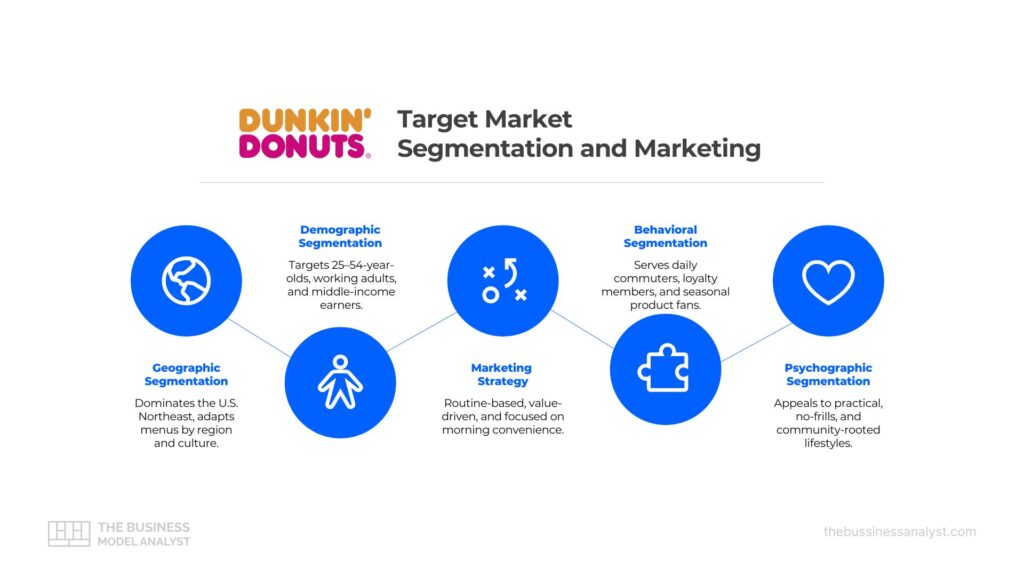
Dunkin’ Donuts Target Market Segmentation and Marketing
Market segmentation is the process of dividing a broad consumer market into smaller, more defined categories. This helps companies tailor their messaging, product offerings, and services to better align with the preferences of specific groups. Dunkin’ Donuts excels at this, using data-driven insights to connect with the right customers at the right time.
The Dunkin’ Donuts target market is shaped through four main types of segmentation: demographic, geographic, behavioral, and psychographic. Each plays a crucial role in how Dunkin’ tailors its menu, pricing, advertising, and loyalty programs.
For instance, Dunkin’ adjusts its product selection depending on regional food preferences and urban density. At the same time, it leans heavily into behavioral data—like morning visits or weekday traffic patterns—to plan promotions and design store layouts.
In the following sections, we’ll take a deeper look at how Dunkin’ Donuts applies each segmentation method to build its audience connection and sustain market relevance.
Demographic Segmentation
Demographic segmentation involves dividing the market based on measurable statistics such as age, gender, income, and education. For Dunkin’ Donuts, this segmentation is key to understanding and attracting its high-frequency, value-conscious consumer base.
Dunkin’s primary audience falls between the ages of 25 and 54, encompassing both Millennials and Gen Xers. These consumers are often mid-career professionals or working-class individuals with packed schedules and limited time for breakfast or coffee breaks. Dunkin’ caters to this need for speed and reliability by streamlining ordering, offering mobile pickup, and maintaining consistent menu items.
Income also plays a defining role. Most of Dunkin’s customers earn between $35,000 and $75,000 annually, placing them squarely in the lower-middle to middle-income brackets. This demographic is particularly price-sensitive, so Dunkin’ emphasizes affordability. Promotions such as combo deals or loyalty rewards specifically target this group’s desire for savings and consistent value.
Education levels among Dunkin’ patrons vary, but many have high school diplomas or some college education. The brand’s tone—friendly, straightforward, and practical—resonates with this audience. It avoids the intellectual or lifestyle elitism often associated with upscale coffee brands like Starbucks.
Real-world customer personas include a 32-year-old single parent who grabs a large coffee on the way to work or a 47-year-old contractor picking up a breakfast wrap between job sites. These examples underscore how demographics influence Dunkin’s product mix, marketing style, and even store locations, which often favor suburban and commuter-friendly environments.
Geographic Segmentation
Geographic segmentation refers to the practice of tailoring marketing and services based on a customer’s physical location. For Dunkin’ Donuts, geography has always played a critical role in shaping its brand identity and market strategy.
Dunkin’s dominance is especially strong in the Northeastern United States, where it enjoys a nearly cult-like following. In states like Massachusetts, Rhode Island, and Connecticut, it’s common to find multiple Dunkin’ locations within a few blocks. This saturation supports the brand’s image as an integral part of daily life. Regional loyalty is so high that Dunkin’ became part of the local culture, often featured in jokes, memes, and even state campaigns.
Outside the Northeast, Dunkin’ has expanded across the Midwest, Southeast, and Southwest. In these areas, the company has adapted to local tastes and preferences, adding items such as sweet tea, bacon-topped donuts, and sausage kolaches in certain markets. Internationally, Dunkin’ has a presence in countries like India, South Korea, and Saudi Arabia, where menus are tailored to reflect cultural norms and dietary restrictions—for instance, offering vegetarian options or altering sugar content.
Urban vs. rural dynamics also influence strategy. Urban locations typically focus on grab-and-go formats and mobile ordering, while suburban shops may include drive-thrus and seating areas. In all regions, Dunkin’ ensures that pricing, promotions, and even store decor feel familiar and relevant to the local community.
Behavioral Segmentation
Behavioral segmentation focuses on how consumers interact with a brand—examining habits such as purchase frequency, product usage, and loyalty patterns. Dunkin’ Donuts excels in this area by analyzing customer behavior to fine-tune offerings and enhance brand loyalty.
One of Dunkin’s core behavioral insights is that most customers visit in the morning, typically between 6:00 a.m. and 10:00 a.m. The brand has optimized its operations around this habit by emphasizing breakfast items, fast service, and mobile pre-ordering. Many patrons stop by Dunkin’ as part of their daily routine, making coffee and a breakfast sandwich part of their morning commute.
Dunkin’s loyalty program, Dunkin’ Rewards, plays a central role in tracking and responding to customer behavior. The system offers points per purchase, redeemable for free drinks and food. Members receive personalized offers based on their visit patterns and preferences—like discounts on frequently ordered items or bonus points for trying new products. These behavioral nudges boost repeat visits and deepen customer commitment.
Seasonal promotions also reflect behavioral patterns. For example, fall sees the return of pumpkin-flavored items, while summer brings cold brew and iced coffee deals. These campaigns are timed to align with consumer cravings and purchase timing, drawing on years of sales data.
Additionally, Dunkin’ recognizes different customer tiers. Some visit daily for the same order, while others pop in weekly or only during special promotions. Each group receives tailored marketing—from push notifications to email offers—designed to match their engagement level and increase retention.
Psychographic Segmentation
Psychographic segmentation explores the deeper motivations behind consumer behavior—such as values, lifestyle, attitudes, and personality traits. For Dunkin’ Donuts, understanding what customers believe and how they live is essential for fostering emotional connections and brand loyalty.
Dunkin’ appeals to pragmatic, no-nonsense individuals who prioritize efficiency and consistency over luxury or experimentation. These customers value routine, familiarity, and affordability, and they often see Dunkin’ as a reliable part of their daily lives. Instead of artisanal ambiance, they seek a quick and predictable experience—one that helps them get through a busy day.
The brand’s tone is casual, friendly, and unpretentious. This aligns with the lifestyle of its core customers: working professionals, blue-collar workers, students, and busy parents. Many are task-focused and time-sensitive, using Dunkin’ as a tool to stay fueled rather than a place to linger. The brand’s campaigns often reflect this ethos—like the famous “America Runs on Dunkin’” slogan, which positions the brand as essential fuel for hard-working people.
Dunkin’ also taps into emotional triggers such as identity and community. In the Northeast, it’s not just a coffee shop; it’s part of local culture. This regional attachment is reinforced by messaging that emphasizes hometown pride and everyday heroes.
Psychographically, Dunkin’ customers are often value-driven and brand loyal. They appreciate rewards for their purchases, look for dependable quality, and often avoid brands that feel overly commercial or pretentious. Dunkin’s minimalist approach to branding and pricing supports this alignment perfectly.
Dunkin’ Donuts Marketing Strategy
Dunkin’ Donuts markets itself through a straightforward, approachable, and routine-driven strategy. Rather than promoting exclusivity or high-end experiences, the brand highlights convenience, affordability, and everyday reliability—values that resonate deeply with its core audience.
The company uses a multi-channel marketing approach, including TV, radio, social media, digital ads, and out-of-home placements. Dunkin’ is especially active on platforms like Instagram, Facebook, and TikTok, where it showcases seasonal flavors, promotions, and user-generated content with a tone that’s humorous, relatable, and unfiltered.
Influencer partnerships and regional campaigns add another layer. For instance, collaborations with celebrities like Ben Affleck—who represents Dunkin’s blue-collar roots and Boston heritage—help reinforce authenticity and local pride.
Dunkin’ emphasizes emotional connection by presenting itself as a daily essential, not a treat. The core message is that it fits seamlessly into your lifestyle—whether you’re commuting, working long hours, or managing a busy family schedule. Campaigns like “Keep On Running” and “Do Your Thing” speak directly to this mindset, offering Dunkin’ as a loyal companion rather than a destination.
How Dunkin’ Donuts Reaches Its Audience
Dunkin’ employs a multi-faceted approach to deliver its messaging and connect with different audience segments. The brand combines traditional media, digital channels, loyalty-driven communications, and on-site experiences to engage customers across their journey.
Traditional Media & Mass Reach
Dunkin’ leverages television, radio, and outdoor advertising to reach commuters and working adults. These campaigns often emphasize morning routines—showcasing people on their way to work with Dunkin’ coffee in hand. This aligns perfectly with the time-sensitive, routine-driven habits of core customers and reinforces brand familiarity through repeated exposure.
Digital & Social Media Marketing
On Instagram, TikTok, and Facebook, Dunkin’ promotes limited-time menu items, behind‑the‑scenes content, and user-generated posts. The tone is fun and relatable—often humorously highlighting customers’ morning struggles or seasonal coffee cravings. This digital presence helps the brand remain relevant, especially among younger Millennials and Gen Z who expect entertaining content and social engagement.
Influencer Collaborations & Regional Campaigns
Dunkin’ collaborates with influencers who embody regional identity and working-class authenticity. For example, in Boston, partnerships with local personalities and imagery tied to the Northeast heartland support community resonance. In some markets, the brand embraces local sports teams or events to foster local pride and shared identity.
Mobile App & Email Loyalty Communications
Dunkin’ makes robust use of its loyalty program—Dunkin’ Rewards—to drive repeat visits. Push notifications and email campaigns send personalized offers based on past purchases or frequent visit times. The messaging emphasizes value (e.g., “Buy 5 coffees, get one free”) and new seasonal items, nudging both habitual and occasional customers to return.
In‑Store Experience & Promotions
At dine-in or drive-thru locations, Dunkin’ uses visible signage and menu boards to highlight combo deals and limited-time offerings. Seasonal launches—like frozen coffees in summer or pumpkin spice treats in fall—come with in-store promotions that reinforce urgency and relevance. The seamless ordering experience, whether at the counter or drive-thru, supports the practical, no-frills delivery its audience expects.
Comparison to Competitors’ Target Audience
To fully understand the Dunkin’ Donuts target market, it’s important to compare it to that of its closest competitors—particularly Starbucks and, to a lesser extent, McDonald’s. These brands also dominate the coffee and breakfast space but appeal to different demographics, psychographics, and lifestyle segments.
Dunkin’ Donuts vs Starbucks Target Audience
Dunkin’ and Starbucks serve the same basic need—coffee and quick meals—but they target fundamentally different customers. Dunkin’ attracts a more blue-collar, budget-conscious audience, typically aged 25–54, who value convenience and affordability. These customers are less interested in brand prestige and more focused on routine and practicality.
Starbucks, on the other hand, targets a more urban, white-collar, and brand-sensitive audience. Its core demographic includes professionals aged 25–45 with higher disposable income. Starbucks customers tend to be lifestyle-oriented, willing to pay a premium for customized drinks, specialty ingredients, and a café environment conducive to working or socializing.
Where Dunkin’ focuses on fast service and standard offerings, Starbucks emphasizes premium experience, customization, and ethical sourcing. Starbucks locations often serve as “third places”—comfortable spots between home and work—while Dunkin’ is typically a grab-and-go pit stop.
Dunkin’ Donuts vs McDonald’s Target Audience
McDonald’s competes more directly with Dunkin’ in terms of value and convenience. Both brands cater to the working-class and family-oriented segments, but McDonald’s skews more toward families with children and younger demographics. It has a broader menu that appeals to kids and late-night diners, whereas Dunkin’ is more morning-centric and focuses heavily on beverages.
Dunkin’s audience is more loyal in terms of daily routines, particularly around coffee consumption. McDonald’s customers may be more sporadic, visiting for breakfast deals or lunch rather than for daily coffee. McDonald’s also has a more globalized identity, whereas Dunkin’s brand is deeply rooted in regional U.S. culture, especially in the Northeast.
Similarities in Target Audiences
Despite their differences, Dunkin’, Starbucks, and McDonald’s share several overlapping audience traits. All attract time-sensitive consumers looking for quick meals or beverages. Each brand also appeals to people who value loyalty rewards and mobile ordering. Millennials and Gen Z are key targets across all three brands, especially in how digital engagement and app-based promotions are delivered.
There’s also a shared emphasis on seasonal flavors and limited-time offerings. Pumpkin spice, peppermint mocha, and cold brews are popular across the board—signaling a common interest in trend-driven, Instagram-worthy items, even among different income groups.
Key Differences in Target Audiences
Where the brands diverge most sharply is in emotional connection and perceived lifestyle alignment. Starbucks markets itself as a symbol of aspiration and mindfulness. McDonald’s leans into family-friendliness and nostalgia. Dunkin’ is all about everyday grit and simplicity, appealing to those who take pride in hard work and practicality.
Brand loyalty is also shaped by these distinctions. Dunkin’ customers often see the brand as part of their daily identity, especially in the Northeast. Starbucks builds loyalty through brand experience and personalization, while McDonald’s uses price and ubiquity to attract mass-market appeal.
Dunkin’ Donuts Advantages
- Regional Loyalty in the Northeast
Dunkin’s identity is deeply entrenched in the Northeastern U.S., especially in Massachusetts and surrounding states. This connection isn’t just geographic—it’s cultural. The brand is seen as a hometown staple, reinforcing daily habits and emotional familiarity that competitors can’t easily replicate. - Speed and Efficiency
Dunkin’s grab-and-go model supports customers who prioritize speed. With optimized store layouts, mobile ordering, and drive-thru availability, the brand appeals to time-starved commuters. This operational efficiency builds trust among repeat customers who need reliable service. - Affordable Price Point
Compared to Starbucks, Dunkin’ offers lower prices across its core items—particularly coffee. This positions the brand well for budget-conscious consumers, making it a practical daily habit rather than a splurge. - High Loyalty Program Engagement
Dunkin’ Rewards is tailored to habitual visitors, offering relevant perks and custom deals. The system uses behavioral data effectively, encouraging return visits and increasing ticket size through upsells and limited-time offers.
Dunkin’ Donuts Disadvantages
- Limited Global Brand Prestige
Unlike Starbucks, Dunkin’ lacks a strong international presence and premium image. In global markets, it’s often perceived as an American export rather than a lifestyle brand, which limits appeal among aspirational consumers abroad. - Narrow Product Perception
Dunkin’ is heavily associated with coffee and donuts, which can hinder its expansion into healthier or more premium menu categories. Consumers looking for specialty drinks, organic items, or plant-based options may turn to Starbucks instead. - Weaker In-Store Experience
Dunkin’s store environments are designed for speed, not ambiance. Compared to Starbucks’ cozy seating and Wi-Fi-equipped lounges, Dunkin’ stores can feel utilitarian. This limits the brand’s appeal for consumers who seek a social or work-friendly atmosphere. - Regional Dependence
While strong in the Northeast, Dunkin’s appeal is less consistent in the West and internationally. Its heavy reliance on regional culture can make it harder to scale emotionally resonant campaigns in diverse markets.
Conclusion
The success of Dunkin’ Donuts lies in its clear understanding of its target market and consistent application of that insight across every aspect of its business. By focusing on pragmatic, routine-oriented consumers who value speed, affordability, and reliability, Dunkin’ has carved out a unique space in the highly competitive coffee and quick-service food industry.
Through strategic segmentation—demographic, geographic, behavioral, and psychographic—Dunkin’ delivers experiences that resonate deeply with its audience. Its loyalty programs, regional campaigns, and efficient service model all reflect a brand that listens closely to its customers and adjusts accordingly.
Yet, as the market continues to shift and consumer preferences evolve, Dunkin’ will need to balance its core identity with opportunities to innovate. That might mean expanding menu variety, enhancing store ambiance, or strengthening global positioning. Still, as long as Dunkin’ stays true to its roots while adapting to emerging trends, its connection with its target audience is likely to remain strong.


