
Airbnb Target Market Analysis
Jul
Understanding a company’s target market is essential for crafting meaningful customer experiences and sustaining long-term growth. In today’s digital economy, knowing exactly who you’re speaking to enables brands to tailor products, messaging, and services with precision. This is particularly crucial in the travel and hospitality industry, where personal preferences, cultural nuances, and budget considerations vary widely across user groups.
Airbnb, founded in 2008, has transformed the global travel landscape. What started as a platform to rent out air mattresses in a San Francisco apartment has grown into a worldwide marketplace for unique stays and experiences. Operating in over 190 countries, Airbnb has connected millions of travelers with hosts offering everything from cozy studios to luxury villas, yurts, and treehouses. But Airbnb’s growth hasn’t just come from listing more properties — it stems from its deep understanding of who its customers are and what they want.
This article offers a comprehensive analysis of the Airbnb target market. We’ll explore who Airbnb’s core users are, how the company segments its audience, and how it adapts its offerings and messaging to different groups around the world. By the end, you’ll gain clear insight into how Airbnb tailors its brand to meet evolving traveler needs — and how it stacks up against competitors in doing so.
Contents
Who is Airbnb’s Target Audience?
The Airbnb target market is broad but strategically segmented. At its core, Airbnb appeals to millennial and Gen Z travelers, typically aged 18 to 40, who value affordability, uniqueness, and authentic local experiences over traditional hospitality. These travelers often have mid-range incomes and are highly active on digital platforms, seeking inspiration and convenience online.
Airbnb customers are often adventurous, open-minded, and socially conscious. They prefer travel that feels personal, immersive, and flexible. Unlike conventional hotel guests who may seek consistency and luxury, Airbnb users value homes with personality — a charming loft in Lisbon, a tiny home in Tokyo, or a beach shack in Bali. For these users, the story behind the stay matters as much as the comfort it offers.
In urban markets, Airbnb also draws digital nomads and remote workers. These users book longer stays and need work-friendly environments with Wi-Fi, kitchens, and privacy. Airbnb responded to this trend by launching the “Live Anywhere on Airbnb” campaign in 2021, which encouraged longer, experience-rich stays tailored to remote lifestyles.
Meanwhile, families and multi-generational groups use Airbnb for the space, kitchen access, and cost-effectiveness it provides. Instead of booking several hotel rooms, a family can stay together in a large house — often for less money — and enjoy home comforts.
Airbnb’s audience also includes hosts, many of whom are middle-class homeowners seeking extra income. By making it easy to list properties, Airbnb turns regular people into hospitality providers, broadening its community appeal.
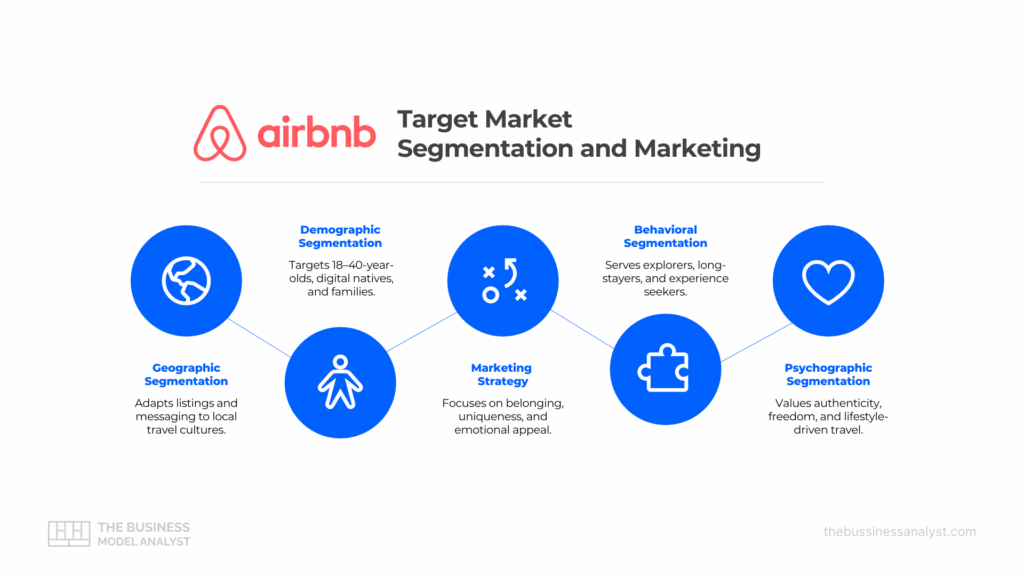
Airbnb Target Market Segmentation and Marketing
Market segmentation is the practice of dividing a broad audience into smaller, more manageable groups based on shared characteristics. This allows companies to create targeted marketing campaigns, product offerings, and experiences that resonate more deeply with specific consumer segments.
Airbnb uses segmentation to fine-tune its platform and messaging for both guests and hosts. By analyzing user behavior, demographics, location, and values, Airbnb tailors experiences — from promoting treehouses to couples seeking romantic getaways to showcasing long-term stays for remote workers in coastal towns.
The company primarily leverages four segmentation types to reach its diverse audience base:
- Demographic Segmentation: Airbnb identifies groups based on age, income, education level, and family size. This helps shape product features and pricing models.
- Geographic Segmentation: The platform adapts offerings to local cultures, urban versus rural preferences, and regional travel patterns.
- Behavioral Segmentation: Airbnb tracks how users interact with the platform — from booking frequency to type of property — to customize experiences and offers.
- Psychographic Segmentation: Airbnb taps into users’ lifestyles, beliefs, and emotional triggers, emphasizing themes like belonging, exploration, and connection.
These strategies allow Airbnb to maintain a competitive edge while personalizing its platform to evolving consumer needs.
Demographic Segmentation
Demographic segmentation helps Airbnb understand and cater to specific user groups based on measurable traits such as age, gender, income, education, and family status. This method plays a pivotal role in how the company positions its services and designs its user experience.
Airbnb’s largest demographic group comprises millennials and Gen Z users, typically aged 18 to 40. These younger travelers are more inclined to explore unconventional accommodations and are comfortable using digital platforms for booking. They’re also more likely to prioritize travel over material goods, spending on experiences rather than possessions — a trend that aligns perfectly with Airbnb’s value proposition.
Income level is another crucial factor. While Airbnb offers luxury stays, most listings cater to middle-income earners, providing affordable alternatives to hotels. For instance, students and young professionals might choose a private room in an apartment to save money, while families might opt for entire homes that provide value and space.
Education also plays a role. Many Airbnb users are college-educated and globally minded. They tend to appreciate authentic cultural experiences, which is why Airbnb’s marketing often emphasizes connection with local hosts and communities.
Family structure influences booking patterns, too. Young couples might book tiny homes or city studios for quick getaways, while multi-child families look for spacious homes with kitchens and multiple bedrooms. Airbnb accommodates these variations by offering filter tools and personalized recommendations.
Overall, these demographic insights help Airbnb maintain relevance across a wide user base — adapting both its interface and inventory to suit different needs and expectations.
Geographic Segmentation
Geographic segmentation focuses on tailoring services and marketing efforts based on users’ locations — whether by country, region, climate, or urban versus rural settings. For Airbnb, this segmentation is especially important given its global footprint and the vastly different travel preferences across markets.
Airbnb operates in over 220 countries and regions, but its approach is far from one-size-fits-all. In major urban hubs like New York, Paris, and Tokyo, Airbnb offers chic apartments and work-friendly spaces aimed at solo travelers, digital nomads, and city explorers. These locations typically highlight convenience, culture, and access to public transport.
Conversely, in rural areas or small towns, Airbnb promotes cabins, farm stays, or eco-lodges. For example, in the U.S., “Off-the-Grid” listings are targeted at adventure seekers and eco-conscious travelers looking to disconnect. Similarly, Airbnb’s “National Parks” category is designed to attract road-trippers and nature lovers within domestic travel markets.
Localization is a major part of Airbnb’s geographic strategy. In Japan, Airbnb adapted its offerings to align with government regulations by introducing the “Minpaku” model, which allows legally compliant home-sharing. In China, Airbnb redesigned its app to suit local UX preferences and integrated Alipay to align with local payment habits.
Additionally, Airbnb varies pricing strategies and promotional messaging by region. In developing countries, it emphasizes affordability and flexibility, while in affluent markets, it often promotes luxury and exclusivity through its “Airbnb Luxe” and “Airbnb Plus” collections.
Behavioral Segmentation
Behavioral segmentation is the process of grouping users based on how they interact with a platform — including purchase habits, usage frequency, loyalty, and decision-making behavior. For Airbnb, this approach helps customize offerings, anticipate user needs, and build long-term engagement across different travel styles.
One of Airbnb’s most valuable user groups is the frequent traveler — people who book multiple trips per year for leisure, work, or both. These users often engage with Airbnb’s “Wishlist” and “Saved Trips” features, which allow for easy rebooking and planning. To encourage loyalty, Airbnb surfaces personalized listings and sends email reminders based on browsing behavior.
Airbnb also tracks length of stay and booking patterns. For example, users booking stays over 28 days — typically remote workers and digital nomads — are presented with discounts and properties tagged as “long-stay friendly.” The platform even introduced a “Monthly Stays” category during the pandemic to cater specifically to this behavior shift.
The company identifies last-minute bookers, seasonal travelers, and experience seekers through browsing and purchase histories. Airbnb’s algorithm uses this data to adjust search results and email content — showcasing trending destinations, flexible cancellation options, or curated experiences like cooking classes or guided hikes.
Loyalty is subtly encouraged through trust-building tools. Guests who leave reviews and maintain high ratings are rewarded with a smoother booking process, while hosts with strong response rates and consistent service are promoted under the “Superhost” badge — a behavioral segmentation strategy that boosts both visibility and reliability.
These behavioral insights allow Airbnb to offer a more dynamic, responsive platform that evolves alongside user habits.
Psychographic Segmentation
Psychographic segmentation categorizes users based on their values, lifestyle, personality traits, and emotional drivers. This is one of Airbnb’s strongest marketing pillars — enabling the brand to build deep emotional connections with travelers by aligning with their identity and aspirations.
Airbnb appeals to people who value authenticity, freedom, and meaningful experiences. Unlike traditional hotels that emphasize uniformity, Airbnb markets itself as a platform for discovering places that reflect personal taste — from minimalist Scandinavian lofts to vibrant artist studios. This appeals to users who want their accommodations to match their creative, independent spirit.
The company’s long-running brand message, “Belong Anywhere,” captures a strong psychographic appeal. It speaks to users who seek connection — not just to a place, but to its people and culture. Whether it’s sharing a meal with a host in Florence or staying in a historical riad in Marrakesh, Airbnb promises experiences that feel personal and rooted.
Travelers motivated by sustainability and community impact also find alignment with Airbnb’s platform. Many prefer to stay with local hosts rather than corporate chains, seeing their bookings as a way to support local economies. Airbnb capitalized on this with its “Made Possible by Hosts” campaign, highlighting real host stories and the diversity of global hospitality.
Moreover, Airbnb targets explorers, non-conformists, and dreamers — people drawn to adventure and self-discovery. This psychographic profile has been key to Airbnb’s success with millennials, many of whom see travel as a way to express individuality and gain perspective.
By addressing users’ emotional values and identity-driven choices, Airbnb becomes more than a service — it becomes part of how people define themselves as travelers.
Airbnb Marketing Strategy
Airbnb’s marketing strategy is deeply rooted in emotional storytelling and community-driven content. Rather than focusing solely on amenities or deals, Airbnb emphasizes the human aspect of travel — highlighting real hosts, unique homes, and unforgettable moments that travelers can create.
The company leverages a mix of digital marketing channels, including social media platforms like Instagram and YouTube, where visually rich content brings its listings and brand ethos to life. Airbnb also runs strategic ad campaigns such as “Made Possible by Hosts” and “Live There”, which emphasize belonging, cultural immersion, and local experiences.
Influencer partnerships and user-generated content are key to Airbnb’s grassroots appeal. Travelers frequently share their stays online, which builds organic buzz and trust among peers. Airbnb supports this by resharing guest stories and running content contests.
The company also uses email marketing and retargeting ads to engage users based on their browsing behavior and booking history. Messaging is often warm, inclusive, and focused on emotional themes like connection, discovery, and home.
Whether it’s through short films, city guides, or personalized recommendations, Airbnb’s strategy centers on making travel feel personal and purposeful — aligning with the motivations of its diverse, experience-driven audience.
How Airbnb Reaches Its Audience
Airbnb employs a multifaceted approach to reach and engage its target segments. Through a combination of digital, offline, and community-driven tactics, the platform ensures that every traveler and host touches base at the right time and place.
Digital Advertising and Content Marketing
Airbnb uses targeted social media ads on platforms like Instagram, Facebook, TikTok, and YouTube. These ads highlight visually captivating locations, Airbnb-hosted experiences, and curated home collections. For example, ads promoting “mountain retreats” during winter encourage seasonal bookings, while beachfront villas dominate summer campaigns. Content marketing also includes travel stories and city guides shared on Airbnb’s website and blog to inspire travelers.
Influencer and Partner Campaigns
Strategic partnerships with travel influencers and bloggers boost brand awareness in niche communities. Influencers are often invited to stay in unique listings and share their adventure journeys. This user-generated content becomes a powerful testimonial leveraged in both digital and offline channels. Additionally, Airbnb collaborates with tourism boards—such as Visit Norway or Tourism Australia—to feature themed stays like northern lights cabins or coastal homes.
Personalized Email and Retargeting
Airbnb’s email campaigns target users based on their behavioral activity—saved destinations, previous searches, or length-of-stay preferences. These insights shape tailored offers like “long-term stay discounts” or “last-minute city stays.” Site data also enables dynamic retargeting across websites and social ads, keeping Airbnb top-of-mind with users who browsed but haven’t booked.
Offline Activations and Events
To build local trust and engage hosts, Airbnb hosts offline events like “Superhost meetups” and host-training sessions. In some cities, Airbnb sponsors cultural events or pop-up installations—such as unique lodging experiences at film festivals or city fairs—to drive awareness among travelers and host communities.
Mobile App Experience
Airbnb’s mobile app has become a direct communication and booking channel for users on the go. The app sends push notifications for deal alerts, check-in reminders, and city recommendations tailored to travel history. It also provides in-app community tools for guest-host messaging and for discovering “Experiences” led by locals.
These integrated tactics ensure Airbnb remains relevant to both travelers’ emotional needs and practical planning behaviors—harmonizing visibility, personalization, and human connection.
Comparison to Competitors’ Target Audience
Airbnb has carved out a distinctive identity in the hospitality space, but it’s not without competition. Traditional hotel chains and newer peer-to-peer platforms like Vrbo also compete for market share, often by targeting slightly different traveler profiles. To understand Airbnb’s edge, it’s important to compare its target audience with these key players.
Airbnb vs Vrbo Target Audience
While both Airbnb and Vrbo offer short-term rentals, their target markets show key differences. Vrbo (Vacation Rentals by Owner) primarily targets families and large groups seeking full-property rentals for vacations. These users often look for multi-bedroom homes, especially in suburban or beach resort locations in the U.S. and Europe. Vrbo users value privacy, space, and reliability over cultural immersion.
In contrast, Airbnb caters to a younger, more diverse audience that includes solo travelers, couples, remote workers, and even backpackers. Airbnb’s offerings include shared spaces, unique lodgings like yurts or castles, and host-led experiences — things Vrbo typically does not support. Airbnb’s messaging appeals more to individuality, discovery, and local connection, making it a better fit for experience-oriented travelers.
Airbnb also leads in urban markets and international locations, while Vrbo often performs better in traditional vacation destinations like lake towns or beach cities. This reflects how Airbnb aligns with modern, mobile lifestyles while Vrbo stays close to traditional family getaways.
Similarities in Target Audiences
Both Airbnb and Vrbo attract travelers seeking alternatives to hotels. Users from both platforms often look for kitchens, flexibility, and cost savings. They value home-like comfort and often travel in groups, whether family, friends, or work colleagues.
Additionally, both platforms appeal to property owners seeking income from short-term rentals. These hosts often use both platforms to increase exposure and maximize bookings. For them, reliability, ease of use, and guest screening tools are critical factors.
Key Differences in Target Audiences
The key difference lies in travel purpose and mindset. Airbnb’s audience tends to value cultural engagement, lifestyle alignment, and personal storytelling. This is reflected in its Experiences platform, host spotlights, and messaging around “belonging.”
Vrbo’s audience leans toward comfort, convenience, and predictability. They’re less interested in cultural depth or local interaction and more concerned with logistics and amenities, especially for longer family stays.
Airbnb also wins in the digital-native demographic, with a strong following among millennials and Gen Z who prefer apps, dynamic content, and experiential travel. Vrbo skews slightly older, appealing to Gen X and boomers planning multi-generational trips.
Airbnb Advantages
- Brand Adaptability
Airbnb adapts quickly to new traveler trends. Whether it’s the rise of remote work or the need for socially distanced travel, Airbnb swiftly introduces new categories and flexible booking tools — staying relevant across changing lifestyles and needs. - Global Reach and Cultural Relevance
Operating in more than 220 countries, Airbnb customizes listings and UX per region. From integrating local payment systems to offering culturally sensitive Experiences, it connects with users far beyond the Western vacation model that competitors often default to. - Unique Listings and Experiences
Airbnb’s inventory includes treehouses, tiny homes, and heritage buildings — creating unforgettable travel moments. This unique selection appeals to users who view travel as self-expression. Airbnb Experiences further differentiate the brand with host-led activities not available on Vrbo. - Emotional Branding
Airbnb’s “Belong Anywhere” isn’t just a slogan — it’s a psychographic appeal to those who seek meaning and connection. This deeper emotional positioning fosters loyalty beyond price or location.
Airbnb Disadvantages
- Regulatory Pressure
Airbnb faces stricter regulation in cities like New York, Barcelona, and Amsterdam, where local governments aim to control short-term rentals. This limits availability and deters hosts, giving more stable platforms like Vrbo an edge in those markets. - Inconsistent Quality Control
Airbnb’s flexibility means guest experiences can vary widely. While Superhost badges help, some travelers still prefer the predictability of hotel chains or full-property-only platforms like Vrbo. - Host-Dependence for Service
Unlike hotels or some Vrbo rentals managed by professional agencies, Airbnb relies heavily on individual hosts. This sometimes leads to inconsistent check-in processes, cancellation issues, or communication lapses that affect user satisfaction. - Perceived Price Inflation
Service fees, cleaning fees, and dynamic pricing can make Airbnb stays unexpectedly expensive. Travelers on tighter budgets might switch to alternatives once price transparency becomes a concern — especially when comparing to hotels or Vrbo’s simpler fee structure.
Conclusion
Airbnb’s ability to understand and engage its target market has been central to its rise as a global travel brand. By leveraging demographic, geographic, behavioral, and psychographic segmentation, Airbnb reaches a wide spectrum of users — from adventurous millennials and digital nomads to budget-conscious families and passionate hosts.
Its emotional appeal, flexible offerings, and distinctive user experience set it apart from competitors like Vrbo and traditional hotels. Airbnb doesn’t just offer places to stay; it offers experiences shaped by identity, values, and lifestyle. That alignment with evolving consumer priorities — especially the desire for authentic, personalized travel — makes its platform uniquely resonant.
However, Airbnb must continue to navigate regulatory hurdles, price concerns, and service consistency as it scales. As user expectations grow and market dynamics shift, refining its segmentation strategies will remain essential. With smart adaptation and a continued focus on community and belonging, Airbnb is well-positioned to stay ahead in the changing landscape of global travel.


