
Distribution Channels

May
Distribution Channels
When designing your business model, your first step will be to define the customer segments and the value propositions that align with this target audience. After this stage, it is time to establish the Distribution Channels and determine how the company will deliver its value proposition to each customer segment.
Therefore, channels will be the way the organization chooses to reach out and communicate with its consumers. In short, channels are the interface between the company and the public.
Finding the proper distribution channels to reach customers is paramount, so your value proposition can reach the market. But what is this block for?
Contents
Distribution Channels Definition and Importance
Distribution channels refer to how a business reaches and interacts with its customers. They establish how an organization communicates with its pre-identified customer segments and are the way to deliver the value propositions it has to offer. They are, therefore, essential for the customer experience.
Channels can be the most varied, and different channels are often used for various customer segments. If, before the 1990s, the channels were limited to the stores that sold the products, today, with the advent of the internet, the reality is much more promising.
As a point of contact between the company and the public, the channels serve several functions, which include:
- Expansion of knowledge by customers about products and services offered by the company;
- Delivery of the value proposition developed by the company;
- Assistance to clients in evaluating the value proposition delivered by the company;
- Acquisition of specific products and services by the customers;
- Support after purchase.
Phases of the Distribution Channel
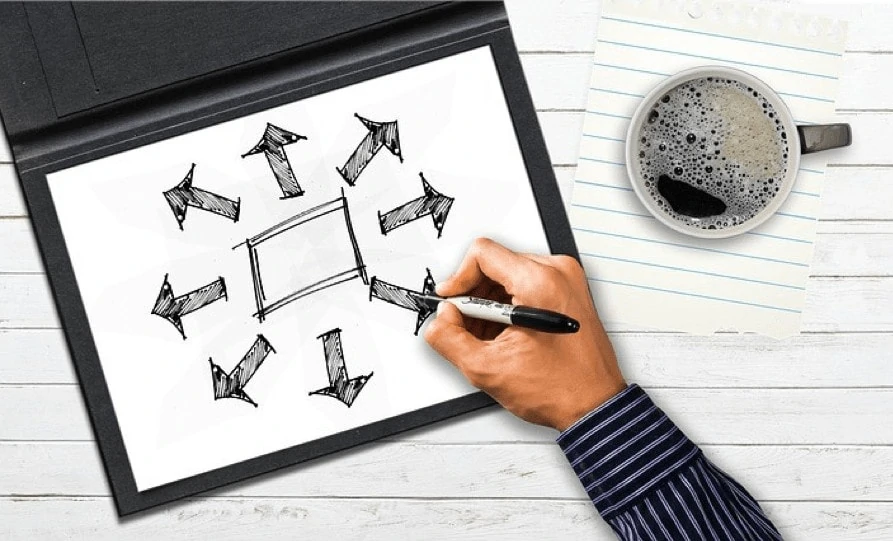
- Awareness: It is the advertising stage when the customer learns about your value proposition;
- Evaluation: This is the moment when the customer will evaluate your product by reading about, looking at, and testing it. This is when they will form an opinion about the value proposition to see if they choose you or the competition;
- Purchase: Involves the buying and selling process itself;
- Delivery: This is the service, how the product arrives at the customer;
- After-sales: This is the support offered after purchasing the product or service. This phase empowers the customer and creates “defenders” of your brand.
Types of Distribution Channels
Organizations can reach customers through their channels, in partnership with others, or a mix of both. Distribution channels are essential for delivering information about products and services to the target audience and come in two broad types:
- Owned Channels: Direct (e.g., a brand’s Channels sales team or digital e-commerce platform) or indirect (e.g., brand-owned retail stores);
- Partner Channels: Channels that involve third parties, such as distributors, agents, and external websites.
Below, there are examples and details on each owned and partnership distribution channel type, helping businesses maximize reach and enhance customer experience.
Owned Distribution Channels
- Personal Sales: Personal sales offer a one-on-one approach to customers, where sales representatives provide in-depth demonstrations and often offer home delivery. This direct communication builds strong customer relationships, enhances trust, and often leads to higher profit margins. Personal sales are ideal for companies with a smaller customer base or high-value products requiring direct engagement in the user journey.
However, scaling personal sales is challenging for larger companies due to the high resources needed to maintain a large sales team. While feasible for small operations, expanding this model to continue broad outreach can quickly drive up costs.
- Internet: Selling through the Internet provides a cost-effective and scalable distribution method, allowing companies to quickly reach a maximum customer base. Online channels offer the convenience of 24/7 access, ease of use, and customization for each user. Moreover, online sales channels facilitate immediate feedback through customer reviews and comments, helping companies adjust strategies to meet consumer demands better.
The downside to online distribution is its impersonal nature, which can hinder brand loyalty and the sense of connection that personal sales foster. Without direct interaction, companies may find it challenging to offer personalized after-sales support, reducing the chances of development in long-term customer relationships.
- Telephone Sales: Telephone sales, or telemarketing, offer a direct line of communication to customers, making it a valuable channel for reaching people in remote areas. With a relatively low cost per interaction, telephone sales enable companies to maintain a personal touch without high overhead.
However, this channel has gained a reputation for being intrusive, with many consumers viewing telemarketing as bothersome or spammy. Companies using this approach need a well-thought-out plan to ensure respectful, relevant communication, maximizing the chance of engaging customers positively.
- Traditional and Electronic Mail: Traditional mail and email are versatile distribution channels that can be easily customized for each customer segment, creating a targeted, personal approach. They allow companies to reinforce brand presence, update customers about new products, and share exclusive offers. Direct mail can also provide a physical reminder of a brand, while email allows for rapid dissemination and tracking.
Despite their advantages, both traditional and electronic mail face low engagement rates. Customers often delete emails or discard physical mail without review, leading to a lower return on investment (ROI) for these channels. A well-crafted and targeted strategy is essential for maximizing the impact of mail campaigns.
Partner Distribution Channels
The indirect or partnership distribution is usually done through retailers, agents, brokers, representatives, and distributors. Look:
- Retailers: Retailers provide an established infrastructure for distribution, often with physical stores or well-trafficked websites. Companies can leverage a retailer’s market presence and brand recognition to reach a large, diverse customer base without building their own sales network. Retailers also handle customer service and after-sales support, which can be valuable for brands with limited customer service resources.
However, selling through retailers often comes with reduced profit margins and less control over the customer experience. Since retailers manage the customer relationship, companies may find it challenging to maintain direct engagement with buyers, limiting opportunities for brand loyalty initiatives.
- Sales Representatives and Agents: Sales representatives, brokers, and agents serve as intermediaries between companies and customers, promoting products through established personal connections and networks. These representatives are typically well-versed in the market and can provide a valuable, low-cost sales channel with a broad reach.
However, agents may represent multiple brands, sometimes including competitors. This multi-brand representation can reduce a company’s control over its words, brand message, and image and influence over customer relationships. In addition, representatives’ loyalty may be influenced by commissions or price structures, making this channel sensitive to price changes and incentives.
- Distributors: Distributors have the storage and logistics infrastructure and customer base to deliver products efficiently to a broad market. They typically manage inventory, reducing storage costs for the manufacturer and speeding up distribution. Additionally, distributors are often technically trained, allowing them to promote the product effectively.
The main drawbacks include a lack of control over customer relationships and pricing. Since distributors often work with multiple brands, there’s a risk that competing products will be offered to the same customer base. Partnering with distributors can also require upfront investment, making it more resource-intensive than other partnership channels.
Selecting a distribution channel
To select a distribution channel, look at the following five elements:
- The number of pre-defined customer segments and/or the size of the market to be segmented;
- The cost-benefit ratio offered by the distribution channel (investment vs profitability);
- Standardization or non-standardization of the product — external channels can sell a standard product because it reaches more than one segment of customers, but a product that requires customization demands direct contact with the customer;
- The required control over a channel — as in the case of a distributor that also appeals to competition, for example;
- The time it will take to establish a good relationship with the distribution channel and the duration and “term of validity” of that relationship.
In short, the disadvantage of partnership channels is that they often bring in smaller profits. However, they allow faster expansion and extended reach. Own channels, on the other hand, offer higher profits but also demand greater initial investment, both in time and money.Therefore, the key is to balance the different types of channels, improve the customer experience, and ensure a higher return on sales. Once the distribution channels have been selected, it is time to move on to the next block, Customer Relationships.
TAKE ME TO THE NEXT BLOCK -> CUSTOMER RELATIONSHIP

