Hilton SWOT Analysis
Feb
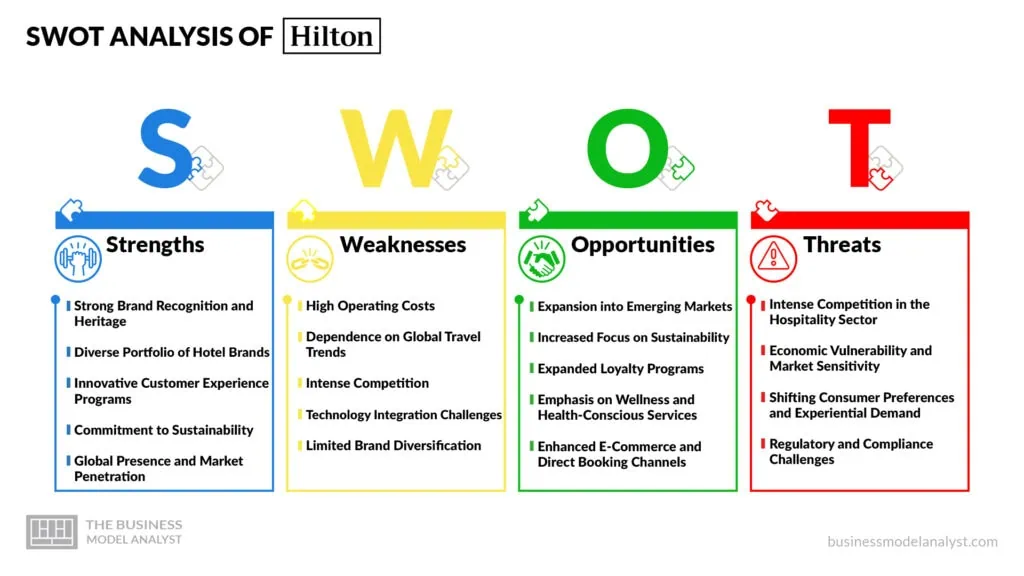
Hilton SWOT Analysis reveals the intricate tapestry of strengths, weaknesses, opportunities, and threats that define one of the world’s foremost hospitality giants. With a legacy from 1919, Hilton has established itself as a dominant force in the global hotel industry, boasting an impressive portfolio of brands catering to a diverse range of travelers.
From the luxury of the Waldorf Astoria to the convenience of Hampton Inn, Hilton’s vast presence ensures that it meets the varied needs of its clientele, whether they are business or leisure travelers.
However, even a titan like Hilton cannot escape the challenges of a dynamic market. Below, we will take a deep look into Hilton’s SWOT analysis, shedding light on the company’s key strengths and weaknesses, while also exploring potential opportunities for growth and the threats lurking in its competitive landscape.
Contents
Hilton Strengths
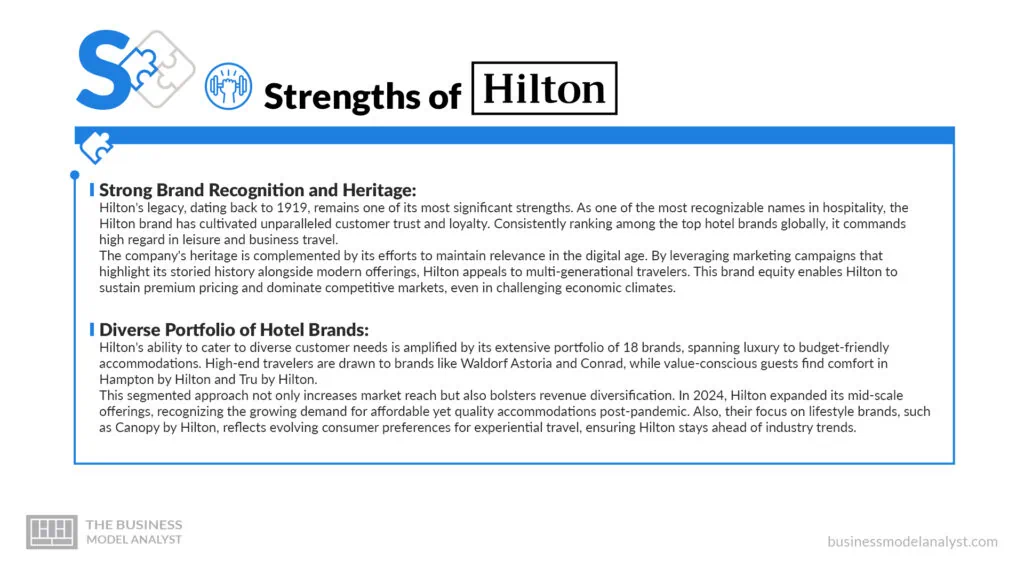
The strengths of Hilton remain a testament to its ability to innovate, adapt, and maintain its position as a global leader in hospitality. With recent advancements and strategic efforts, Hilton continues solidifying its legacy while evolving to meet modern demands.
Strong Brand Recognition and Heritage
Hilton’s legacy, dating back to 1919, remains one of its most significant strengths. As one of the most recognizable names in hospitality, the Hilton brand has cultivated unparalleled customer trust and loyalty. Consistently ranking among the top hotel brands globally, it commands high regard in leisure and business travel.
The company’s heritage is complemented by its efforts to maintain relevance in the digital age. By leveraging marketing campaigns that highlight its storied history alongside modern offerings, Hilton appeals to multi-generational travelers. This brand equity enables Hilton to sustain premium pricing and dominate competitive markets, even in challenging economic climates.
Diverse Portfolio of Hotel Brands
Hilton’s ability to cater to diverse customer needs is amplified by its extensive portfolio of 18 brands, spanning luxury to budget-friendly accommodations. High-end travelers are drawn to brands like Waldorf Astoria and Conrad, while value-conscious guests find comfort in Hampton by Hilton and Tru by Hilton.
This segmented approach not only increases market reach but also bolsters revenue diversification. In 2024, Hilton expanded its mid-scale offerings, recognizing the growing demand for affordable yet quality accommodations post-pandemic. Also, their focus on lifestyle brands, such as Canopy by Hilton, reflects evolving consumer preferences for experiential travel, ensuring Hilton stays ahead of industry trends.
Innovative Customer Experience Programs
Hilton Honors’s flagship loyalty program remains a cornerstone of the company’s customer engagement strategy. With over 200 million members as of 2024, Hilton Honors has evolved to include dynamic features like flexible point redemption options and exclusive partnerships with brands like Lyft and Amazon.
Digital innovation further enhances the guest experience, with features like mobile check-in, digital room keys, and personalized room selection via the Hilton app. Hilton has also introduced AI-driven chat support, which ensures seamless communication between guests and staff, boosting overall satisfaction. Such initiatives underscore the brand’s commitment to convenience, personalization, and fostering long-term customer relationships.
Commitment to Sustainability
Hilton’s “Travel with Purpose” initiative exemplifies its leadership in sustainable hospitality practices. In 2023, Hilton reported significant progress toward cutting its environmental footprint by 50% and doubling its social impact by 2030. Energy-efficient operations, waste reduction programs, and partnerships with local communities reflect this commitment.
The rollout of carbon-neutral meeting packages, piloted in several regions in 2023, has resonated strongly with corporate clients seeking sustainable solutions. In addition, Hilton’s focus on eco-certified accommodations aligns with the growing trend of eco-conscious travel, positioning the company as a preferred choice for environmentally aware consumers.
Global Presence and Market Penetration
Hilton’s expansive reach spans over 8,000 properties in 135+ countries as of 2024, solidifying its position as one of the largest hotel chains worldwide. In recent years, Hilton has aggressively entered emerging markets like India and Southeast Asia, leveraging these regions’ burgeoning middle class and increasing tourism.
The company also adapts to local preferences, such as offering halal-certified menus in Muslim-majority regions or partnering with local suppliers where cultural authenticity matters. Hilton’s global presence mitigates risks from localized economic downturns and ensures steady revenue streams across diverse markets.
Robust Financial Performance
Hilton’s financial resilience continues to impress, even amid fluctuating economic conditions. Despite industry challenges like the 2020 pandemic, inflationary pressures, and geopolitical instability, Hilton reported a steady increase in revenue per available room (RevPAR) from 2021 to 2023.
Its asset-light model, relying on franchise and management agreements, reduces operational risks while maintaining high profit margins. In addition, Hilton’s continuous investment in technology for operational efficiency, such as automated revenue management systems, ensures sustainable profitability and long-term growth.
Strategic Partnerships and Alliances
Hilton has strengthened its market position through strategic collaborations with airlines, online travel agencies, and corporate clients. Notable partnerships include alliances with American Express, enabling exclusive offers for cardholders, and integration with ride-share platforms like Uber to enhance customer convenience.
Such partnerships boost brand visibility and enable Hilton to deliver seamless, multi-faceted travel experiences. For instance, Hilton Honors members enjoy bundled benefits like flight discounts and hotel stays, enhancing their perceived value and loyalty to the brand.
Advanced Technology Implementation
Hilton leads the industry in adopting cutting-edge technology to enhance operational efficiency and guest satisfaction. Its proprietary “Connected Room” technology allows guests to personalize their stay, controlling room temperature, lighting, and entertainment from their smartphones.
In 2024, Hilton expanded its use of AI in revenue management, leveraging data analytics to predict demand trends and optimize pricing strategies. These technological advancements ensure that Hilton remains at the forefront of innovation, delivering value to customers and stakeholders.
Hilton Weaknesses
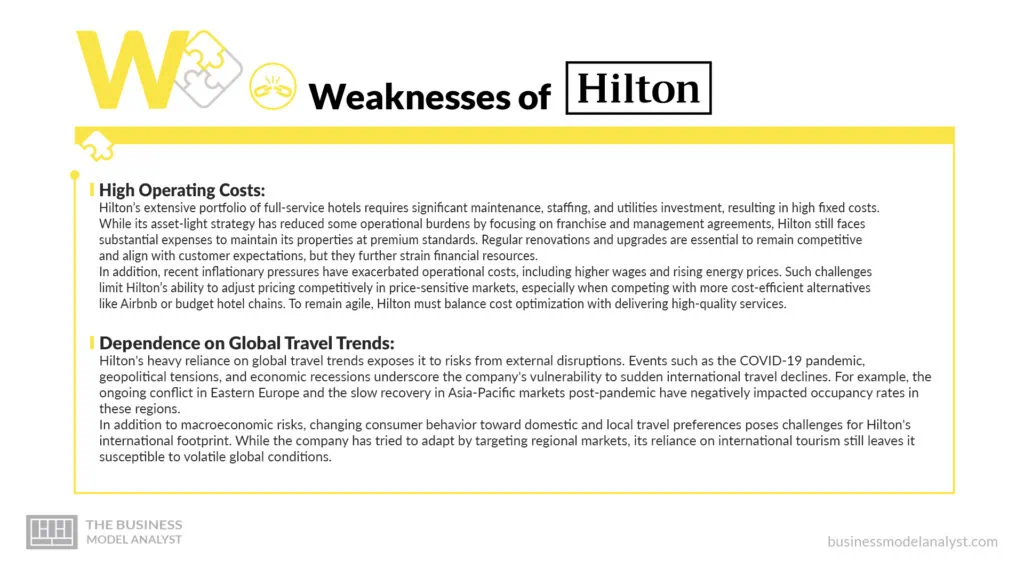
While Hilton stands as a formidable player in the global hospitality industry, it is not without its vulnerabilities. These weaknesses, ranging from financial challenges to external dependencies, highlight areas where the company must focus its efforts to sustain its competitive edge.
High Operating Costs
Hilton’s extensive portfolio of full-service hotels requires significant maintenance, staffing, and utilities investment, resulting in high fixed costs. While its asset-light strategy has reduced some operational burdens by focusing on franchise and management agreements, Hilton still faces substantial expenses to maintain its properties at premium standards. Regular renovations and upgrades are essential to remain competitive and align with customer expectations, but they further strain financial resources.
In addition, recent inflationary pressures have exacerbated operational costs, including higher wages and rising energy prices. Such challenges limit Hilton’s ability to adjust pricing competitively in price-sensitive markets, especially when competing with more cost-efficient alternatives like Airbnb or budget hotel chains. To remain agile, Hilton must balance cost optimization with delivering high-quality services.
Dependence on Global Travel Trends
Hilton’s heavy reliance on global travel trends exposes it to risks from external disruptions. Events such as the COVID-19 pandemic, geopolitical tensions, and economic recessions underscore the company’s vulnerability to sudden international travel declines. For example, the ongoing conflict in Eastern Europe and the slow recovery in Asia-Pacific markets post-pandemic have negatively impacted occupancy rates in these regions.
In addition to macroeconomic risks, changing consumer behavior toward domestic and local travel preferences poses challenges for Hilton’s international footprint. While the company has tried to adapt by targeting regional markets, its reliance on international tourism still leaves it susceptible to volatile global conditions.
Intense Competition
Hilton operates in a fiercely competitive landscape, facing challenges from traditional competitors like Marriott and Hyatt and alternative accommodation providers such as Airbnb. The increasing popularity of these nontraditional platforms, which often offer cost-effective and personalized stays, has eroded some market share from traditional hotel operators.
Also, Hilton’s reliance on Online Travel Agencies (OTAs) to drive bookings poses additional challenges. OTAs like Expedia and Booking.com levy high commissions and diminish direct engagement with guests. Despite efforts to promote direct bookings through loyalty programs, Hilton must continue innovating to strengthen customer loyalty and mitigate the competitive threat posed by OTAs and alternative accommodations.
Technology Integration Challenges
While Hilton has made strides in adopting technology, staying ahead of rapid technological advancements remains a persistent challenge. Investments in features like mobile check-in, digital room keys, and AI-powered guest interactions require substantial resources. However, the pace of these developments often lags behind competitors or fails to meet evolving customer expectations.
Cybersecurity remains a critical concern, as any breach in customer data can severely damage Hilton’s reputation. Recent reports of heightened cyberattacks across industries highlight the increasing need for robust digital defenses. Failure to maintain a seamless, secure, innovative technological ecosystem can result in lower customer satisfaction and erosion of market share.
Limited Brand Diversification
Although Hilton’s portfolio spans various market segments, its concentration on midscale and upscale accommodations creates a notable gap in the budget and economy segments. Competitors like Marriott, Accor, and IHG have successfully diversified their offerings to include low-cost accommodations, allowing them to capture a broader audience.
Hilton’s limited presence in the budget segment could alienate cost-conscious travelers, especially during economic downturns when affordability becomes a priority. Expanding into the budget-friendly segment would require a careful approach to maintain the brand’s premium image while meeting the needs of value-driven travelers.
Sustainability and Environmental Concerns
Hilton has made strides in implementing sustainability initiatives through its “Travel with Purpose” program, but growing consumer and regulatory expectations demand even faster progress. Critics argue that while Hilton has introduced energy-efficient practices and waste reduction programs, these measures do not yet place the company at the forefront of the industry’s sustainability efforts.
Moreover, stricter carbon emissions and waste management regulations in key markets, such as Europe, could require additional investments to comply with evolving standards. As younger, eco-conscious travelers increasingly prioritize sustainable options, Hilton must accelerate its environmental initiatives to maintain its appeal and avoid reputational risks associated with failing to meet sustainability benchmarks.
Hilton Opportunities
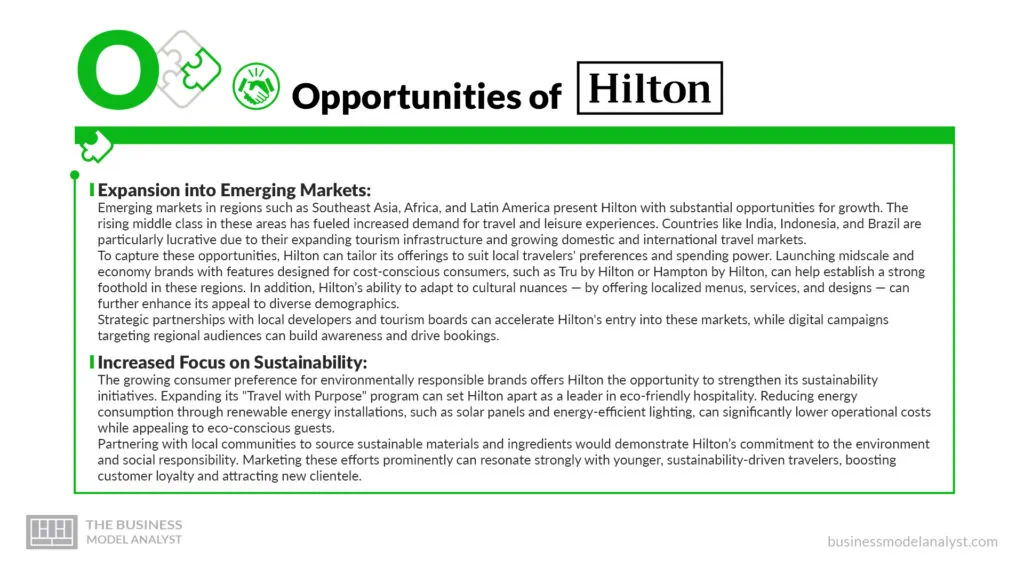
Hilton’s expansive market presence and strong brand equity position the company to take advantage of numerous growth opportunities in the evolving global hospitality landscape. By leveraging emerging trends, strategic initiatives, and innovation, Hilton can expand its market reach and strengthen its profitability.
Expansion into Emerging Markets
Emerging markets in regions such as Southeast Asia, Africa, and Latin America present Hilton with substantial opportunities for growth. The rising middle class in these areas has fueled increased demand for travel and leisure experiences. Countries like India, Indonesia, and Brazil are particularly lucrative due to their expanding tourism infrastructure and growing domestic and international travel markets.
To capture these opportunities, Hilton can tailor its offerings to suit local travelers’ preferences and spending power. Launching midscale and economy brands with features designed for cost-conscious consumers, such as Tru by Hilton or Hampton by Hilton, can help establish a strong foothold in these regions. In addition, Hilton’s ability to adapt to cultural nuances — by offering localized menus, services, and designs — can further enhance its appeal to diverse demographics.
Strategic partnerships with local developers and tourism boards can accelerate Hilton’s entry into these markets, while digital campaigns targeting regional audiences can build awareness and drive bookings.
Increased Focus on Sustainability
The growing consumer preference for environmentally responsible brands offers Hilton the opportunity to strengthen its sustainability initiatives. Expanding its “Travel with Purpose” program can set Hilton apart as a leader in eco-friendly hospitality. Reducing energy consumption through renewable energy installations, such as solar panels and energy-efficient lighting, can significantly lower operational costs while appealing to eco-conscious guests.
Partnering with local communities to source sustainable materials and ingredients would demonstrate Hilton’s commitment to the environment and social responsibility. Marketing these efforts prominently can resonate strongly with younger, sustainability-driven travelers, boosting customer loyalty and attracting new clientele.
Expanded Loyalty Programs
Hilton Honors remains a key customer retention and satisfaction driver, with significant room for growth. Enhancing the program by offering experiential rewards, such as curated travel experiences or exclusive events, can deepen member engagement. New tiers with additional perks, such as guaranteed late check-outs, complimentary upgrades, or dedicated concierge services, could incentivize higher spending among frequent travelers.
Partnerships with airlines, entertainment companies, and dining establishments could expand the benefits available to loyalty members, creating an integrated travel ecosystem. Also, Hilton can utilize data insights to provide targeted offers and promotions, further personalizing the loyalty experience and encouraging repeat bookings.
Emphasis on Wellness and Health-Conscious Services
The growing focus on wellness travel provides Hilton with an opportunity to enhance its health-focused offerings. Establishing wellness centers with features such as state-of-the-art fitness facilities, meditation zones, and organic spa treatments can attract health-conscious travelers.
Introducing farm-to-table dining options with locally sourced, organic ingredients would appeal to guests prioritizing nutrition and sustainability. Partnerships with fitness brands for in-room exercise equipment or on-demand virtual fitness classes can provide added convenience for wellness-focused travelers. Marketing these offerings as integral to the Hilton experience can position the brand as a top choice for health-conscious consumers.
Enhanced E-Commerce and Direct Booking Channels
Strengthening direct booking platforms can reduce Hilton’s reliance on Online Travel Agencies (OTAs) and the associated high commission fees. Offering exclusive deals, instant loyalty point rewards, and curated travel packages on Hilton’s website and app can drive more direct bookings.
Developing an AI-powered booking assistant to help users navigate options, compare prices, and customize stays can enhance the user experience and convert casual browsers into loyal customers. Investing in sophisticated pricing algorithms that dynamically adjust rates based on demand trends would enable Hilton to maximize revenue while maintaining competitive pricing.
Growing Demand for Unique Experiences
The demand for authentic and localized travel experiences presents a significant opportunity for Hilton to differentiate itself. Curating unique packages that include local cultural activities, culinary classes, and excursions can attract travelers seeking memorable and immersive experiences.
Incorporating local artistry and cultural elements into hotel designs, menus, and guest programming can create a sense of place and deepen guest satisfaction. By actively promoting these experiences, Hilton can align itself with the growing segment of travelers seeking more profound connections with the destinations they visit.
Hilton Threats
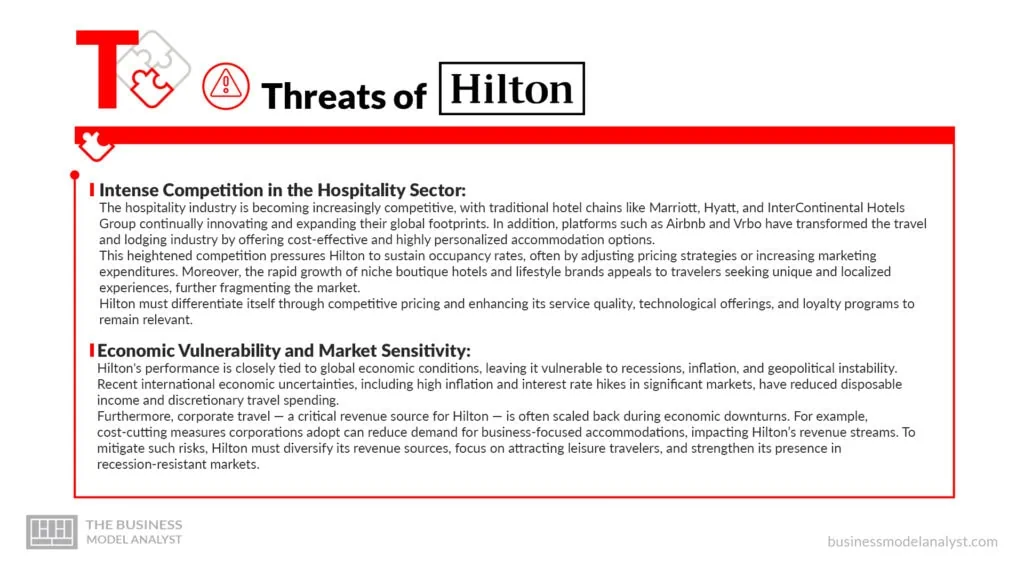
Hilton Worldwide faces several threats that could significantly impact its operations, profitability, and competitive position. These challenges highlight the importance of proactive measures and adaptive strategies to safeguard Hilton’s market leadership in the ever-changing hospitality landscape.
Intense Competition in the Hospitality Sector
The hospitality industry is becoming increasingly competitive, with traditional hotel chains like Marriott, Hyatt, and InterContinental Hotels Group continually innovating and expanding their global footprints. In addition, platforms such as Airbnb and Vrbo have transformed the travel and lodging industry by offering cost-effective and highly personalized accommodation options.
This heightened competition pressures Hilton to sustain occupancy rates, often by adjusting pricing strategies or increasing marketing expenditures. Moreover, the rapid growth of niche boutique hotels and lifestyle brands appeals to travelers seeking unique and localized experiences, further fragmenting the market.
Hilton must differentiate itself through competitive pricing and enhancing its service quality, technological offerings, and loyalty programs to remain relevant.
Economic Vulnerability and Market Sensitivity
Hilton’s performance is closely tied to global economic conditions, leaving it vulnerable to recessions, inflation, and geopolitical instability. Recent international economic uncertainties, including high inflation and interest rate hikes in significant markets, have reduced disposable income and discretionary travel spending.
Furthermore, corporate travel — a critical revenue source for Hilton — is often scaled back during economic downturns. For example, cost-cutting measures corporations adopt can reduce demand for business-focused accommodations, impacting Hilton’s revenue streams. To mitigate such risks, Hilton must diversify its revenue sources, focus on attracting leisure travelers, and strengthen its presence in recession-resistant markets.
Shifting Consumer Preferences and Experiential Demand
The growing preference for authentic, personalized travel experiences poses a significant challenge for traditional hotel chains. Lifestyle brands, boutique hotels, and shared-economy accommodations are gaining favor among younger, experience-driven travelers. Platforms like Airbnb excel in offering locally tailored stays that appeal to this demographic.
Hilton must adapt to these shifting preferences by integrating more localized and experiential elements into its offerings. While the company has made strides with brands like Canopy and Curio Collection, these efforts must be expanded to resonate with a broader audience seeking cultural immersion and unique experiences. Failure to keep pace with these trends could result in lost market share, particularly among millennials and Gen Z travelers.
Regulatory and Compliance Challenges
Operating in over 135 countries, Hilton must navigate a complex web of regulations, including employment laws, environmental standards, tax requirements, and health and safety protocols. Stricter ecological laws in regions like the EU, requiring businesses to adhere to sustainability and carbon neutrality standards, could increase operational costs and compliance burdens.
Hilton is also subject to evolving data privacy regulations, such as the General Data Protection Regulation (GDPR) in Europe and the California Consumer Privacy Act (CCPA) in the U.S. Non-compliance with these laws could result in substantial fines, lawsuits, and reputational damage. Maintaining robust compliance programs and continuously updating policies to meet legal standards are critical for mitigating these risks.
Technology Vulnerabilities and Cybersecurity Risks
Hilton’s reliance on technology for booking systems, guest management, and data analytics makes it vulnerable to cybersecurity threats. Data breaches in the hospitality industry have become increasingly common, often exposing sensitive customer information, including credit card details and personal identification.
In 2023 and 2024, heightened concerns around cyberattacks targeting large corporations underscored the critical importance of robust cybersecurity measures. A significant breach could lead to financial losses from lawsuits and penalties, damage Hilton’s brand reputation, and erode customer trust. Continuous investment in advanced cybersecurity protocols and employee training is necessary to protect against these threats.
Labor Shortages and Rising Wage Costs
The hospitality sector has been grappling with labor shortages, particularly in key markets like the U.S. and Europe, where demand for skilled workers often outstrips supply. Hilton faces increasing difficulty in recruiting and retaining talent, especially for front-line roles vital to maintaining high service standards.
Rising wage demands, influenced by inflation and evolving worker expectations for better pay and benefits, further strain profit margins. High employee turnover exacerbates these challenges, increasing training and onboarding costs. To address these issues, Hilton must invest in employee engagement programs, competitive compensation packages, and career development opportunities to foster loyalty and reduce attrition rates.
Negative Publicity and Brand Reputation Management
Nowadays, adverse incidents such as poor service reviews, cleanliness issues, or cybersecurity breaches can rapidly escalate into public relations crises. Social media amplifies the speed at which such incidents are shared, potentially causing long-term damage to Hilton’s reputation.
A single high-profile case of guest dissatisfaction or mishandling of customer data can erode consumer trust and loyalty. To mitigate these risks, Hilton must implement robust crisis management strategies, continuously monitor public sentiment, and proactively address customer concerns. Real-time engagement with customers on digital platforms can help prevent isolated incidents from spiraling into reputational threats.
Conclusion
Hilton is a strong player in the global hospitality industry, leveraging its extensive brand portfolio, loyalty programs, and commitment to innovation. The company’s strengths are offset by challenges such as intense competition and economic fluctuations that can impact travel demand. However, Hilton’s capacity to expand its presence in emerging markets and invest in technology positions it well to capitalize on new opportunities.
By addressing its weaknesses, such as high operational costs and potential overdependence on the North American market, Hilton can continue to enhance its competitive advantage. A thorough understanding of these factors will empower Hilton to navigate the complexities of the hospitality landscape effectively and sustain its growth trajectory in the coming years.