Top 10 Airbnb Competitors & Alternatives
Jul
Airbnb has undeniably soared to unprecedented heights in the hospitality industry, redefining how people travel and stay around the globe. However, this revolutionary platform has been joined in its journey.
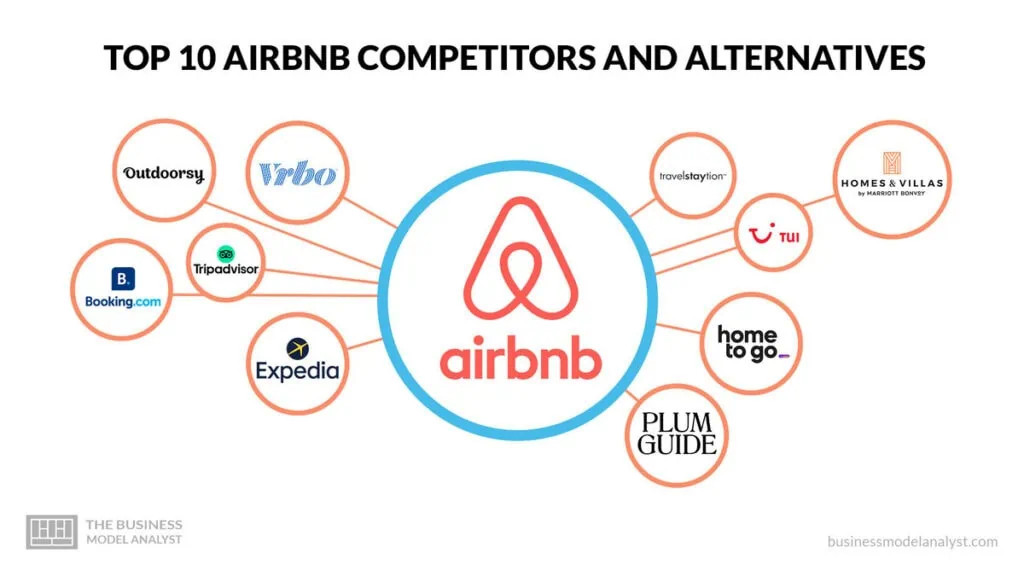
Naturally, with such a vibrant field, the range of competitors is wide. Therefore, in this article, we will look at the top 10 competitors and alternatives to Airbnb. Each has strengths, from familiar titans like Vrbo and Booking.com to growing platforms like TUI Villas and TravelStaytion. Even tech powerhouse Google has stepped in, creating a more diverse landscape of choices.
As we peel back the layers of this industry, each competitor provides a fresh perspective. Be it Booking.com’s vast selection or the niche appeal of TUI Villas, each platform brings something unique to the table. That’s what makes this journey intriguing.
This voyage isn’t just about listing alternatives — it’s about appreciating the variety, understanding the unique selling propositions, and realizing each platform’s potential as a viable Airbnb alternative.
Contents
Top 10 Airbnb Competitors & Alternatives
Vrbo
Vrbo, an acronym for Vacation Rentals by Owner, is an American platform renowned for its unique spin on vacation rentals. One of Airbnb’s competitors, Vrbo, was established in 1995 by David Clouse and intended to connect homeowners with vacationers searching for different lodging from the usual hotel experience.
Vrbo offers a comprehensive marketplace for vacation rental homes, leveraging its robust business model to provide travelers with a wide variety of properties. From city condos to beach houses, it competes with Airbnb for travelers seeking unique accommodation experiences. Furthermore, its HomeAway subsidiary extends its reach, catering to a global audience craving local, home-like stays.
Unlike Airbnb, which targets a broad range of accommodation seekers, Vrbo has carved its niche with vacation rentals. It focuses on groups and families seeking a homely environment for their stays. Meanwhile, Airbnb operates in various markets and provides numerous services, catering to individual travelers and large groups alike.
The key to Vrbo’s continued success lies in its dedication to simplicity and customer satisfaction. The platform has consistently simplified its booking process, ensuring travelers can easily navigate and make reservations. This dedication to user-friendliness has been a critical factor in Vrbo’s ability to stand as a reliable alternative to Airbnb.
In the financial year 2023, Vrbo reported impressive revenue growth (from $2.79 billion in 2022 to $3.3 billion in 2023), showcasing its resilience against the diverse competition in the vacation rental market. This accomplishment becomes all the more remarkable when considering the challenges the travel industry faces due to the global pandemic.
Undeterred by the difficulties, Vrbo’s leadership demonstrated incredible resilience. They launched creative solutions to maintain customer trust while navigating through the uncertainties brought about by the pandemic.
A remarkable instance of this was their “Book with Confidence Guarantee” program. This initiative offered comprehensive payment protection, emergency rebooking assistance, and other security features to enhance customers’ booking experiences during the crisis.
Such strategies have significantly contributed to retaining high levels of customer engagement, giving Vrbo an edge over competitors. By mitigating the risks associated with booking platforms, Vrbo has successfully fostered a sense of security and trust among its users.
Looking at Vrbo’s vibrant growth, it’s evident that its strategy of prioritizing customer needs and providing unique vacation experiences has paid off. As we move forward, this focus on user experience and satisfaction is expected to continue to drive Vrbo’s success in the increasingly competitive vacation rental market.
Booking.com
Born in 1996, Booking.com is a remarkable force in the hospitality sector, serving as a reliable, one-stop solution for countless travelers worldwide. With its roots in the Netherlands, this platform has extended its reach globally, providing accommodation and travel options that make it a worthy contender in the Airbnb competition.
Rather than specializing in vacation rentals alone, Booking.com offers various travel possibilities. Its listings span an impressive spectrum of accommodation types, from luxury hotel accommodations to quaint apartments, vacation homes, and treehouses. Unlike Airbnb, which is primarily a peer-to-peer rental service, Booking.com also offers options from professional hospitality providers.
On Booking.com, travelers find an all-inclusive portal where they can not only secure a place to stay but also book flights, rent cars, and reserve airport taxis. This unique, comprehensive offering creates an added layer of convenience that distinguishes Booking.com from platforms such as Airbnb.
While Airbnb primarily focuses on providing unique, local experiences through homestays, Booking.com appeals to a broader audience. Whether searching for an affordable city stay or a lavish retreat, Booking.com’s wide range of options caters to all.
Over the years, Booking.com has shown robust financial performance, maintaining its position as a strong player in the online travel industry. Despite formidable competition from Airbnb and other Airbnb alternatives, Booking.com has held its ground.
Booking.com’s extensive reach and comprehensive offerings render it a powerful Airbnb alternative in this ever-evolving travel landscape. The platform’s commitment to delivering diverse and convenient travel solutions is evidence of why Booking.com thrives against an increasingly competitive backdrop.
TripAdvisor
Founded in 2000, TripAdvisor has grown into an undisputed leader in the travel industry, offering a wealth of information and resources to millions of explorers around the globe. While it began as a platform for user-generated reviews, it has expanded its services to include flight and hotel bookings, vacation rentals, restaurant reservations, and more.
TripAdvisor casts a broader net than Airbnb, which has made its name in homestays and short-term rentals. It allows users to browse an extensive range of accommodation types, including hotels, bed and breakfasts, specialty lodging, and vacation rentals. This wide array of options puts TripAdvisor in direct competition with Airbnb, allowing travelers to compare and choose what suits them best.
Yet, what truly sets TripAdvisor apart is the wealth of user-generated content. Similar to its competitor, Yelp, TripAdvisor offers millions of reviews, photos, and opinions from travelers worldwide, providing a detailed and authentic glimpse into prospective travel destinations. This allows users to make informed decisions based on other travelers’ experiences, creating a community-driven platform.
While Airbnb also has a review system, it primarily focuses on the feedback of hosts and guests. On the other hand, TripAdvisor offers a comprehensive outlook on the entire travel experience, ranging from accommodations and restaurants to attractions and experiences. This broad perspective is invaluable for travelers seeking to get the most out of their journeys.
Despite facing competition from Airbnb and other online travel agencies, TripAdvisor continues to hold its own in the industry. Its significant web traffic, global recognition, and vast wealth of travel information contribute to its robust presence in the market.
Its wide range of services, extensive user-generated content, and commitment to customer satisfaction make it a noteworthy Airbnb alternative. As we move forward, TripAdvisor’s emphasis on comprehensive, authentic travel experiences will continue to drive its success in an increasingly competitive industry.
Expedia
Established in 2001, Expedia is a leading figure in travel services, providing its users with an array of travel-related offerings. Primarily focusing on helping travelers book flights, hotels, car rentals, and more, the company has built a reputation as a one-stop shop for planning and booking travel.
Expedia encompasses a broad spectrum of travel offerings. It offers an array of lodging options, from hotels to vacation rentals, to cater to travelers’ diverse needs. This inclusive approach has put Expedia in direct competition with Airbnb and other travel service platforms.
A key distinguishing factor for Expedia is its seamless integration of various travel services. Users can effortlessly book their flights, secure accommodations, rent cars, and even reserve holiday packages on a single platform.
This efficiency simplifies travel planning and allows users to capitalize on package deals and save money, making it a worthy adversary in the travel industry. However, where Expedia truly excels is in its breadth and depth of options. With access to many airlines, hundreds of thousands of hotel properties, and car rental companies worldwide, Expedia offers its users an almost limitless variety of choices.
Despite the stiff competition from Airbnb and other online travel agencies, Expedia’s diverse offerings and easy-to-use platform have allowed it to maintain a strong presence in the travel industry. The company’s commitment to convenience and variety continues to attract travelers worldwide.
Expedia remains a noteworthy competitor in the travel industry as it continues to innovate and expand its services. Its comprehensive offerings, ease of use, and commitment to customer satisfaction ensure its position as a powerful contender in travel services. As the travel industry continues to evolve, it’s clear that Expedia is poised to adapt and thrive in this dynamic landscape.
TUI Villas
Carving a niche in the holiday rental market, TUI Villas is a significant player in the global vacation industry. Since its inception, TUI Villas has established a considerable presence in the field, creating a curated catalog of exclusive holiday properties around the globe.
With an estimated annual booking of millions of holiday homes and experiencing significant growth every year, TUI Villas stands as a noteworthy competitor to other platforms like Airbnb. TUI Villas offers property owners the chance to list their holiday homes on the platform, providing potential guests with an extensive range of unique accommodations.
Unlike Airbnb, which primarily centers around homestays and shared spaces, TUI Villas specializes in private holiday homes and villas, presenting a new level of luxury and exclusivity. This position makes TUI Villas an appealing choice for travelers seeking extra comfort and privacy during their vacation.
In addition to offering exclusive listings, TUI Villas offers access to thousands of properties in various parts of the world, so it is not as constrained by local availability as many other platforms. The wide variety of options ensures that guests are likely to find the perfect fit, regardless of whether they are seeking a romantic getaway in the countryside or a family-friendly villa near the beach.
As travel preferences evolve, TUI Villas are well-positioned to meet the rising demand for exclusive and private holiday experiences. Through its rich collection of properties and commitment to offering a unique holiday experience, TUI Villas will remain a dominant player in the global vacation industry.
TravelStaytion
Having established a remarkable presence in the holiday accommodation market, TravelStaytion has emerged as a worthy rival to major vacation rental platforms. This London-based company curates an extensive collection of high-quality rental homes that vacationers can effortlessly book for their trips.
TravelStaytion’s growth has been commendable. Its platform hosts thousands of properties across numerous countries, making it a notable competitor to giants like Airbnb.
One key reason vacationers are drawn to TravelStaytion is its simple yet innovative property listing approach. As of August 2024, the platform hosted over 85,000 property listings worldwide.
This allows holidaymakers to book a variety of accommodations, including luxurious villas, small accommodations, chic city apartments, and cozy cottages, saving them time scouring multiple platforms. However, as with any growing venture, there are challenges, and the key lies in how well these are navigated.
In an ambitious move to further enhance its competitive edge in 2022, TravelStaytion announced partnerships with several high-profile property management companies worldwide. These partnerships enable the platform to provide its users with an even more comprehensive array of properties.
Unlike Airbnb’s model, where individual homeowners mainly list their spaces, TravelStaytion’s collaborations with property management companies ensure a certain level of professional service and quality assurance, putting pressure on Airbnb and similar platforms.
TravelStaytion’s partnership model reduces the risks and uncertainties often associated with online vacation rentals. By working with established property managers, the platform ensures that the properties listed meet certain quality and service standards, providing vacationers with a smoother and more reliable booking experience.
Despite stiff competition from more established vacation rental platforms, TravelStaytion continues to hold its own, primarily due to its commitment to offering a reliable, high-quality booking experience. Its unique partnership model and focus on quality assurance make it a solid alternative to Airbnb.
HomeToGo
HomeToGo is a Berlin-based company that has created ripples in the vacation rental space. This robust platform, featuring an impressive array of rental properties, gives holidaymakers a hassle-free experience when booking their dream vacation homes. HomeToGo’s meteoric rise in the past few years puts it firmly on the radar of leading vacation rental platforms like Airbnb.
Dedicated to making vacation home bookings easy and enjoyable, HomeToGo boasts a vast collection of rentals spanning several continents. As of 2023, the platform had an impressive 18 million listings, ensuring holidaymakers had plenty of options, irrespective of their destination or budget. However, it’s not without challenges, and tackling these sets HomeToGo apart.
Capitalizing on its strength as an aggregator of vacation rentals, HomeToGo formed strategic alliances with prominent vacation rental companies globally in 2022. Unlike Airbnb’s model, where homeowners directly list properties, HomeToGo curates listings from various partner platforms, offering an expansive range of options. This model has spurred competition and presents a unique advantage in ensuring quality and diversity.
HomeToGo’s aggregation model also minimizes the risk of fraudulent listings or substandard accommodations, an issue that plagues many vacation rental platforms. By sourcing from trusted partner platforms, guests are assured of reliable listings and consistent quality and service, thereby enhancing customer confidence in the platform.
Looking to the future, HomeToGo promises to become a formidable force among the top rental sites in the vacation rental market.
Plum Guide
Plum Guide, a London-based start-up, emerged in 2015, promising to raise the bar in the luxury vacation rental market. The company’s concept is simple but ingenious. Unlike its rivals, Plum Guide does not merely provide a platform for vacation rentals.
It stands out by meticulously selecting and testing every home listed on its platform, ensuring a stellar stay for its guests. By 2024, Plum Guide had successfully carved out a niche for itself. Its business model focused on handpicking the top 1% of homes in a given city, resulting in an inventory of over 40,000 exceptional properties.
The homes undergo a rigorous testing process, scrutinized against 150 criteria, to ensure they meet the company’s standards. This stringent quality control approach is where Plum Guide distinguishes itself from its competitor, Airbnb, which offers an extensive yet uncurated list of accommodations.
A key driver behind Plum Guide’s growing popularity has been its commitment to delivering unique and extraordinary experiences. The company invests significantly in developing rich, original content showcasing each property, creating exclusivity. Furthermore, the company offers 24/7 guest support and local expert recommendations, which has given it an edge in customer satisfaction.
The advent of the sharing economy has sparked a fierce battle for dominance in the vacation rental industry. However, in this saturated marketplace, Plum Guide has managed to shine by sticking to its unique business model and unwavering focus on quality. By emphasizing curated experiences and excellent customer service, Plum Guide has effectively positioned itself as a trusted provider of luxury vacation rentals.
Moving forward, Plum Guide’s prospects look promising. With a growing reputation for providing unique, quality-assured experiences and its commitment to maintaining high standards, the company is poised to make significant strides in the luxury vacation rental market.
Outdoorsy
Brought into existence by Jeff Cavins and Jennifer Young in 2015, Outdoorsy revolutionized travel and tourism. This innovative platform caters to outdoor and adventurous spirits seeking a unique, personal vacation experience.
It connects RV owners with travelers desiring a vacation on wheels, making road trips more accessible and memorable. Outdoorsy’s closest competitor, RVshare, has marked its presence, but Outdoorsy’s commitment to providing unparalleled service keeps it standing firm in this niche market.
Outdoorsy’s unique offerings cater to varying consumer tastes, from its extensive selection of RVs and campervans to its range of travel trailers. This goes head-to-head with RVshare, which offers similar services. Despite this competition, Outdoorsy continues to charm its customers with its user-friendly interface and dedicated customer support, creating an easy and enjoyable experience.
One of Outdoorsy’s key strengths is its diverse reach. While RVshare primarily serves customers within the United States, Outdoorsy extends its service to international customers, attracting adventurers worldwide. Outdoorsy has a competitive advantage thanks to its global reach because it can access markets that rivals frequently overlook.
Outdoorsy’s financial performance reflects its success. With a revenue generation of over $1 billion in 2022, the platform shows promising growth year after year. This impressive feat is a testament to its robust strategy and relentless pursuit of customer satisfaction.
Outdoorsy also prioritizes its users’ security. From offering comprehensive insurance coverage to implementing stringent verification processes, it aims to provide RV owners and renters peace of mind. This focus on safety is a crucial differentiator, setting it apart from competitors who may offer different assurances.
Marriott Homes and Villas
Established in 2019, Marriott Homes and Villas have elevated luxury hospitality. This exceptional entity, part of the Marriott International conglomerate, connects discerning travelers with an exclusive array of private homes and villas worldwide.
Although its competitor, Airbnb Luxe, has made a name in the same space, Marriott Homes and Villas’ dedication to unparalleled service and hospitality solidifies its position in this refined market.
Marriott Homes and Villas is an oasis for travelers seeking privacy and luxury. Their portfolio, which includes oceanfront villas and countryside manors, is a testament to diversity. Airbnb Luxe, too, has a similar clientele, but Marriott Homes and Villas’ commitment to providing a superior guest experience sets it apart.
Marriott Homes and Villas have no geographical restrictions. Unlike Airbnb Luxe, which mainly serves the Western market, Marriott Homes and Villas offers a global service. It covers an extensive geographical landscape, from the streets of Paris to the beaches of Bali. This broad reach provides Marriott with a competitive advantage, allowing it to cater to the varied preferences of the global luxury traveler.
Even in its nascent years, Marriott Homes and Villas has shown impressive financial prowess. Its revenue for the year 2022 stood at an amazing $1.5 billion, showing an upward trajectory in the luxury hospitality sector. Such a remarkable performance indicates a strong business strategy and an unwavering commitment to customer satisfaction.
An essential aspect of Marriott Homes and Villas is its focus on security. Their comprehensive insurance coverage and stringent verification processes provide travelers with more confidence. This emphasis on safety sets it apart from competitors who may need to offer similar assurances, thereby enhancing customer loyalty.
Marriott Homes and Villas are surviving and thriving amidst tough competition. Their dedication to continuous innovation, understanding of evolving travel trends, and unwavering focus on customer experience point to a future of sustained growth and success. As they redefine the luxury hospitality space, their commitment to creating extraordinary experiences will likely keep them at the helm of this prestigious industry.
Conclusion
With Airbnb as its leader, the vacation rental industry has undeniably made its mark on the travel and hospitality landscape. Having established an impressive portfolio of rentals worldwide, an innovative business model, and sound financials, Airbnb remains a formidable competitor for any enterprise venturing into this space.
But as we’ve seen, challengers like Booking.com, Marriott Homes and Villas, HomeAway, and others present significant competition, each with its own unique approach to capturing the vacation rental market.
As the sector evolves, so does the rivalry. With Airbnb extending its reach into experiential travel and hotel offerings, the competition in this industry will continue to heat up. The need for viable alternatives to Airbnb becomes increasingly crucial for hosts and travelers seeking diversity, flexibility, and unique experiences.
However, considering Airbnb’s dominant market position, its penchant for innovation, and its solid financial standing, it’s plausible to envision the company maintaining its top-dog status in the vacation rental industry for the foreseeable future. Even so, the players discussed in this blog post, with their distinct strengths and strategies, are set to influence and shape the trajectory of this vibrant industry.
As these companies jostle for market share, travelers stand to benefit from the plethora of choices and enhanced offerings. The industry’s future looks promising, with healthy competition driving innovation, improving service quality, and shaping the future of travel and hospitality. Rest assured, the world of vacation rentals, spearheaded by Airbnb and its competitors, will continue redefining how we travel.