-
×
 Insurtech Business Models
1 × $29
Insurtech Business Models
1 × $29 -
×
Business Model Metrics and KPIs
1 × $29
-
×
The Perfect Business Plan
1 × $29
-
×
Cost Models
1 × $29
-
×
Web 3.0 Business Models
1 × $29
-
×
Super Guides Bundle
1 × $97
-
×
LinkedIn Strategies
1 × $19
-
×
Pricing Strategies for Digital Products
1 × $24
-
×
Digital Marketing Agency Management
1 × $24
-
×
Company Vision Statements
1 × $24
-
×
Marketing Automation
1 × $29
-
×
Lead Generation
1 × $29
-
×
Sales Enablement
1 × $29
-
×
Pricing Strategies for Retailers
1 × $29
-
×
Customer Journey
1 × $29
-
×
Cognitive Biases
1 × $29
-
×
OKR Essentials
1 × $29
-
×
Pricing Strategies for Service Providers
1 × $29
-
×
10 Most Profitable Business Models in 2023
1 × $29
-
×
Project Management Frameworks
1 × $29
-
×
Startup Funding Strategies
1 × $29
-
×
Top 100 Venture Capital Firms
1 × $29
-
×
Negotiation Strategies and Techniques
1 × $29
-
×
Hotel Business Models
1 × $29
-
×
Pricing Strategies for SaaS
1 × $29
-
×
Growth Hacking Techniques
1 × $29
-
×
Business Model Evolution
1 × $29
-
×
Business Model Assessment
1 × $29
-
×
Consulting Business Models
1 × $29
-
×
Fintech Business Models
1 × $29
-
×
170+ Business Model Canvas Examples
1 × $0
-
×
Business Model Innovation with ChatGPT
1 × $119
-
×
10 Innovative Business Models for Childcare and Early Education
1 × $49
-
×
10 Innovative Business Models for Waste Management and Recycling
1 × $49
-
×
10 Innovative Business Models for Personal Finance and Wealth Management
1 × $49
-
×
10 Innovative Business Models for Subscription Products & Services
1 × $49
-
×
10 Innovative Business Models for Space Technology and Services
1 × $49
-
×
10 Innovative Business Models for Educational Tech Startups
1 × $49
-
×
10 Innovative Business Models for Urban Farming
1 × $49
-
×
10 Innovative Business Models for Flower Shops
1 × $49
-
×
10 Innovative Business Models for Coffee Shops
1 × $49
-
×
10 Innovative Business Models for Jewelry Stores
1 × $49
-
×
10 Innovative Business Models for 3D Printing Services
1 × $49
-
×
10 Innovative Business Models for Sustainable Fashion
1 × $49
-
×
10 Innovative Business Models for Yoga Studios
1 × $49
-
×
10 Innovative Business Models for Plant-Based Foods and Alternatives
1 × $49
-
×
10 Innovative Business Models for Bookstores
1 × $49
-
×
10 Innovative Business Models for Mobile App Development
1 × $49
-
×
10 Innovative Business Models for Elder Care Services
1 × $49
-
×
10 Innovative Business Models for Biotechnology
1 × $49
-
×
10 Innovative Business Models for Renewable Energy Solutions
1 × $49
-
×
10 Innovative Business Models for Smart Home Technology
1 × $49
-
×
10 Innovative Business Models for eSports and Gaming
1 × $49
-
×
10 Innovative Business Models for Drone Technology and Services
1 × $49
-
×
Business Model Canvas SWOT Analysis Assesment Excel Spreadsheet
1 × $97
-
×
Strategy Pack for Art Galleries and Artists
1 × $89
-
×
Strategy Pack for Agriculture and Farming
1 × $89
-
×
Strategy Pack for Craft Breweries and Distilleries
1 × $89
-
×
Strategy Pack for Architectural Services
1 × $89
-
×
Strategy Pack for Accounting & Bookkeeping Firms
1 × $89
 Insurtech Business Models
  Business Model Metrics and KPIs
  The Perfect Business Plan
  Cost Models
  Web 3.0 Business Models
  Super Guides Bundle
  LinkedIn Strategies
  Pricing Strategies for Digital Products
  Digital Marketing Agency Management
  Company Vision Statements
  Marketing Automation
  Lead Generation
  Sales Enablement
  Pricing Strategies for Retailers
  Customer Journey
  Cognitive Biases
  OKR Essentials
  Pricing Strategies for Service Providers
  10 Most Profitable Business Models in 2023
  Project Management Frameworks
  Startup Funding Strategies
  Top 100 Venture Capital Firms
  Negotiation Strategies and Techniques
  Hotel Business Models
  Pricing Strategies for SaaS
  Growth Hacking Techniques
  Business Model Evolution
  Business Model Assessment
  Consulting Business Models
  Fintech Business Models
  170+ Business Model Canvas Examples
  Business Model Innovation with ChatGPT
  10 Innovative Business Models for Childcare and Early Education
  10 Innovative Business Models for Waste Management and Recycling
  10 Innovative Business Models for Personal Finance and Wealth Management
  10 Innovative Business Models for Subscription Products & Services
  10 Innovative Business Models for Space Technology and Services
  10 Innovative Business Models for Educational Tech Startups
  10 Innovative Business Models for Urban Farming
  10 Innovative Business Models for Flower Shops
  10 Innovative Business Models for Coffee Shops
  10 Innovative Business Models for Jewelry Stores
  10 Innovative Business Models for 3D Printing Services
  10 Innovative Business Models for Sustainable Fashion
  10 Innovative Business Models for Yoga Studios
  10 Innovative Business Models for Plant-Based Foods and Alternatives
  10 Innovative Business Models for Bookstores
  10 Innovative Business Models for Mobile App Development
  10 Innovative Business Models for Elder Care Services
  10 Innovative Business Models for Biotechnology
  10 Innovative Business Models for Renewable Energy Solutions
  10 Innovative Business Models for Smart Home Technology
  10 Innovative Business Models for eSports and Gaming
  10 Innovative Business Models for Drone Technology and Services
  Business Model Canvas SWOT Analysis Assesment Excel Spreadsheet
  Strategy Pack for Art Galleries and Artists
  Strategy Pack for Agriculture and Farming
  Strategy Pack for Craft Breweries and Distilleries
  Strategy Pack for Architectural Services
  Strategy Pack for Accounting & Bookkeeping Firms
 What is Minimum Viable Product (MVP)?
11
Sep
Sep
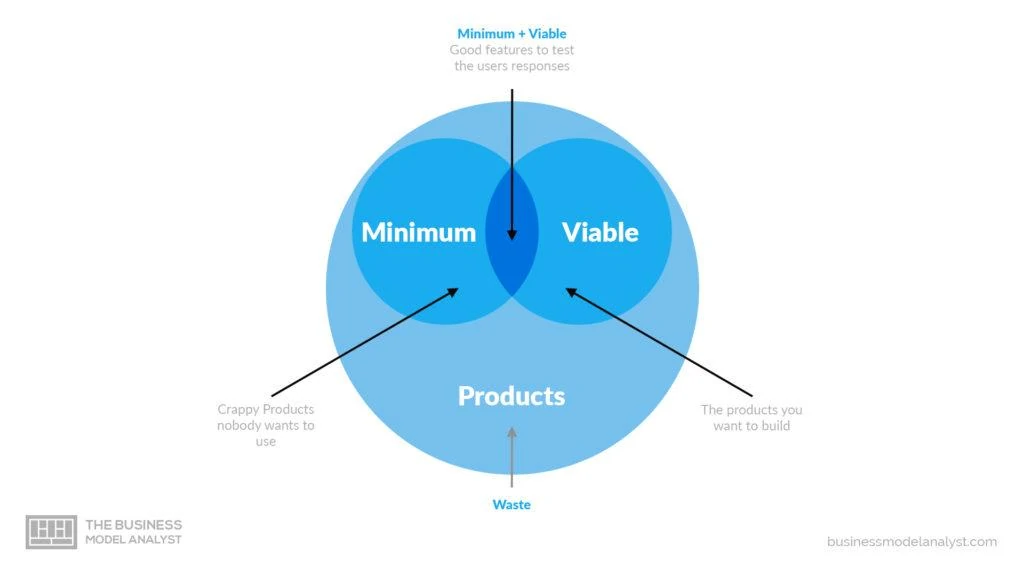
Minimum Viable Product (MVP) is the simplest version of a product that includes only the core features necessary to solve a problem or fulfill a need for the target audience. The goal is to launch quickly and gather valuable user feedback. This feedback helps companies validate the demand for their product, refine the concept, and make informed decisions before investing in further development.
By testing with an MVP, businesses can minimize risk, save resources, and adjust the product based on real-world insights from users. One of the biggest mistakes of many entrepreneurs is launching products without experimenting with and validating their ideas before doing so.
The result is that they often waste time and money investing in a product that nobody wants. The concept of a Minimum Viable Product, or MVP, is designed to avoid this. The objective is to avoid waste by developing a beta version of the end product before launching it on the market.
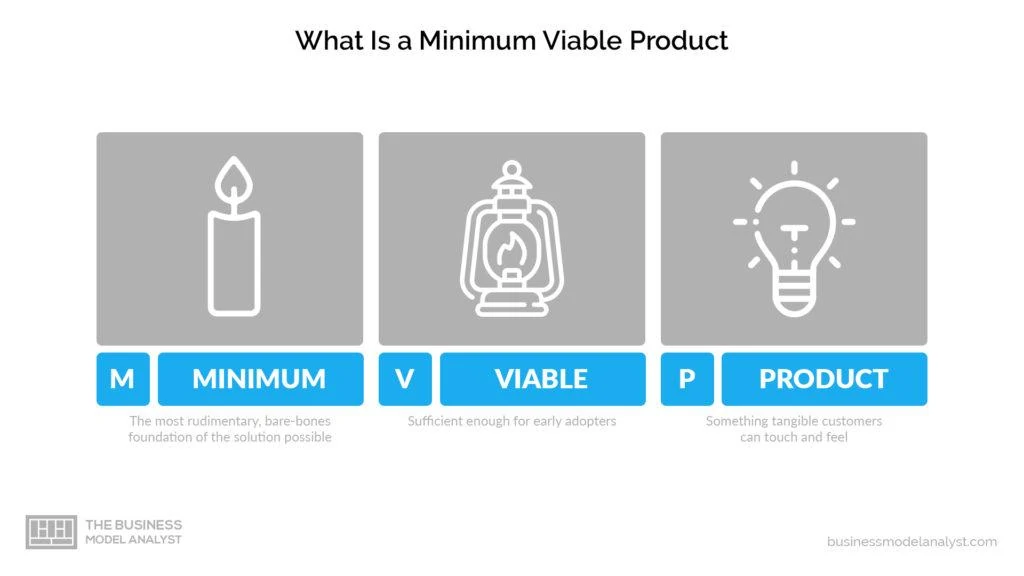
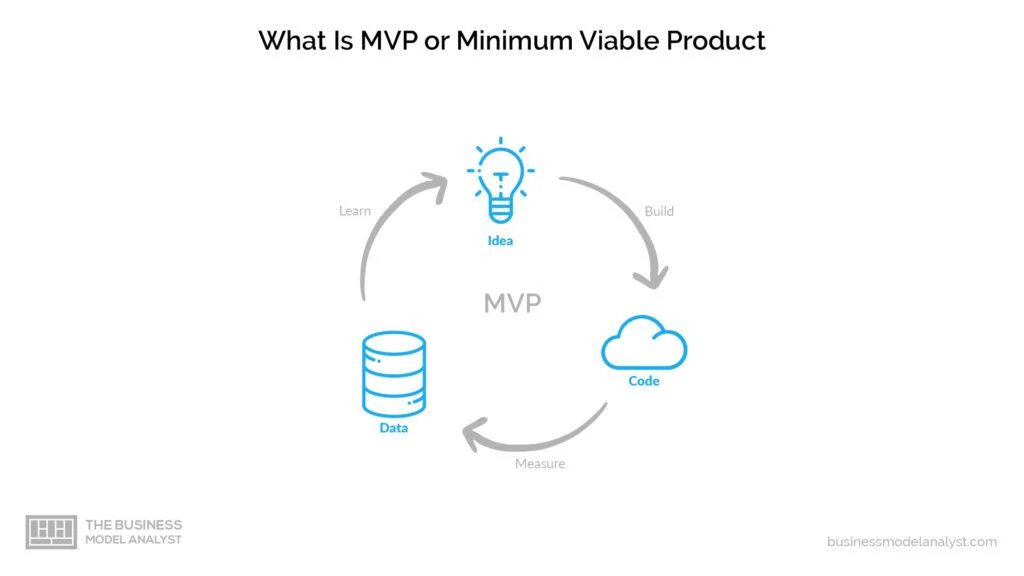
The MVP is a key part of the Lean Startup methodology since it involves testing hypotheses, getting customer feedback, and improving (iterating) the product before launching. The MVP is this experiment instrument. It’s going to anticipate problems before the whole business model is set.
The complete end product, full of features, will be designed and developed only after considering the first feedback on the Minimum Viable Product. The idea is to allow users to foresee the promise of this new product and identify what kind of value they perceive, guiding developers toward the ideal product that will be adopted by the largest share of the target audience.
Contents
How does Minimum Viable Product work?
MVP is applied as the core of an experimentation strategy, such as inside the Lean Startup methodology. The company or team perceives the audience’s necessity and develops a solution that meets this need. After delivering the customers the first version of this solution, they collect information during the experiment to check if they would buy it.
Based on the data gathered, the team will decide if the idea is valid and must be kept, if it is good, but needs improvement, or if it’s safer to discard it simply. A genuine product will be launched — but a more basic version. That way, it’s possible to see how people will behave towards the product and decide on the idea’s future.
Minimum Viable Product’s main characteristics
- Having enough value to be used from the beginning;
- Showing future benefits, able to attract the first users/buyers;
- Generating vital feedback, capable of guiding further development.
A good Minimum Viable Product puts the user/customer in the center of the project. It aims to solve real needs and problems. It also provides efficient mechanisms to measure engagement and get feedback to quantify and qualify the product’s overall performance.
How to build a Minimum Viable Product?
Before calling designers and engineers, some steps must be followed:
- Formulate hypotheses for validation. As the objective of MVP is to validate ideas on the market before launching them, it’s essential to create clear hypotheses from the start. If you cannot elaborate, it’s certainly not the time to build your Minimum Viable Product yet.
- Understand the market. Check audience indicators, have your persona clearly defined, perceive the company’s scenario and its competition, and learn as much as you can about your universe and users/customers.
- Set indicators and metrics. After checking the market, choose which metrics and indicators you will employ to evaluate the performance of your MVP with your audience.
- Decide on the MVP’s features. Balance time, resources, and the strategy you will employ to present its value proposition to the customer.
- Offer the solution. After elaborating on all those steps, it’s time to develop your MVP, which stands for a solution to your customer. Remember, you must invest as little time and capital as possible while still having features that meet your customers’ expectations in order to guarantee the best experience you can.
- Get feedback. Create a process for receiving comments, criticism, and suggestions on your MVP. You may need interviews, surveys, polls, online reviews, social media, etc.
- Iterate. After collecting all the information and opinions, consider the changes you may apply to your product. Finding an MVP is, in fact, the result of many iterations and errors. Sometimes, working on different versions of a business model is necessary. However, it’ll be worth it once you can validate your hypotheses!
- Launch the final product! Or not. After developing, iterating, getting feedback, and analyzing metrics and investments, you can decide if launching the actual product on the market is sustainable or if it’s prudent to discard this one and find another.
Minimum Viable Product Examples
Below are some well-known examples of MVPs that helped shape successful products.
- Dropbox: Dropbox is a good Minimum Viable Product example — their MVP was a simple explainer video. Before investing heavily in building the complex infrastructure required for a file storage and synchronization service, Dropbox created a short video demonstrating how their product would work. This video generated significant interest, validating the demand for a cloud-based file-sharing solution. It allowed Dropbox to gather a list of potential users who wanted the product, proving that the concept had a market appeal before the company wrote a single line of code.
- Airbnb: Airbnb’s founders initially launched their MVP to test the idea of renting out extra space in their apartment to people attending a conference in San Francisco. They created a simple website, took pictures of their apartment, and listed it as available for rent. They quickly attracted paying guests with minimal investment, proving demand for a peer-to-peer home rental service. This MVP enabled Airbnb to test and iterate the concept before scaling into its current global platform.
- Zappos: The online shoe retailer Zappos started with an MVP that involved the founder, Nick Swinmurn, taking photos of shoes from local stores and posting them online. Instead of investing in inventory, Swinmurn purchases shoes only after customers order on the website. This lean approach validated that people would buy shoes online without trying them on first. Once the business model was proven, Zappos expanded its offerings, eventually becoming one of the largest online shoe retailers.
- Buffer: Buffer, a social media scheduling tool, started with a simple MVP landing page explaining the product and offering interested users a sign-up option. If users clicked the sign-up button, they were shown a pricing page with different subscription tiers. However, the actual product did not exist yet. This test allowed Buffer to gauge user interest and validate demand for social media management tools. When enough users expressed interest, the founders began developing the product.
- Instagram: When Instagram first launched, it was a simple photo-sharing app with basic filters. The founders focused on building a smooth, user-friendly interface and limited the app’s functionality to uploading and sharing photos. By keeping the MVP lean, Instagram gained traction among users quickly. The product’s simplicity resonated with early adopters, and as the user base grew, additional features like video sharing and stories were introduced.
- Facebook: Facebook’s MVP, “The Facebook,” was initially a social network exclusive to Harvard University students. It had limited functionality compared to the platform it is today—students could create profiles and connect with classmates, but there were no games, news feeds, or advertising. The MVP helped validate the need for an online social network for college students. As the user base grew, Facebook expanded its features and opened the platform to other universities and eventually to the public.
- Spotify: Spotify’s MVP was a desktop application that allowed users to stream music instantly without downloading files. The founders wanted to test whether users would use a streaming service in an era dominated by illegal downloading and paid downloads. Spotify’s focus on solving the immediate problem of delayed music access gave it a competitive advantage. Based on the success of the MVP, Spotify expanded into mobile apps and curated playlists — eventually, became a global streaming giant.
- Uber: Uber’s MVP was a simple app that allowed users to request a ride in San Francisco. The initial version didn’t include the sophisticated algorithms, multiple ride options, or extensive driver network that Uber has today. The app was designed to connect riders with available drivers and process payments. The founders tested the concept in one city before expanding the service. The MVP proved that people would use a ride-hailing service, allowing Uber to grow and expand into new markets rapidly.
- Twitter (now X): Twitter’s MVP, known initially as “twttr,” was a primary platform that allowed users to post short 140-character messages. It was born from an internal hackathon project at Odeo, a podcasting company, and was intended to provide a simple way for employees to stay connected. The founders deliberately kept the MVP simple to focus on user interactions. Over time, Twitter evolved into a full-fledged microblogging platform, with hashtags, retweets, and other features being added based on user feedback.
- Foursquare: Foursquare started with a simple MVP focused on one core feature: checking locations and earning badges. Rather than launching a full-fledged social media platform with various features, the founders limited the initial release to this gamified check-in feature. The simplicity of the MVP allowed them to attract users and grow a community around the product. Over time, Foursquare expanded its functionality based on user feedback and behavior.
What are the benefits of the Minimum Viable Product?
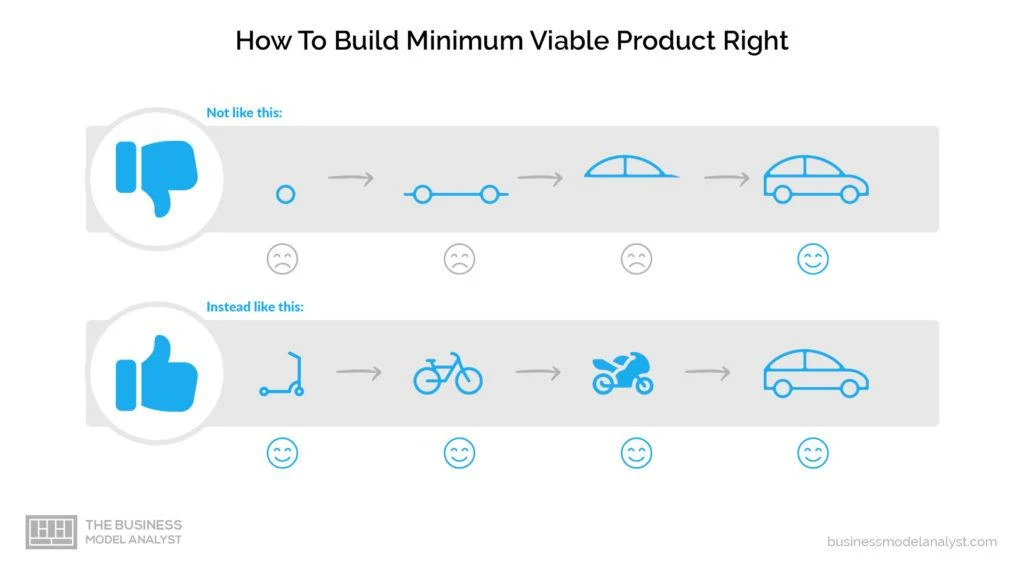
First, it’s important to highlight that the MVP is NOT a prototype. Featuring a Minimum Viable Product does not mean launching a product with fewer attributes or less quality. If so, how will you evaluate its viability on the market with all the needed features?
The MVP allows the development team to learn as much as they can about the customer’s vision with little effort and investment. It’s a way to realize how people will actually act toward the product, not just have an opinion about something they don’t even see.
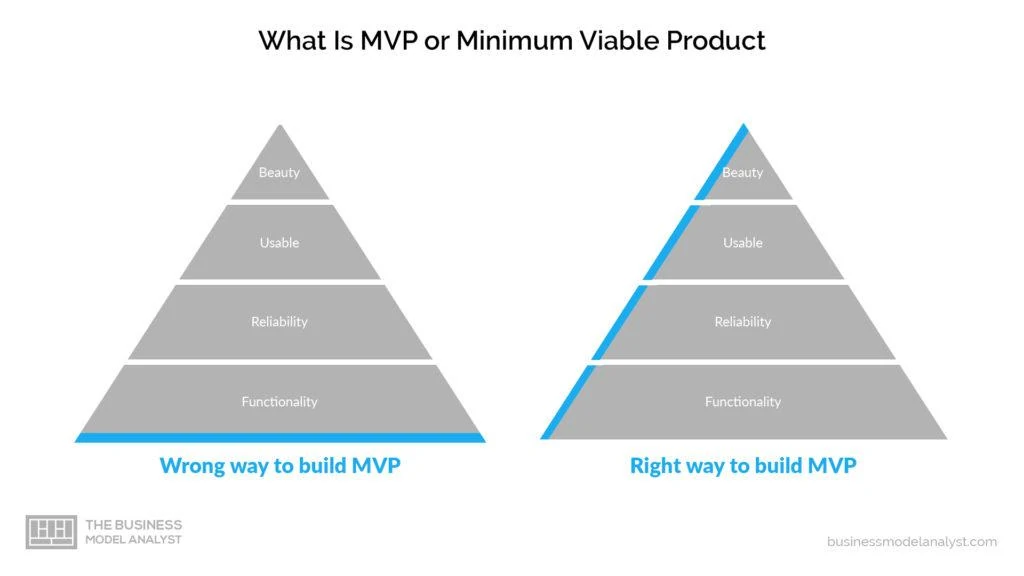
Thus, the Minimum Viable Product is the path to discovering if and how your solution will attract customers. It permits the team to iterate drastically or abandon the idea, if necessary, based on honest feedback and not spend too much on an idea that nobody cares about.
The Minimum Viable Product (MVP) approach has gained popularity in both startups and established businesses for its ability to bring a product to market quickly and efficiently. By focusing on the core functionalities that solve a specific problem or fulfill a fundamental need, the MVP allows companies to validate their ideas, iterate quickly, and reduce risks. Below are the key benefits of developing an MVP:
- Faster Time to Market: One of the most significant advantages of an MVP is the speed with which a product can be launched. By focusing only on the essential features, companies can release their product faster than if they waited to develop a fully-featured version. This early launch allows businesses to test their ideas in the market, reach potential customers quickly, and gain a competitive edge.
A faster time to market also means that companies can start generating feedback, revenue, and user engagement sooner, giving them a head start on optimizing their product based on real user needs.
- Reduced Development Costs: Developing a full-fledged product from the beginning can be time-consuming and expensive. By creating an MVP, companies can significantly reduce initial development costs. This is especially beneficial for startups with limited resources, allowing them to test their ideas without committing to heavy upfront investments.
Since the MVP includes only the core features, businesses avoid spending unnecessary time and money on features that might not resonate with users. This lean approach minimizes waste and maximizes efficiency, allowing companies to allocate resources where they matter most.
- Risk Mitigation: An MVP helps reduce the risk of product failure by allowing businesses to test their concept before investing too much time, money, and resources. By validating an idea early on, companies can avoid building a product that users may not want or need. Instead of committing to a fully developed product based on assumptions, the MVP provides real-world user preferences and behavior data.
If the initial MVP doesn’t meet market expectations, the company can pivot, iterate, or refine the product based on user feedback, thus lowering the chances of complete failure.
- User-Centered Product Development: MVPs enable businesses to involve users early in product development. By launching a simple product version and gathering feedback, companies can build products that align with user needs and preferences. This user-centered approach allows companies to refine and improve the product based on user behavior rather than relying solely on assumptions.
User feedback from the MVP can guide the development of new features, improvements, and design changes, ensuring that the final product delivers value to the target audience.
- Early Market Validation: MVPs allow companies to test the viability of their product idea in the real world. By releasing a simplified version of the product, businesses can assess whether there is sufficient demand for the solution they offer. Early market validation helps companies understand whether they are addressing a genuine problem and whether customers are willing to pay for the product.
This validation is crucial for making informed decisions about the product’s future. Companies can confidently move forward with further development if the MVP performs well. If it does, they can adapt or pivot before investing too much into a product that may fail.
- Faster Iteration Cycles: An MVP allows businesses to collect user feedback quickly and iterate on the product faster. Because the MVP is simple and focuses on core features, it’s easier to make changes and improvements based on user input. This feedback loop accelerates the development process, enabling companies to respond more effectively to user needs and evolving market conditions.
Instead of spending months or years perfecting a product, companies using an MVP can adopt an agile approach. They can continuously improve the product based on real-time feedback. Faster iteration cycles lead to a better product that meets user expectations and market demands.
- Building a Loyal Customer Base Early: Launching an MVP allows companies to engage with early adopters who are often more forgiving of imperfections and willing to provide feedback. These early users can become valuable advocates and help spread the word about the product, contributing to organic growth.
By involving users early in the process, companies can build a loyal customer base that feels invested in the product’s success. Early adopters appreciate being part of the product’s development journey and are likelier to remain engaged as the product evolves.
- Better Resource Allocation: MVP development allows businesses to allocate resources more effectively. Instead of investing in unnecessary features or designs upfront, companies can focus their time, money, and talent on what truly matters—the core functionalities that solve users’ problems. Once the MVP is validated, companies can prioritize adding new features based on user demand, ensuring that resources are spent on features that provide the most value.
This lean approach helps businesses avoid the common pitfall of developing products with too many features that users don’t need, ultimately saving resources in the long run.
- Attracting Investors: For startups looking to raise capital, an MVP can be proof of concept, demonstrating that the product has real market potential. Investors are more likely to invest in a business that has validated its product idea with an MVP, especially if there is evidence of user engagement, early sales, or positive feedback.
By launching an MVP, companies can showcase their ability to execute an idea and attract investors who want to see evidence of market traction before committing funds. A successful MVP can give investors confidence that the business is solving a real problem and has growth potential.
- Testing Different Market Segments: An MVP allows businesses to experiment with different market segments and customer personas without needing a fully developed product. By launching a lean version of the product, companies can target specific groups, test their response, and adjust their product accordingly.
For example, companies can use the feedback to pivot and target a different audience if an MVP is launched with one target audience in mind and fails to gain traction. This flexibility helps companies refine their product-market fit and better understand which customer segments will generate the most value.
FAQ
Which two aspects of a product do Minimum Viable Products (MVPs) test?
MVPs primarily test two key aspects of a product:
- Market Demand: MVPs help determine whether there is genuine interest in the product from the target audience. By releasing a simplified version of the product, businesses can assess if users are willing to engage with it, provide feedback, and pay for it;
- Core Functionality: MVPs test whether the product’s essential features adequately solve the user’s problem or fulfill a specific need. This allows companies to validate that their solution works in practice before committing to developing additional features.
Why might a company build a prototype or Minimum Viable Product?
Companies build prototypes or MVPs for several reasons:
- Validate Product Ideas: MVPs and prototypes allow businesses to test their concepts realistically, ensuring demand for their product before heavily investing in development;
- Minimize Risks: Companies can mitigate financial and operational risks by starting with a simplified product version. If the MVP fails to resonate with users, they can make changes without the high costs associated with fully developed products;
- Collect User Feedback: MVPs allow users to gather early feedback, allowing businesses to improve the product based on real-world needs and preferences;
- Faster Time to Market: By focusing only on core features, MVPs enable companies to launch quickly and get their product into customers’ hands sooner, giving them a competitive advantage;
- Attract Investors: An MVP can demonstrate market traction and proof of concept, making it easier for businesses to secure investment or funding.
Want to learn more about MVP? Go ahead and check out our Super Guide for it!