Business Model Innovation: Strategies and Examples for Successful Transformation
Mar
Companies must constantly innovate in today’s business environment to remain relevant and competitive. Business model innovation entails changes to one or multiple elements of an existing business model, which can assist businesses in generating new revenue streams, improving customer experience, and lowering costs.
Organizations can implement various strategies to achieve success. One approach is routine innovation, which enhances a company’s established strategy and caters to its existing customers by creating a new version of an existing product.
Another is disruptive innovation, which involves creating a new market by introducing a product or service that addresses a previously unmet need. Companies can also adopt open innovation, collaborating with external partners to develop innovations.
Innovation management is crucial for organizations that want to thrive and achieve long-term success. Companies that fail to innovate risk becoming irrelevant and losing market share to competitors. This article will explore various strategies for innovating business models and highlight examples of companies that have successfully implemented them.
Contents
What is Business Model Innovation?
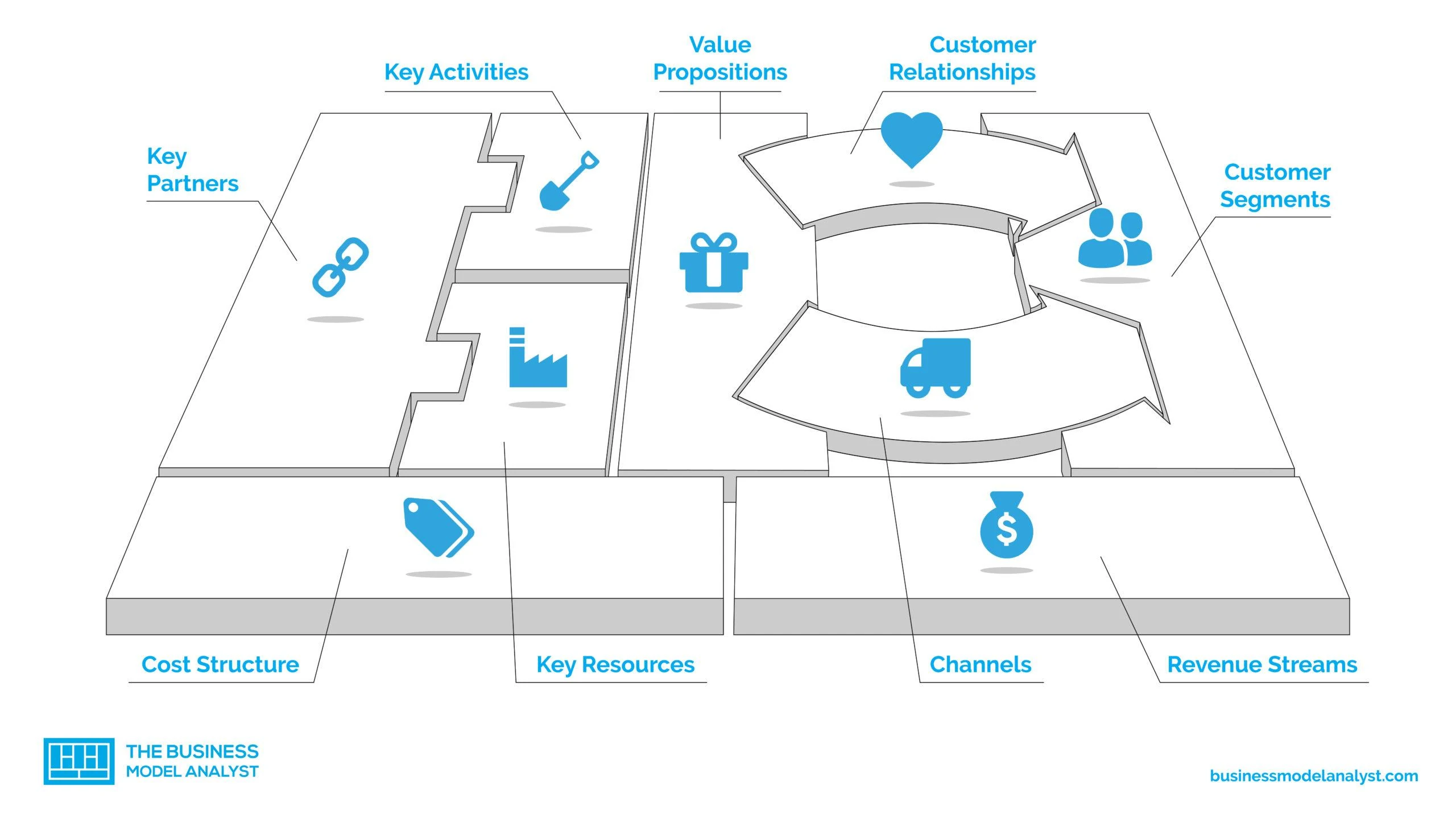
Business model innovation is creating new ways of delivering value to customers. It involves fundamental changes to a business’s operations, including its revenue streams, cost structure, and distribution channels.
This practice is essential for companies that want to stay competitive in today’s rapidly changing business environment. It allows businesses to adapt to new market conditions, respond to changing customer needs, and take advantage of emerging technologies.
Business model innovations can take many forms, such as:
- Creating new products or services
- Developing new distribution channels
- Changing pricing models
- Adopting new technology
- Entering new markets
Successfully implementing these innovations requires a deep understanding of the business landscape, agile thinking, and a culture that supports experimentation and learning.
Why is Business Model Innovation Important?
Innovative business models are fundamental to maintaining competitiveness in today’s market. It allows a company to adapt to changing customer demands and expectations, critical for maintaining relevance and market share. Key reasons why innovative approaches are essential include:
- Enhanced Value Proposition: Business model innovation allows a company to improve its customer value proposition. By making changes to its value proposition, a company can offer new and improved products or services that better meet customer needs;
- Increased Efficiency: Innovations can help a company increase efficiency and reduce costs. By making changes to its operating model, a company can streamline its operations and reduce waste, which can lead to significant cost savings;
- Competitive Advantage: Business model innovation can give a company a competitive advantage. By offering a unique value proposition and operating model, a company can differentiate itself from its competitors and attract more customers.
Without these innovations, a company risks stagnating and losing its competitive edge. It may also miss opportunities to expand into new markets or offer new products or services. Therefore, business model innovation should be a crucial part of any company’s strategy for long-term success.
Examples of Successful Business Model Innovation
Successful innovation can lead to significant growth and profitability for companies. Here are a few examples of companies that have successfully implemented innovative models:
- Amazon: Amazon’s subscription model has been a game-changer regarding customer lifetime value. The company’s Prime membership program has over 200 million members worldwide, who pay an annual fee in exchange for free shipping, access to streaming services, and other benefits. This has helped Amazon to increase customer loyalty and drive repeat purchases;
- Airbnb: Airbnb’s innovation in business model has centered around its value chain. The company has built a digital platform connecting hosts with guests, enabling them to rent their spare rooms or entire homes. Airbnb has disrupted the traditional hotel industry by offering a more personalized and affordable alternative. The company’s success has been driven by its ability to create a seamless experience for both hosts and guests;
- Netflix: Netflix’s business model innovation has been focused on its content strategy. The company has shifted from a DVD rental service to a streaming service and has invested heavily in producing original content. This has helped Netflix differentiate itself from competitors and build a loyal customer base. The company’s success has been driven by its ability to offer a wide variety of high-quality content that appeals to a broad audience.
These examples illustrate how innovative business models can drive growth and profitability. Companies can create new business models that disrupt traditional industries and drive innovation by focusing on customer needs and leveraging technology.
Strategies for Implementing Business Model Innovation
Implementing business model innovation can be a challenging task for any organization. It requires a clear understanding of the current business model, the market, and the customer’s needs. Here are some strategies that can help organizations implement business model innovation:
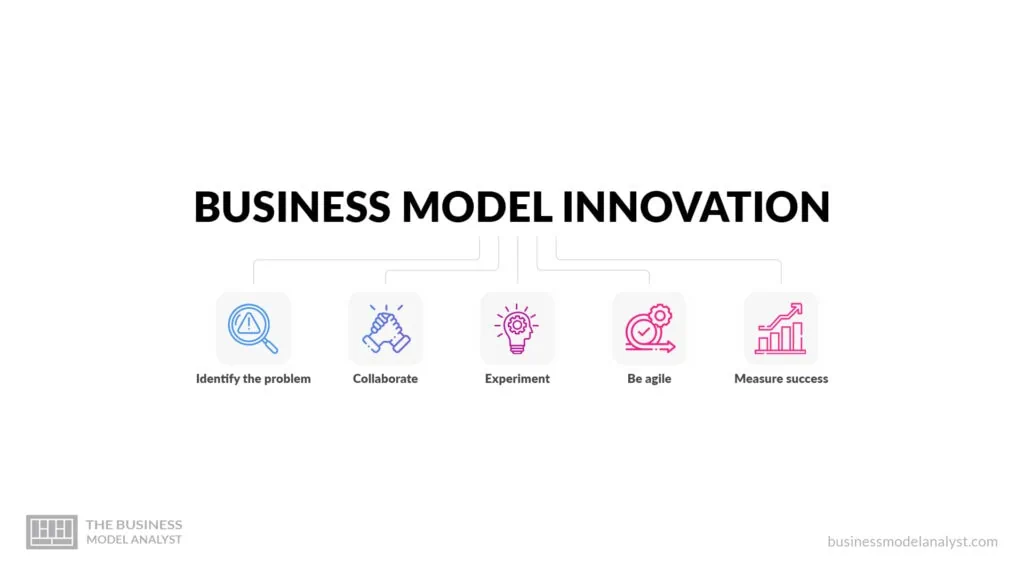
- Identify the problem: Before implementing any changes, organizations must identify the problem they are trying to solve. This requires a deep understanding of the current business model and the market. Once the problem is identified, organizations can start brainstorming new ideas and solutions;
- Collaborate: Collaboration is essential when implementing business model innovation. It involves working with different departments, teams, and stakeholders to develop and implement new ideas. Collaboration can help organizations identify new opportunities and potential roadblocks;
- Experiment: Experimentation is critical when implementing business model innovation. Organizations should not be afraid to try new things and test different ideas. Experimentation can help organizations identify what works and what doesn’t work;
- Be agile: Agility is essential when implementing innovation. Organizations should be able to adapt quickly to changing market conditions and customer needs. Being agile can help organizations stay ahead of the competition and remain relevant;
- Measure success: Measuring success is crucial when implementing business model innovation. Organizations should establish clear metrics and KPIs to measure the success of new ideas and solutions. Measuring success can help organizations identify what works and what needs improvement.
Implementing business model innovation requires a clear strategy and a willingness to try new things. By identifying the problem, collaborating, experimenting, being agile, and measuring success, organizations can successfully implement business model innovation and stay ahead of the competition.
Challenges and Risks of Business Model Innovation
While business model innovation can deliver a competitive advantage and foster growth, it also comes with challenges and risks. Here are some of the critical challenges and risks that companies may face when implementing innovation:
- Resistance to change: Innovation often requires a significant shift in the way a company operates, which can be met with resistance from employees and stakeholders who are comfortable with the status quo;
- Uncertainty: Because innovation involves exploring new and untested ideas, there is a level of uncertainty about whether the new model will succeed or not;
- Cost: Implementing a new business model can be costly in terms of time and resources. Companies may need to invest in new technology, retrain employees, and modify their supply chain, among other things;
- Competition: Other companies may also be exploring new business models, which can create intense competition and make it harder for a company to stand out;
- Legal and regulatory issues: Depending on the industry and the specifics of the new business model, there may be legal and regulatory hurdles to overcome.
Despite these challenges and risks, business model innovation can be a powerful tool for companies looking to stay competitive and grow. By carefully considering these challenges and taking steps to mitigate them, companies can increase their chances of success when implementing a new business model.
Conclusion
Business model innovation is essential for any organization seeking to remain competitive in today’s ever-changing market. It involves identifying new ways of delivering value to customers, which can lead to increased revenue and growth.
This article has explored various strategies and examples of business model innovation. We have seen how companies like Tesla and Discovery have revolutionized their industries by implementing innovative business models. We have also discussed the importance of customer-centricity, collaboration, and experimentation in business model innovation.
It is clear that business model innovation is not a one-time event, but an ongoing process that requires continuous adaptation and improvement. Companies must be willing to take risks and experiment with new ideas, while also being open to feedback and learning from their failures.
Innovation can be an excellent tool for organizations looking to stay ahead of the competition. By embracing new ways of delivering value to customers, companies can unlock new opportunities for growth and success in the years to come.