Disney Target Market Analysis
Jul
Understanding a company’s target market is essential for shaping everything from product development to advertising strategies. For a brand as globally recognized and emotionally resonant as Disney, knowing exactly who their audience is—and how to reach them—has been key to decades of growth and transformation.
The Disney target market encompasses a wide and diverse customer segment, from young children discovering magic for the first time to nostalgic adults revisiting beloved stories. Disney’s reach spans generations and continents, making its market analysis particularly unique. Whether it’s through theme parks, movies, merchandise, or streaming services like Disney+, the brand has cultivated a multi-layered strategy to connect with its audience on emotional and cultural levels.
This article will explore Disney’s target audience in detail, including how the company uses segmentation strategies to cater to specific groups. We’ll also analyze Disney’s marketing tactics, geographic focus, and behavioral insights, while comparing its audience approach to competitors like Universal Studios and Netflix. Finally, we’ll assess Disney’s advantages and potential weaknesses in engaging with its core market.
Contents
Who is Disney Target Audience?
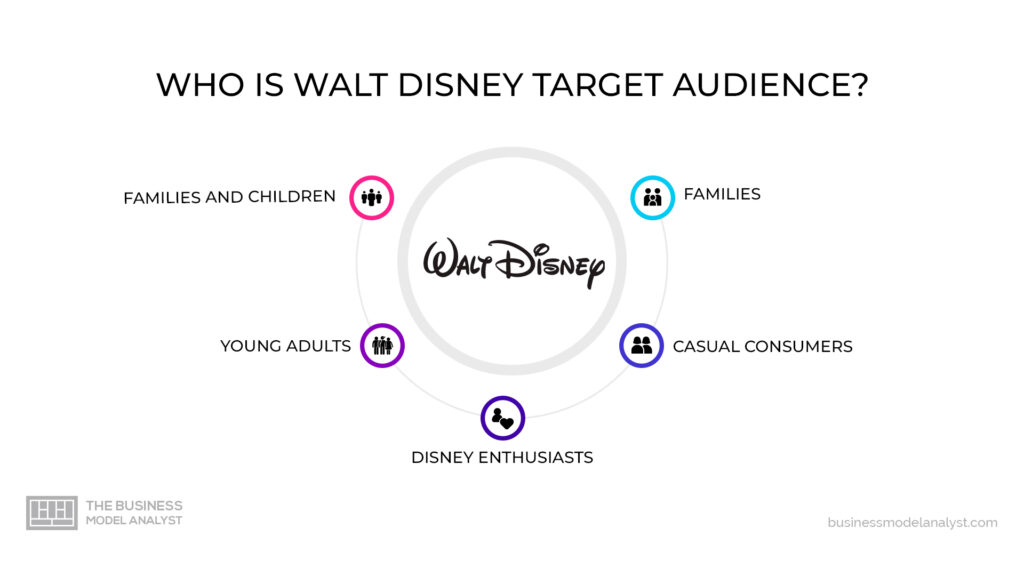
The Disney target market is remarkably diverse, spanning across age groups, geographies, and cultural backgrounds. However, the company has strategically identified and prioritized several key audience segments to maintain relevance and drive revenue across its portfolio.
At its core, Disney targets families with young children, particularly those aged 4 to 12. These children are often first introduced to Disney through animated films, merchandise, or streaming content on Disney+. Parents, typically aged 25 to 45, are also a primary focus—both as gatekeepers of household spending and as nostalgic consumers themselves. Disney designs experiences, from movie themes to theme park attractions, that appeal to this dual-layer of child excitement and parental trust.
In addition, Disney increasingly engages Millennials and Gen Z, especially through franchises like Marvel, Star Wars, and Pixar. These demographics value inclusive storytelling, diverse representation, and streaming flexibility, all of which Disney has embraced in recent years. Shows like The Mandalorian and Ms. Marvel reflect this shift, catering to younger adults and teenagers who expect deeper narratives and fresh perspectives.
Income-wise, Disney appeals largely to middle- and upper-middle-class households, particularly for high-cost experiences like Disney World vacations or exclusive Disney+ bundles. Their marketing speaks to aspirational family values—joy, imagination, and quality time—making the brand both emotionally resonant and materially desirable.
In short, the Disney target market includes children, nostalgic adults, and content-savvy teens, tied together by a shared appreciation for story-driven content and immersive entertainment. Disney’s cross-generational reach sets it apart in the global media landscape.
Disney Target Market Segmentation and Marketing
Market segmentation is the process of dividing a broad consumer market into smaller groups based on shared characteristics. This allows companies to tailor their messaging, products, and services to meet the distinct needs of each segment. Disney applies this principle extensively, using segmentation to ensure its offerings resonate across generations and cultures.
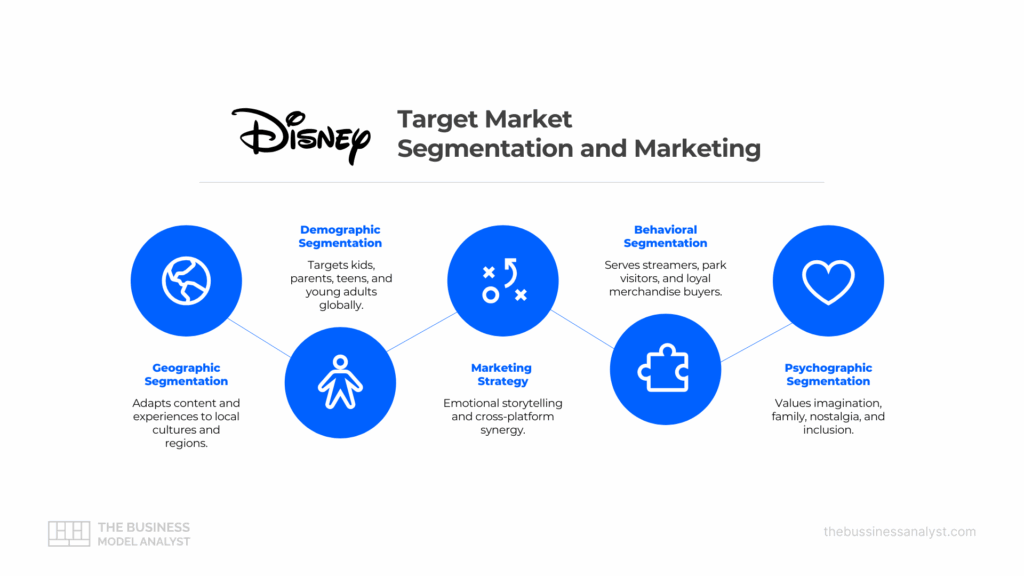
The Disney target market is broken down using four major segmentation types: demographic, geographic, behavioral, and psychographic. Each one helps Disney create customized experiences that feel personal and relevant, whether it’s a toy line aimed at preschoolers or a Marvel movie for young adults.
For example, Disney’s demographic segmentation focuses on children and families, but also older teens and nostalgic adults. Geographic segmentation enables Disney to localize content and park experiences to regional tastes, such as Shanghai Disneyland’s emphasis on Chinese mythology. Behaviorally, Disney tracks how consumers engage with content—like binge-watching trends on Disney+—to personalize recommendations. Psychographically, Disney taps into universal values such as imagination, bravery, and family connection, using storytelling to create emotional bonds.
In the following sections, we’ll examine each segmentation approach in detail to show how Disney crafts its strategy across platforms, products, and cultures.
Demographic Segmentation
Demographic segmentation refers to dividing the market based on statistical characteristics such as age, gender, income, education, and family structure. For a brand as far-reaching as Disney, this type of segmentation is fundamental to understanding and serving its varied customer base.
The Disney target market is anchored by children aged 4 to 12, who are introduced to the brand through animated films, toys, and television series. Characters like Elsa from Frozen or Lightning McQueen from Cars are designed to appeal directly to this age group, with bright visuals, catchy music, and simple yet emotional storylines. Disney leverages these characters in every facet of marketing—from merchandise to theme parks.
However, Disney also targets parents aged 25 to 45, especially mothers who often make entertainment and travel decisions for the family. These adults are reached through nostalgic content, such as live-action remakes of classic films or theme park promotions that emphasize “making magical family memories.” Disney’s marketing often appeals to this audience’s desire to provide joyful, wholesome experiences for their children.
The company further extends its reach to teens and young adults, particularly through Marvel and Star Wars. These franchises skew toward ages 13 to 35, blending action with complex narratives and characters. The content is strategically aligned with what older viewers value—mature themes, strong character development, and representation.
Income is another important demographic factor. Disney largely targets middle to upper-middle-income families, those who can afford streaming subscriptions, theatrical releases, merchandise, and costly vacation packages to Disney theme parks. For example, a family trip to Disney World typically costs several thousand dollars, positioning it as a premium experience.
Education and lifestyle also play a role. Disney appeals to educated, brand-conscious consumers who value safe, imaginative content for their children and resonate with family-oriented messaging. These consumers are also more likely to invest in experiential offerings and follow Disney’s ever-expanding cinematic universes.
In essence, Disney’s demographic segmentation allows it to speak to a wide yet clearly defined group: children as primary users, parents as purchasers, and older fans as emotionally invested brand advocates.
Geographic Segmentation
Geographic segmentation involves tailoring products and marketing efforts based on location—ranging from country and region to urban versus rural areas. For a global brand like Disney, understanding where its audiences live and how cultural contexts shape preferences is vital.
The Disney target market spans multiple continents, but the brand modifies its strategies to align with regional values and consumption patterns. In the United States, Disney’s largest market, the company offers a broad portfolio—from Disney Channel to Disneyland to Disney+—with marketing that reflects American family values, diversity, and pop culture trends.
In contrast, Disney localizes content and experiences when expanding internationally. Shanghai Disneyland, for instance, was designed with Chinese consumers in mind. It features attractions like the “Garden of the Twelve Friends,” incorporating the Chinese zodiac, and food options that cater to local tastes. This localization helped the park draw 11 million visitors in its first full year—proof that adapting to geography is not just a courtesy, but a business imperative.
In India, Disney leverages cricket and Bollywood culture on Disney+ Hotstar, which includes regional language content and live sports streaming—massively popular in the region. Meanwhile, in Europe and Latin America, Disney adapts pricing and promotional strategies to reflect economic conditions and entertainment norms.
Urban areas are a key geographic focus, particularly for Disney+. Cities offer higher internet penetration and a greater appetite for streaming content, making them prime targets for digital campaigns. In rural regions, Disney may focus more on broadcast TV and retail partnerships for physical merchandise.
By adjusting offerings to local contexts—whether through language, pricing, or culturally resonant themes—Disney ensures its global presence remains relevant and profitable.
Behavioral Segmentation
Behavioral segmentation focuses on how consumers interact with a brand—looking at usage habits, purchasing patterns, loyalty behaviors, and product engagement. For Disney, these insights are central to designing personalized content, fostering brand loyalty, and increasing lifetime customer value.
The Disney target market includes individuals who engage frequently with its ecosystem, from binge-watchers of Disney+ series to annual passholders at Disneyland. Disney identifies and segments its audience based on frequency of use and platform engagement. For instance, highly active Disney+ users are shown curated content recommendations and early access to new releases, while occasional viewers may see broader promotional banners or family-focused suggestions.
Purchase behavior is another key signal. Disney tracks merchandise buying habits—like which characters are most purchased or what age groups prefer certain toy lines—to inform future product development. Fans who regularly buy Marvel collectibles or Disney Princess dolls, for example, are targeted with exclusive offers or bundled promotions through the Disney Store or third-party retailers.
Loyalty programs such as the Disney Rewards Visa Card and D23 fan club are tools used to deepen consumer commitment. These programs offer early ticket access, merchandise discounts, and insider content, keeping fans within the Disney ecosystem and encouraging repeat engagement.
Another major behavioral segment involves travel habits. Families who book theme park vacations are typically high-value consumers, often returning every few years. Disney uses email campaigns, seasonal promotions, and family vacation planning tools to convert interest into bookings and upsell hotel stays, meal packages, or Genie+ services.
By closely observing how audiences behave—what they watch, buy, and visit—Disney refines its strategies to maximize engagement, deepen emotional connections, and drive revenue through targeted experiences.
Psychographic Segmentation
Psychographic segmentation dives into consumers’ values, interests, lifestyles, and personalities. For Disney, this form of segmentation is crucial because the brand’s appeal often hinges on emotional resonance and storytelling values, not just product features.
The Disney target market is emotionally driven, responding to themes of imagination, family, nostalgia, adventure, and empowerment. These psychographic traits vary by segment, but they all align with Disney’s storytelling model. For example, parents value wholesome, safe entertainment and respond to narratives about love, resilience, and community. Films like Encanto or Finding Dory emphasize these ideals, reinforcing Disney’s position as a family-first brand.
Young adults and teens, on the other hand, are increasingly drawn to identity and representation. Through franchises like Black Panther, The Little Mermaid (2023), and Turning Red, Disney taps into themes of cultural pride, self-discovery, and growing up. This appeals to an audience that values diversity, inclusion, and authenticity—psychographic drivers that influence both viewing habits and brand loyalty.
Lifestyle alignment also plays a role. Disney fans often participate in “Disneybounding” (dressing in Disney-inspired outfits) or travel annually to Disney parks, indicating a lifestyle built around brand immersion. These consumers—sometimes referred to as “Disney Adults”—often engage with Disney content, merchandise, and community year-round.
Disney’s campaigns are shaped around these emotional and lifestyle cues. For example, its “Dream Big, Princess” campaign empowered young girls by spotlighting real-world women who embody Disney Princess values like courage and compassion. Similarly, Disney Cruise Line emphasizes escapism and adventure, ideal for families seeking stress-free bonding time.
By aligning itself with audience values and life aspirations, Disney maintains an emotional bond that drives loyalty well beyond any single product or experience.
Disney Marketing Strategy
Disney’s marketing strategy is built around emotionally resonant storytelling, cross-platform consistency, and multigenerational appeal. The company uses a wide mix of channels to reach its diverse audience—including television, digital advertising, social media, influencer collaborations, theatrical trailers, and experiential marketing.
The brand’s messaging consistently emphasizes magic, nostalgia, and family values, regardless of the medium. For example, a Disney+ ad may focus on cozy family movie nights, while a Marvel film campaign might highlight themes of empowerment or heroism. Even in product marketing—such as toys or apparel—Disney reinforces its core themes of imagination and wonder.
Disney also invests heavily in content synergy, similar to how the Amazon marketing strategy creates brand consistency across e-commerce, cloud services, and devices. This strategy ensures maximum exposure and brand coherence. When Frozen 2 was released, for example, it was supported by toy lines, live shows, digital games, and themed park experiences—all aligned with the same emotional and narrative cues.
Influencer partnerships, particularly on platforms like TikTok and YouTube, help Disney connect with younger audiences. Meanwhile, nostalgic campaigns targeting adults use legacy content and childhood memories to rekindle emotional connections.
Ultimately, Disney’s marketing strategy succeeds by building on emotional depth, character familiarity, and unified storytelling, allowing it to reach and resonate with virtually every age group.
How Disney Reaches Its Audience
Disney reaches its audience through a sophisticated, multi-channel approach that blends digital innovation with traditional media, in-person experiences, and emotional storytelling. The company’s ability to connect with distinct audience segments across age, region, and platform is a key reason for its global dominance.
Disney+
Launched in 2019, Disney+ has become a central platform for audience engagement. It offers families and individuals immediate access to Disney, Pixar, Marvel, Star Wars, and National Geographic content. Through personalized recommendations, trailers, and content groupings (e.g., “Princess Collection” or “Marvel Legacy”), Disney+ enables users to engage on their terms, fostering deeper connection through on-demand storytelling.
The platform also uses behavioral data to shape content promotion. For example, if users binge Marvel content, they’re likely to see promotional tiles for the next MCU series. This data-driven strategy ensures high relevance, boosting viewership and satisfaction.
Social Media and Influencers
Disney leverages social media to engage fans in real-time, especially younger demographics. On Instagram and TikTok, Disney’s official accounts post behind-the-scenes content, character sketches, and creator collaborations. Influencers often preview new merchandise or share Disney park experiences, turning followers into customers. Campaigns like the #DisneyPlusVoices challenge on TikTok helped boost engagement around inclusive content.
Theme Parks and Events
Disney theme parks remain one of its most powerful audience touchpoints. These immersive spaces turn stories into physical experiences, deepening emotional loyalty. Park visits often become multi-day family events, reinforced by park-specific merchandise, apps, and seasonal campaigns (like Halloween at Disneyland). Disney also hosts fan events like the D23 Expo, where loyal fans gather for exclusive previews and community bonding.
Licensing and Retail
Disney products are sold in nearly every major retailer worldwide, from Walmart to boutique toy shops. The company’s retail strategy ensures that children can engage with Disney characters off-screen—through backpacks, costumes, or home décor. Strategic licensing deals, like collaborations with LEGO or Adidas, also help Disney stay culturally relevant and reach lifestyle-conscious consumers.
Through these varied touchpoints—streaming, social media, physical experiences, and merchandise—Disney maintains a seamless, omnichannel relationship with its audience.
Comparison to Competitors’ Target Audience
When evaluating Disney’s target audience against key competitors, distinct strategic differences emerge in who each brand serves and how they resonate emotionally. Below, we compare Disney with Universal Studios and Netflix, highlighting convergences, contrasts, strengths, and weaknesses in their audience strategies.
Disney vs Universal Studios Target Audience
Both Disney and Universal Studios target families and children, but their approaches diverge significantly. Disney focuses on timeless fairy tales, nostalgia, and wholesome family values, appealing broadly across multiple generations. Universal, in contrast, leans toward thrill-seekers and pop culture enthusiasts, prioritizing franchises like Jurassic Park, Fast & Furious, and Harry Potter with immersive, adrenaline-driven park experiences.
Demographically, Universal tilts toward older teens and adults (15–45), often skewing male, while Disney embraces a more gender-balanced family audience from preschool to adults. Psychographically, Universal attracts adrenaline lovers and pop culture buff, whereas Disney leans into emotional connection, imagination, and family bonds.
Disney holds a clear advantage among families with young children; Universal resonates more with teens and action-focused adults. Their strategies reflect this—Disney uses classic storytelling and character merchandise, while Universal deploys rides, spectacle, and IP-driven immersive experiences.
Disney vs Netflix Target Audience
Disney and Netflix share young adult and family segments but diverge in key areas. Netflix spans a broad age range—from children’s animations to adult dramas and documentaries—while Disney more consistently centers around family-friendly, IP-driven storytelling.
Netflix’s audience skews toward binge-watchers seeking variety and novelty, often localized through region-specific shows. Disney draws those seeking comfort, nostalgia, and cohesive brand worlds (like Marvel, Star Wars). Psychographically, Netflix caters to viewers who value creator-driven, genre-spanning content and unconventional themes, contrasting with Disney’s focus on positivity and universal themes.
In terms of marketing, Netflix often relies on algorithmic recommendations, social buzz, and first-mover releases. Disney supplements its tools with cross-format synergy—movies, series, theme parks, merchandise—creating deeper emotional engagement.
Similarities in Target Audiences
Both Disney and these competitors aim at overlapping demographic groups—families, young adults, and global audiences. All tap into digital platforms to distribute content and engage viewers. They also appeal to similar psychographic desires: entertainment, escapism, and emotional resonance—whether through thrills (Universal), binge culture (Netflix), or heartfelt storytelling (Disney).
Key Differences in Target Audiences
Disparities arise in age focus, values, and content tone. Disney maintains a consistent family-first, nostalgia-driven brand, while Universal emphasizes thrills and spectacle, and Netflix pursues genre diversity and novelty. Disney’s reliance on beloved intellectual property and multigenerational storytelling clearly distinguishes it from its competitors.
Disney Advantages
- Brand Cohesion Across Platforms
Disney’s storytelling ecosystem—spanning movies, parks, merchandise, and streaming—is unified across formats. This synergy deepens awareness and audience loyalty more than isolated experiences. - Emotional and Nostalgic Depth
Disney’s emphasis on legacy characters and family-oriented narratives creates long-term emotional bonds that newer or more transient platforms struggle to imitate. - Extensive Global Reach with Localization
Through localized parks (like Shanghai Disneyland) and region-specific streaming content (e.g., Disney+ Hotstar in India), Disney connects emotionally across cultures.
Disney Disadvantages
- Premium Price Barrier
Disney’s positioning as a premium, family-friendly brand—parks, parks tickets, merchandise—places it out of reach for lower-income families compared to competitors offering a la carte entertainment. - Less Agility in Niche or Edgy Content
Disney’s family focus limits its flexibility. It struggles to cater to niche or adult-only audiences, where Netflix thrives with diverse, mature storytelling. - Potential Brand Fatigue
Reliance on legacy franchises (e.g., repeated films, theme park expansions) can lead to perceptions of diminishing creativity among older audiences craving innovation.
Conclusion
Disney’s success is rooted in its exceptional ability to understand and engage its target market. By segmenting its audience across demographics, behaviors, geographies, and psychographics, Disney delivers deeply personalized and emotionally resonant experiences—whether through blockbuster films, streaming content, or immersive theme parks.
The Disney target market spans generations and geographies, unified by a love for storytelling, imagination, and emotional connection. From toddlers discovering Mickey Mouse to adults rewatching their childhood favorites on Disney+, the brand touches audiences at every life stage. Its strategic use of segmentation ensures that each group sees a version of Disney that feels uniquely tailored to them.
However, as market preferences shift and new platforms emerge, Disney must remain agile—balancing nostalgia with innovation and broad appeal with more niche or diverse narratives. The company’s future success will depend on how well it evolves alongside its audience, both honoring its legacy and embracing the changing dynamics of global entertainment.