Red Bull Value Chain Analysis
Jun
Value chain analysis is a strategic tool developed by Michael Porter to examine internal company activities that create value and contribute to competitive advantage. It divides operations into primary and support activities. For Red Bull, a leading energy drink brand, understanding its value chain reveals how the company sustains high profitability and operational efficiency.
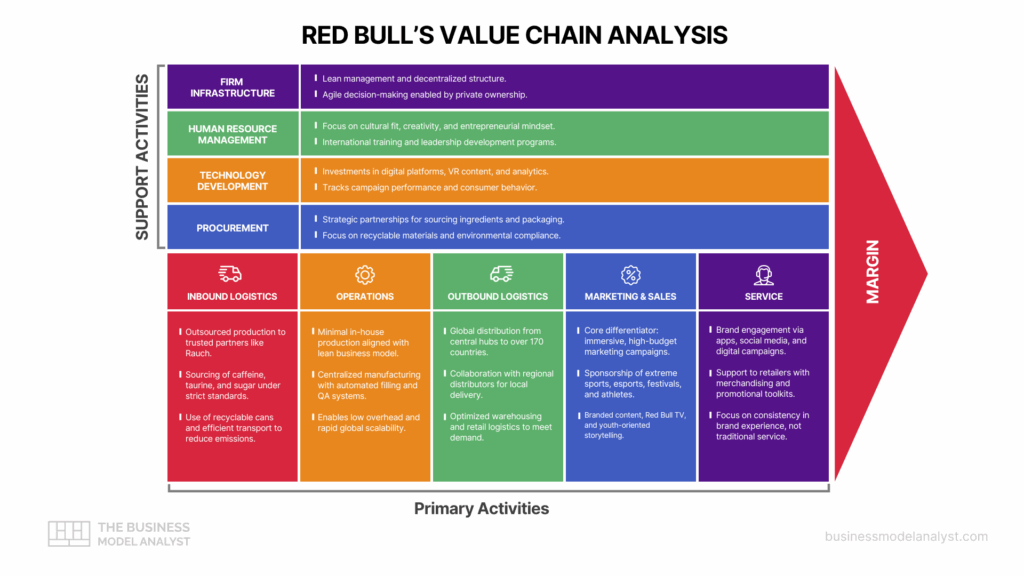
The Red Bull value chain analysis highlights the company’s unique approach—outsourcing production, focusing on powerful marketing, and maintaining a lean infrastructure. Through this model, Red Bull streamlines operations, drives global brand engagement, and prioritizes innovation. Its value creation relies on strategic collaborations, brand positioning, and meticulous control over key activities that shape consumer perception and loyalty.
Contents
Overview of Red Bull
Founded in 1984 by Austrian entrepreneur Dietrich Mateschitz and Thai businessman Chaleo Yoovidhya, Red Bull revolutionized the global beverage industry. Inspired by a Thai energy drink, Mateschitz adapted the formula and branding for Western markets, launching Red Bull GmbH in 1987 in Austria. The brand quickly expanded internationally, pioneering the energy drink category.
Key milestones include Red Bull’s entry into the U.S. market in 1997 and its diversification into extreme sports, music, and media. Red Bull Racing, launched in 2005, strengthened its global identity. These moves reinforced the Red Bull business model, which centers on bold marketing, lifestyle branding, and lean operations. The company avoids in-house manufacturing, relying on partnerships to scale efficiently while focusing on promotion and brand experience.
Primary Activities in Red Bull Value Chain
Inbound Logistics
Red Bull operates with a distinctive supply chain model. Instead of manufacturing its own products, the company outsources production to reliable partners, including Rauch in Austria. These partners source ingredients like caffeine, taurine, and sugar, adhering to Red Bull’s strict quality standards. The company emphasizes sustainability, employing recyclable cans and optimizing transportation routes to reduce emissions.
Operations
Red Bull maintains minimal in-house production, focusing instead on quality assurance and branding, consistent with a lean business model. Production is centralized, then distributed globally through partners. This lean approach reduces fixed costs and enables strategic focus. Investments in automated filling plants and safety testing ensure consistent product quality. Red Bull’s operational strategy supports fast scalability without compromising brand standards.
Outbound Logistics
Once products are manufactured, Red Bull uses a globally integrated distribution network. Products are shipped from central European hubs to over 170 countries. The company collaborates with regional distributors and logistics providers to manage warehousing, delivery, and retail placement—illustrating an effective approach to global distribution channels in the beverage industry.. Efficient outbound logistics help maintain product freshness and reduce stockouts, especially in high-demand areas like convenience stores and nightlife venues.
Marketing and Sales
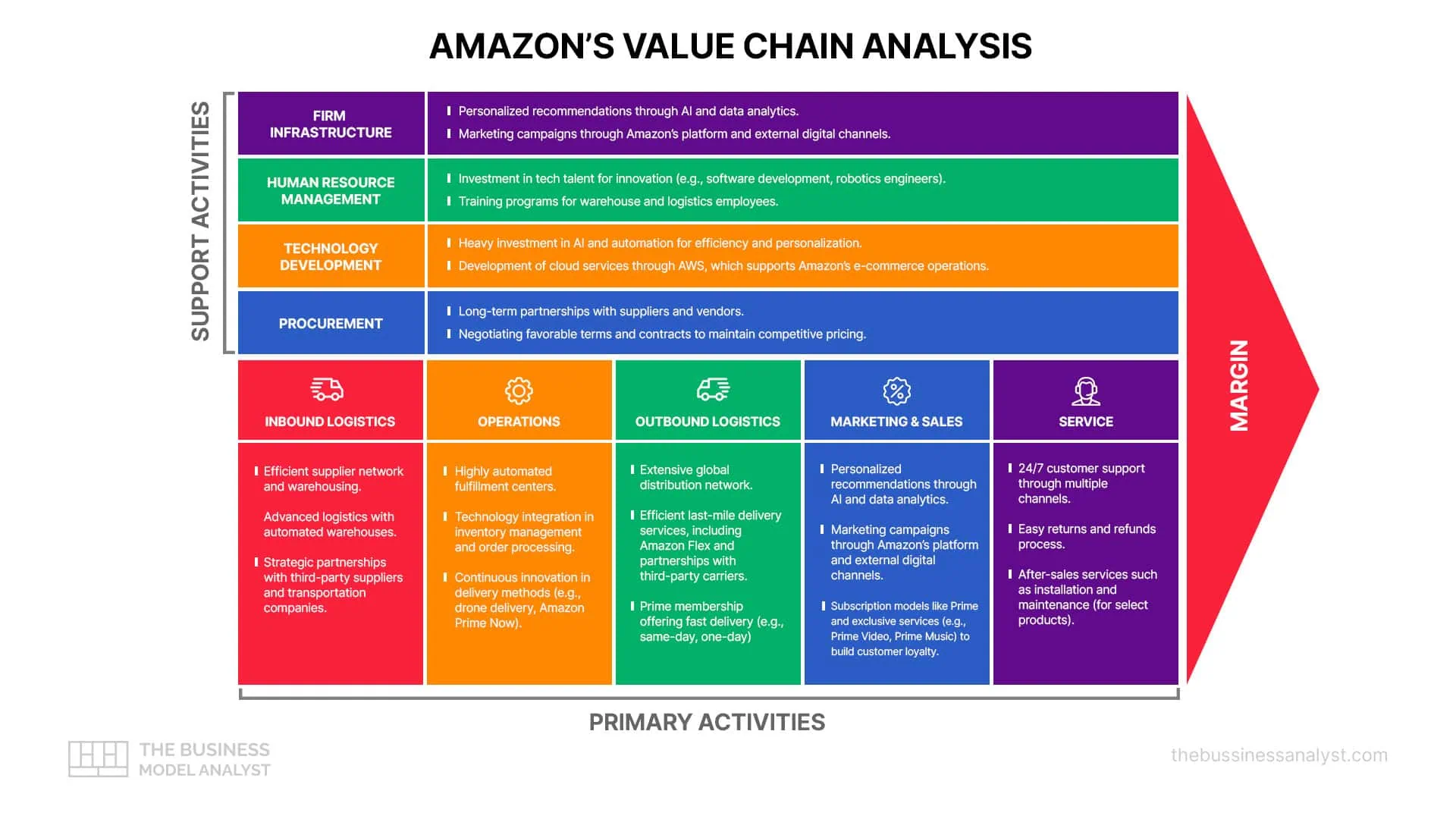
Marketing is Red Bull’s strongest differentiator. The company allocates a significant portion of its budget to high-impact campaigns—an approach that mirrors elements of the Amazon marketing strategy in terms of aggressive brand positioning and customer reach. Red Bull sponsors athletes, produces Red Bull TV, and runs events like Red Bull Air Race. This immersive storytelling connects deeply with young consumers and reinforces its premium positioning—demonstrating a compelling brand promise that aligns marketing with lifestyle values.
Service
Red Bull’s after-sale service focuses on brand engagement rather than traditional customer service. While the product requires little support, the company maintains active consumer engagement through apps, social media, and interactive campaigns. Retailers and distributors receive merchandising support, event toolkits, and promotional materials, helping maintain strong shelf presence and consistent brand experience globally.
Support Activities in Red Bull Value Chain
Firm Infrastructure
Red Bull’s firm infrastructure emphasizes lean management and global oversight. The company is privately held, allowing for agile decision-making. Its decentralized structure supports regional autonomy, enhancing market responsiveness. Red Bull enforces rigorous financial controls and strategic planning, ensuring brand consistency across markets while maintaining cost discipline and operational excellence.
Human Resource Management
Red Bull prioritizes cultural fit, creativity, and entrepreneurial spirit in its hiring. Its HR strategy supports talent development through international training programs and leadership tracks. The company promotes diversity and inclusion and fosters a performance-driven culture. Employees are encouraged to innovate, aligning with Red Bull’s identity as a bold, dynamic brand.
Technology Development
While not a tech company, Red Bull leverages technology for brand experience and operational efficiency. It invests in digital platforms, VR content, and advanced analytics to track campaign performance and consumer behavior. Its media arm, Red Bull Media House, produces high-quality digital content that enhances customer engagement and data-driven decision-making.
Procurement
Red Bull maintains strategic partnerships for sourcing raw materials and packaging. It focuses on high-quality ingredients and environmentally responsible suppliers. Procurement emphasizes long-term collaboration, cost management, and sustainability. The use of lightweight, recyclable cans and supplier audits helps ensure environmental standards and consistent product quality worldwide.
Analysis of Red Bull’s Competitive Advantage
Red Bull’s competitive advantage stems from a tightly focused value chain that prioritizes brand identity, lean operations, and strategic outsourcing. Unlike competitors that manage production internally, Red Bull delegates manufacturing, freeing resources to amplify marketing and brand experience. This lean model increases agility, lowers overhead, and supports rapid global expansion.
Its immersive marketing strategy—spanning extreme sports, content creation, and youth culture—builds strong emotional connections. Red Bull consistently ranks high in brand equity due to this lifestyle-oriented approach. Furthermore, decentralized operations allow for local market adaptation while maintaining core brand consistency.
Red Bull’s control over primary and support activities creates a resilient business model. Its cost-efficient structure, bold branding, and ability to resonate with a global audience ensure long-term sustainability. In a crowded beverage market, these value chain choices provide Red Bull a distinct edge in customer loyalty, profitability, and market adaptability.
Key Takeaways from Red Bull Value Chain
The Red Bull value chain analysis reveals how a non-traditional approach can generate significant competitive advantages. Red Bull focuses on high-impact marketing, strategic outsourcing, and global brand consistency to maximize efficiency and profitability. By excelling in primary activities like marketing and distribution, and reinforcing them with lean support systems, Red Bull ensures scalability and strong brand equity.
Its success lies in aligning every value chain activity with a bold, lifestyle-driven identity. This synergy between outsourced operations and in-house brand control enables the company to dominate the energy drink sector while remaining agile in a fast-changing market. Red Bull’s value chain is a blueprint for leveraging brand power and operational focus to achieve sustainable growth, serving as one of many insightful value chain analysis examples in modern business strategy.