Maruti Suzuki Marketing Strategy
Mar
The Maruti Suzuki Marketing Strategy is centered around affordability, trust, and wide accessibility, making it a cornerstone of India’s automobile market. Through customer-centric innovation, strategic branding, and an expansive distribution network, the brand has successfully reached diverse customer segments and retained leadership in a highly competitive industry.
Founded in 1981 as a joint venture between the Indian government and Suzuki Motor Corporation of Japan, Maruti Suzuki has become synonymous with cars for the Indian middle class. It revolutionized personal mobility in India by making car ownership accessible to millions. Over the years, the brand expanded its offerings from compact hatchbacks like the iconic Maruti 800 to premium sedans and SUVs under its NEXA line, catering to aspirational consumers.
What truly sets Maruti Suzuki apart is its ability to understand the pulse of the Indian consumer. In a market driven by value, fuel efficiency, and service reliability, Maruti has consistently delivered with practical innovations and unmatched service infrastructure. Its marketing combines emotion with economics—appealing to first-time buyers, families, and urban professionals alike.
In an era where personalization, digital transformation, and environmental concerns shape consumer choices, Maruti Suzuki remains relevant by evolving with these trends—whether through hybrid technology, online booking platforms, or lifestyle-oriented showrooms. This makes Maruti Suzuki not just a carmaker, but a reflection of India’s evolving mobility journey.
Contents
Maruti Suzuki Goals and Objectives
Maruti Suzuki’s marketing efforts are driven by clear goals aimed at sustaining its leadership while responding to changing market demands. These include enhancing brand loyalty, deepening market penetration, and delivering innovations that align with evolving customer expectations.
1. Strengthen Brand Loyalty:
By ensuring consistent product quality, accessible service centers, and affordable maintenance, Maruti nurtures trust. For example, its “Namaste India” campaign emphasizes reliability and cultural connection, making ownership feel personal.
2. Expand Rural and Urban Market Penetration:
Maruti targets both emerging urban markets and deep rural areas. Its “gramin” dealership model brings showrooms to underserved regions, supporting its ambition to “sell a car in every village.”
3. Innovate with Value-Driven Technology:
Balancing affordability with technology, Maruti offers features like SmartPlay infotainment in entry-level models. This allows tech-savvy buyers to experience modern connectivity without premium costs.
4. Elevate Premium Brand Perception:
With the NEXA retail network, Maruti positions products like the Baleno and Grand Vitara as aspirational choices. Upscale interiors, stylish marketing, and differentiated showrooms attract an urban, style-conscious audience.
5. Drive Digital Transformation:
Maruti has ramped up its digital footprint, offering virtual showrooms and online booking. This shift caters to a growing segment of digital-native customers seeking convenience.
6. Strengthen Environmental Commitments:
Through hybrid and CNG models, Maruti advances India’s clean mobility goals. Campaigns like “Think Smart, Think Green” promote these offerings while educating consumers.
7. Enhance After-Sales Experience:
From mobile service vans to loyalty programs, Maruti prioritizes post-purchase satisfaction. This approach helps retain customers and boost long-term brand equity.
Together, these objectives power Maruti Suzuki’s sustainable growth in India’s dynamic automotive landscape.
Who is Maruti Suzuki’s Target Audience?

Maruti Suzuki targets a broad yet well-segmented audience, using precise demographic and behavioral insights to appeal to every type of car buyer in India—from first-timers to premium seekers.
Maruti Suzuki Demographics
The core audience includes individuals aged 25–45, typically in middle-income households. This group often comprises salaried employees, small business owners, and young professionals. Maruti also appeals to older buyers aged 45+, who prioritize dependability and ease of use. Families form a key cluster, especially for models like the Ertiga or WagonR.
Maruti Suzuki Psychographics
Maruti’s customers value practicality, fuel economy, and low maintenance. Many are safety-conscious, family-oriented, or cost-sensitive. The brand also appeals to aspirational buyers through its NEXA range, targeting those who associate vehicle ownership with lifestyle upgrades and social status.
Maruti Suzuki Geography
Maruti Suzuki enjoys pan-India appeal. In metro cities, it attracts urban dwellers with compact cars like the Swift or Baleno for city navigation. In rural and semi-urban areas, Maruti dominates due to robust service networks and fuel-efficient models like Alto and Dzire. Localization in marketing and product configuration ensures broad geographic resonance.
Maruti Suzuki Behavior
Buyers often conduct extensive research, comparing mileage, resale value, and service access. Maruti caters to this behavior by offering online tools, financing options, and test drive scheduling. A large portion of customers are repeat buyers—an outcome of trust built through reliability and widespread service coverage.
Maruti Suzuki tailors its messaging, promotions, and product features to meet these segments’ distinct needs. Whether through an affordable hatchback for a student or a feature-rich SUV for a young family, Maruti ensures there’s a model—and message—for everyone.
Marketing Mix of Maruti Suzuki
Maruti Suzuki Product
Maruti offers an extensive portfolio, from entry-level hatchbacks like the Alto and S-Presso to premium offerings under the NEXA umbrella such as the Baleno, Ciaz, and Grand Vitara. It caters to all market segments—economy, family, and aspirational—with practical features and fuel-efficient engines. Innovations like Smart Hybrid technology and CNG variants meet both performance and sustainability demands.
Maruti Suzuki Price
Maruti adopts a value-based pricing model, offering competitive prices across its range. Entry-level models remain budget-friendly, while mid-tier and premium offerings balance cost with enhanced features. Seasonal promotions, exchange bonuses, and financing schemes help make vehicle ownership more attainable across income levels.
Maruti Suzuki Place
With over 3,500 sales outlets and 4,000+ service centers across India, Maruti’s distribution network is unmatched. Its reach includes rural dealerships, urban showrooms, and experience-focused NEXA centers. E-commerce integration through its website allows for online booking and doorstep test drives, enhancing convenience.
Maruti Suzuki Promotion
Maruti’s promotions emphasize trust, efficiency, and affordability. Campaigns like “Kitna Deti Hai?” focus on fuel economy, while NEXA uses sleek digital ads to convey elegance. Maruti is also present in cricket sponsorships, auto expos, and influencer partnerships. It blends traditional advertising with digital engagement to connect with diverse consumer bases.
By leveraging this robust 4Ps framework, Maruti Suzuki delivers on both functional and emotional aspects of car ownership, sustaining its leadership in India’s auto market.
What are Maruti Suzuki’s Strategies?
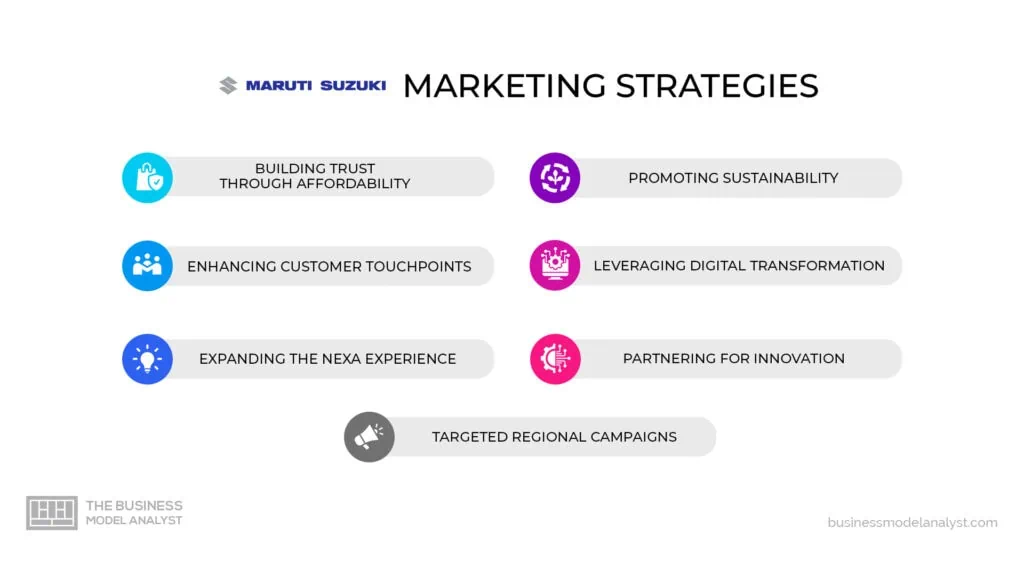
Maruti Suzuki’s success is not just built on products, but on thoughtful strategies that respond to India’s evolving mobility landscape.
From winning first-time car buyers to meeting rising aspirations, Maruti blends tradition with innovation.
The company’s marketing and business strategies are crafted to deepen trust, expand reach, and elevate the brand’s image across all segments.
Building Trust Through Affordability
Maruti Suzuki consistently delivers reliable vehicles at budget-friendly prices. Models like the Alto and WagonR serve as the go-to choices for first-time car buyers, reinforcing Maruti’s image as India’s most dependable auto brand.
Enhancing Customer Touchpoints
Through initiatives like doorstep service, Maruti Mobile Support Vans, and its “Service on Wheels” program, the brand ensures accessibility and care beyond the showroom. This strategy nurtures long-term customer relationships.
Expanding the NEXA Experience
To attract aspirational buyers, Maruti launched NEXA—a premium dealership brand that redefines car buying with modern aesthetics, sophisticated staff training, and exclusive models. It adds emotional appeal and elevates brand perception.
Promoting Sustainability
With a growing range of CNG and hybrid models, Maruti aligns with India’s green mobility goals. Campaigns like “Drive Green, Live Green” highlight its commitment to fuel efficiency and reduced emissions.
Leveraging Digital Transformation
Maruti uses AI-powered chatbots, virtual showrooms, and online bookings to cater to tech-savvy consumers. Its digital-first approach helps shorten the customer journey while enhancing convenience.
Partnering for Innovation
Collaborations with Toyota on shared vehicle platforms and technology exchange allow Maruti to accelerate innovation while controlling costs—seen in models like the Urban Cruiser Hyryder.
Targeted Regional Campaigns
Maruti crafts region-specific advertisements, languages, and offers to resonate with local markets. This micro-targeted marketing ensures relevance, especially in diverse states like Tamil Nadu, Punjab, or West Bengal.
Each strategy reinforces Maruti Suzuki’s dual identity—as a trustworthy mass-market leader and an emerging aspirational brand—helping it maintain a wide and loyal customer base.
Maruti Suzuki Channels
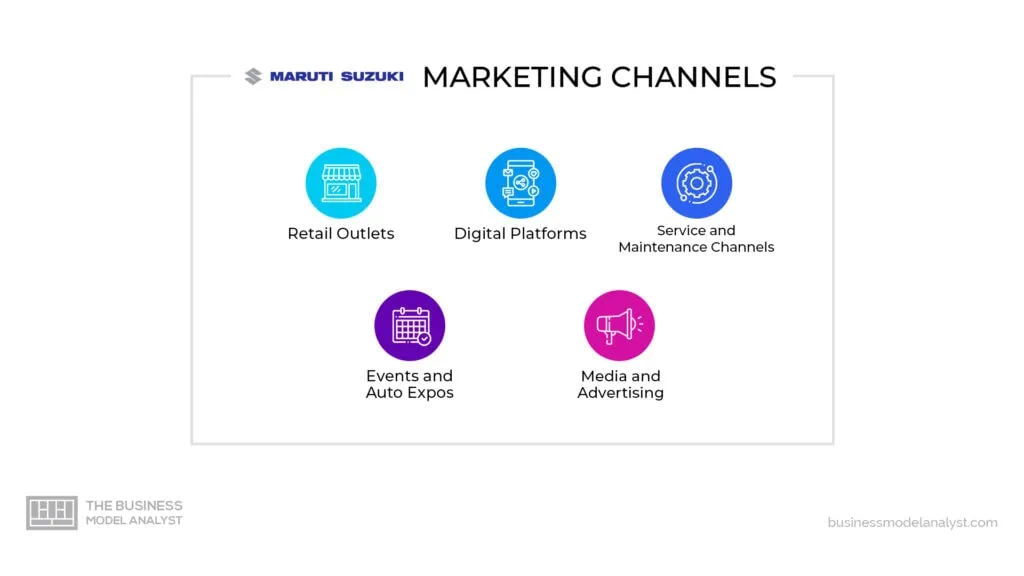
Maruti Suzuki reaches its diverse customer base through a strategic mix of physical, digital, and experiential channels. Each distribution channel is designed to maximize visibility, convenience, and customer engagement at various touchpoints of the buyer journey.
Retail Outlets:
Maruti’s Arena and NEXA showrooms form the backbone of its offline presence. Arena caters to budget-friendly buyers, while NEXA offers a premium experience with modern design and trained relationship managers. True Value outlets handle certified pre-owned cars, broadening appeal to cost-conscious consumers.
Digital Platforms
From virtual car configurators to online booking and doorstep delivery, Maruti’s website and mobile app provide a seamless digital experience. These platforms also support finance applications, service bookings, and customer support, allowing busy users to interact without visiting a showroom.
Service and Maintenance Channels
Maruti operates an expansive network of over 4,000 service centers and mobile service vans. These ensure vehicle upkeep is accessible even in remote areas, building loyalty and reducing long-term ownership costs for consumers.
Events and Auto Expos
Participation in India Auto Expo and brand-specific campaigns like the “NEXA Music” series help Maruti engage culturally and emotionally. These events humanize the brand and connect with aspirational buyers on lifestyle themes.
Media and Advertising
TV, radio, print, and a strong presence on social media platforms ensure Maruti stays top-of-mind. Regional language ads and local influencers help the brand connect across India’s linguistic and cultural landscape.
By using this multi-channel approach, Maruti Suzuki effectively bridges the urban-rural divide while aligning with modern customer expectations.
How to Apply Maruti Suzuki Strategies to Your Business
Maruti Suzuki’s approach is a masterclass in market understanding, adaptability, and customer connection. Whether you’re a startup, local brand, or established player, applying these strategies can elevate your business in meaningful ways.
1. Prioritize Value Without Compromising Quality
Maruti thrives by offering reliable products at fair prices.
Implementation: Use lean operations and smart sourcing to create quality offerings at accessible price points.
Outcome: Builds customer trust and increases repeat purchases.
2. Expand Reach Through Tiered Distribution
From metro showrooms to village dealerships, Maruti maximizes presence.
Implementation: Establish digital storefronts, pop-up shops, or regional partners to tap into overlooked markets.
Outcome: Broadens customer base and boosts brand visibility.
3. Use Brand Extensions to Reach Aspirational Customers
NEXA was Maruti’s strategic leap into premium territory.
Implementation: Create sub-brands or premium product lines to cater to higher-end segments.
Outcome: Increases average revenue per customer while elevating brand image.
4. Invest in After-Sales Support and Service
Maruti’s service accessibility is a key loyalty driver.
Implementation: Offer warranties, easy support channels, and follow-up care.
Outcome: Enhances satisfaction, leading to customer advocacy and long-term retention.
5. Go Digital with Purpose
Maruti’s digital tools simplify decisions and purchases.
Implementation: Build user-friendly platforms with guided navigation, chatbots, and mobile optimization.
Outcome: Streamlines customer experience and increases conversion rates.
6. Localize Your Messaging
Maruti tailors ads to regional cultures.
Implementation: Customize campaigns by geography or customer profile. Use local languages and relatable themes.
Outcome: Increases emotional resonance and customer engagement.
7. Partner to Accelerate Innovation
Maruti’s Toyota alliance fast-tracked tech upgrades.
Implementation: Collaborate with complementary businesses or influencers to innovate quickly.
Outcome: Shared expertise, lower R&D costs, and expanded reach.
By learning from Maruti Suzuki’s blueprint, businesses can grow sustainably, win loyalty, and adapt to evolving market needs—all while staying rooted in customer-first thinking.
Conclusion
Maruti Suzuki stands as a blueprint for balancing scale, affordability, and innovation in a competitive industry. Its deep understanding of Indian consumers, strategic segmentation, and expansive service network have positioned it not just as a carmaker, but as a trusted household brand.
From value-driven hatchbacks to aspirational NEXA experiences, Maruti’s marketing strategy blends tradition with modernity. Its adaptability—whether through digital innovation, localized campaigns, or eco-friendly mobility—has kept it relevant across decades.
As customer expectations evolve, Maruti Suzuki’s ability to personalize experiences, build long-term relationships, and engage through diverse channels ensures its continued leadership. For businesses seeking inspiration, Maruti’s journey offers valuable lessons in market alignment, customer loyalty, and consistent brand value.